
AC Maintenance in Bottineau, ND
Air conditioners here run from July through August, so June is the time for a tune-up. Tell us about your system, and a licensed contractor who covers Bottineau County will get in touch.
Tell us about the job
It takes about a minute.

Two easy months, but a hard ten years outside
Your air conditioner only has to carry you through July and August here, with afternoons averaging 78°F. That is not much strain on the system itself. The outdoor unit still sits outside all year long, through what Bottineau County has seen over the last ten years. Sixty five hail events. Thirty four damaging wind events. Hail up to 3 inches across.
A tune-up before summer is when a contractor checks the coil and cabinet for dents or damage that hail or wind may have left behind, and confirms the fan and refrigerant charge are still right. A bent fin or a cracked line found now is a small fix. Found in August, on the first hot afternoon, it is a breakdown.
- 2 months
- July through August, your air conditioner is on duty
- 78°F
- the average summer afternoon it cools against
- 65 hail events
- in ten years, and hail bends the fins on outdoor coils
- 34 wind events
- in ten years, and wind drives debris into outdoor units
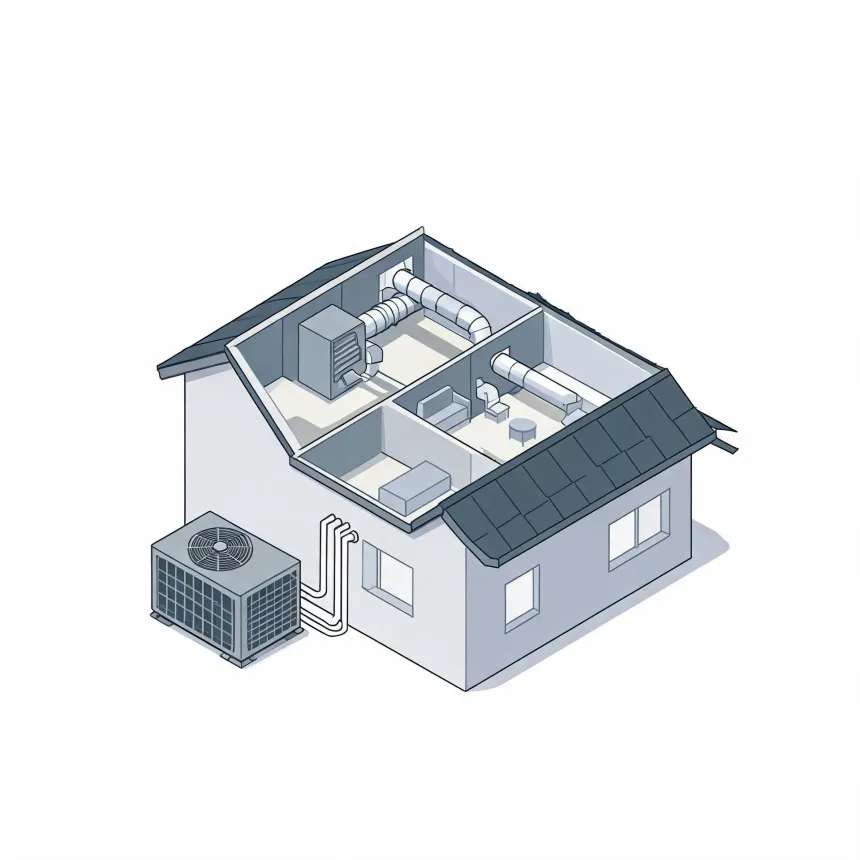
NOAA nClimDiv, 1991–2020 normals

Book your AC tune-up in June, before homes here start needing cooling in July.
- Jan
- Feb
- Mar
- Apr
- May
- Jun
- Jul
- Aug
- Sep
- Oct
- Nov
- Dec
A tune-up checks the refrigerant charge, cleans the coils, tests the capacitor and tightens the electrical connections.
North Dakota requires HVAC contractors to hold a state license.
The license is issued through the Secretary of State, and it covers the contractor, not the individual visit. It means the person or business taking your call has been through the state's process and is on record there. Work under $4,000 is an exception to that rule. Routine air conditioner maintenance usually falls under that line, so the contractor doing it may not be required to hold the state license for this particular job.
What still applies no matter the price is federal. Any technician who opens the refrigerant side of your air conditioner, to check the charge or service the coil, has to hold EPA Section 608 certification. That rule does not come from North Dakota and does not change with the size of the job. It is the one credential that follows the work itself rather than the invoice.
Sources: North Dakota Legislative Branch · North Dakota Secretary of State
- What does AC maintenance include?
- A technician checks refrigerant pressure, cleans the outdoor coil, tests the capacitor, and looks over the electrical connections. They will also check the airflow across the indoor coil and make sure the condensate drain isn't clogged. Anything involving the refrigerant side has to be done by someone with EPA Section 608 certification, which every legitimate technician carries. The point of the visit is to catch a weak capacitor or a dirty coil before it leaves you without cooling in July.
- How often does an air conditioner need maintenance?
- Once a year, ideally in spring before the heat sets in. Here that means checking it before July and August, since those are the two months your system actually has to work. A yearly check catches the small problems, a weak capacitor, a low refrigerant charge, before they turn into a breakdown during the hottest part of summer.
- Is AC maintenance worth it?
- Yes, because most of what causes a system to fail is something a technician can catch ahead of time. A dirty coil or a failing capacitor won't announce itself until the unit stops cooling, usually on the hottest afternoon of the year. With only two months of real cooling demand here, you want the system working the day you turn it on, not the day after it quits.