
HVAC Repair in Cavalier, ND
Homes here need heat from September through May and cooling from July through August. If your system quits, tell us what it's doing and a licensed contractor who covers Pembina County will get in touch.
Tell us about the job
It takes about a minute.

Nine months of heat, and nights that test everything
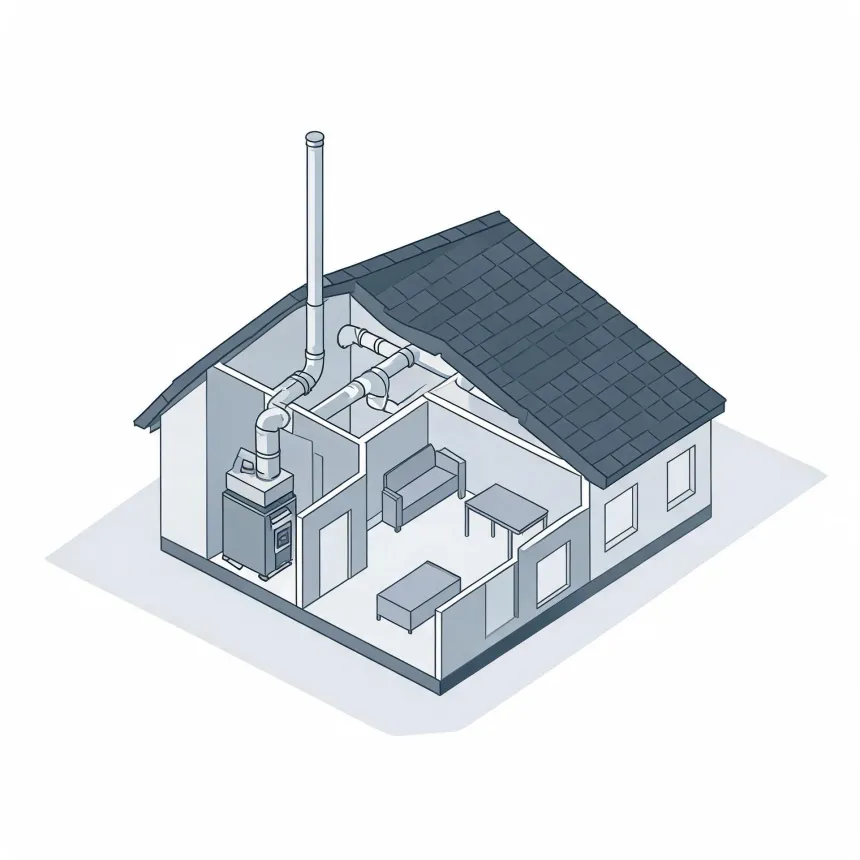
Your furnace is the machine that keeps this house livable here. It runs from September through May, nine months a year, and on the coldest nights, when the temperature drops to around 1°F, it cycles on and off for hours at a stretch. Each start puts a load on the igniter and the ignition control board. Those parts wear from the cycling itself, and a hard winter finds the weak one.
July and August ask something different of the system. Afternoons average 78°F, warm enough that the air conditioner has to run steadily to keep up, and a low refrigerant charge or a failing capacitor shows up fast when it does. This area has seen 62 winter storms and 51 damaging wind events over the past ten years, and statewide, 7% of households went at least 24 hours without power in 2024. When the power drops on a cold night, the house starts losing heat right away, and it keeps losing it until the power or the furnace comes back.
- 9 months
- September through May, your system heats
- 2 months
- July through August, it cools
- 1°F
- the average winter night it heats against
- 78°F
- the average summer afternoon it cools against
NOAA nClimDiv, 1991–2020 normals
North Dakota requires HVAC contractors to hold a state license.
The license is held by the contractor, not issued job by job, so what protects you is that the person or business doing the work has already been through the state's process and is on record with the Secretary of State. That covers who is allowed to take on your repair. It does not mean an inspector checks this particular job when it is done.
There is one exception worth knowing. In North Dakota, work under $4,000 does not need a licensed contractor, so a small repair can legally be done by someone without a state license. If your repair involves gas connections, that is the part where a mistake is dangerous, and a licensed contractor is who the state has actually screened for that kind of work.
Sources: North Dakota Legislative Branch · North Dakota Secretary of State
- Why is my heat not working?
- Start with the thermostat and the power to the furnace. If the display is dead, check the breaker first, then the switch that looks like a light switch near the unit itself. If those are fine, listen for the furnace trying to start. A few clicks followed by nothing usually points to the igniter. No sound at all can mean the flame sensor is dirty or the limit switch has tripped from a clogged filter cutting off airflow. At 1°F on a winter night here, a furnace that will not hold a flame needs a contractor out the same day.
- Why is my system running but not cooling the house?
- If the blower is running but the air is not cold, the problem is usually with the outdoor unit or the refrigerant, not the fan. Check that the outdoor unit is not caked in dirt or blocked by anything growing around it. A dirty filter can also choke off airflow enough that the coil freezes, and once that happens the system blows warm air until it thaws. Low refrigerant from a leak is another common cause, and that one needs a licensed contractor to find and fix.
- What can I check before calling for HVAC repair?
- Check the thermostat settings, the batteries in it if it has any, and the breaker for the system. Pull the filter and hold it up to a light. If you cannot see light through it, replace it, since a clogged filter is behind a lot of no-heat and no-cool calls. Outside, clear any leaves, snow, or debris away from the outdoor unit. If the system still is not working after that, the problem is inside the equipment, and a licensed contractor will need to look at it and price the repair for your system.