
AC Repair in Watford City, ND
Air conditioners here run from July through August. If yours quits, tell us what it's doing and a licensed contractor who covers McKenzie County will get in touch.
Tell us about the job
It takes about a minute.
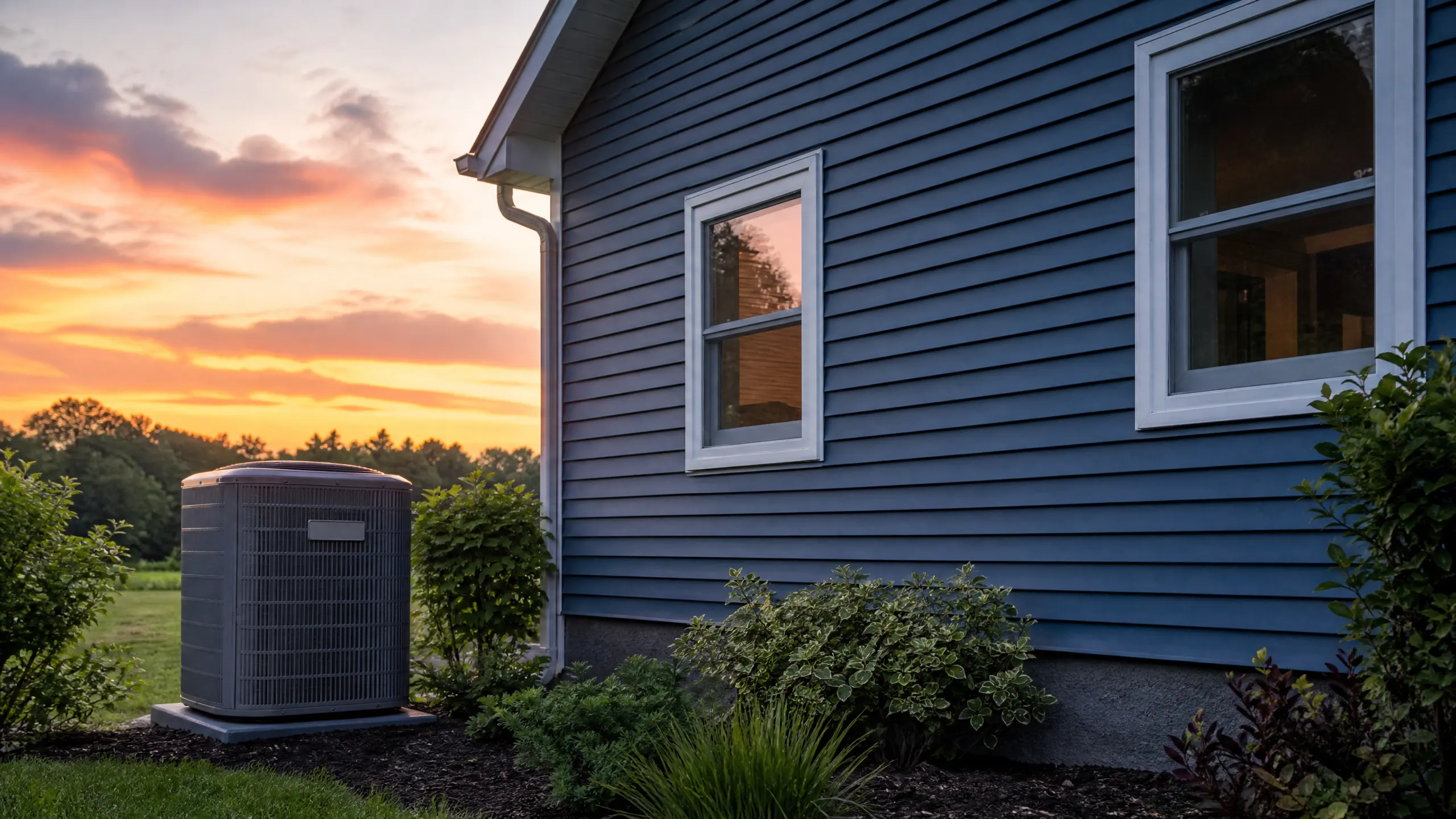
Two months of real heat, then storms the rest of the year
Your air conditioner in Watford City only has July and August to earn its keep, with afternoons averaging 81°F. That short season means the unit sits idle most of the year, then gets asked to run hard right when it's needed most. A system that sat unused since last summer is more likely to show a weak capacitor or a stuck contactor the first hot day you switch it on.
McKenzie County has logged 65 hail events and 79 damaging wind events over the past ten years, with hail up to 2.75 inches. That kind of storm bends the thin aluminum fins on your outdoor unit and can knock the fan blade out of balance. After a hard storm, listen for a new rattle or grinding sound from the outdoor unit, or check whether it's blowing cool air at all.
- 2 months
- July through August, your air conditioner is on duty
- 81°F
- the average summer afternoon it cools against
- 65 hail events
- in ten years, and hail bends the fins on outdoor coils
- 79 wind events
- in ten years, and wind drives debris into outdoor units
NOAA nClimDiv, 1991–2020 normals

A new air conditioner would save little on running costs in McKenzie County, so the repair decision comes down to the unit's condition.
Estimates for a typical McKenzie County home, compared with an older unit built to the previous federal minimum, from EIA household energy data, North Dakota fuel prices and NOAA climate normals. Your home will differ.
Repair makes sense when a part like a capacitor or contactor has failed.
Replacement makes sense when the compressor has failed or the system uses R-22 refrigerant, which is no longer made.
North Dakota requires HVAC contractors to hold a state license.
North Dakota licenses HVAC contractors through the Secretary of State. The license belongs to the contractor, not to any single job, so it carries over from one repair to the next. Work under $4,000 falls outside that requirement, so a smaller repair bill does not need a licensed contractor.
An air conditioner repair can mean opening the refrigerant line, and if it does, the technician doing that part of the work has to hold EPA Section 608 certification. That is a federal rule, the same in every state, and it applies whether the job is licensed under North Dakota's rule or falls under the $4,000 threshold. It covers the handling of the refrigerant itself, not the contractor's business.
Sources: North Dakota Legislative Branch · North Dakota Secretary of State
- Why is my AC not blowing cold air?
- Most of the time it is low refrigerant from a leak, a dirty filter choking airflow, or a frozen coil that needs to thaw before it can cool again. Check the filter first since that is the one thing you can do yourself. If the filter is clean and you still get warm air, the system needs a contractor to check refrigerant levels and pressures, and only someone with EPA Section 608 certification is allowed to open that side of the system.
- Why is my AC leaking water?
- Warm, humid air moving over the evaporator coil produces condensation, and that water is supposed to drain out through a condensate line. If the line is clogged or the drain pan has cracked, the water backs up and shows up inside or around the unit instead. A frozen coil that then melts can also flood the pan faster than it can drain, so if the airflow has been weak or the filter is dirty, that is worth checking too.
- Why won't my AC turn on?
- Start with the thermostat. Check that it is set to cool, the temperature is below the room temperature, and it has power or fresh batteries. If the thermostat looks fine, check the breaker for the outdoor unit, since a tripped breaker will keep the whole system dead. Beyond that, it could be a failed capacitor or a wiring issue, and that is a job for a licensed contractor to diagnose.