Mini Split Installation in Grand Forks, ND
A new system here will heat from September through May and cool from July through August every year. Tell us about the house, and a licensed contractor who covers Grand Forks County will get in touch.
Tell us about the job
It takes about a minute.
A mini-split here works eleven months of the year
Winter nights average 2°F from December through February. That is the kind of cold where a heat pump has to work hardest to pull any warmth out of the outside air. Heat is needed September through May, nine months, and cooling picks up in July and August when afternoons average 79°F. Eleven months out of the year, the system is doing something.
A unit installed here has to be sized for that low end, not just the mild stretch in between. Any split-system heat pump manufactured from January 2023 on, ductless included, has to meet 14.3 SEER2 for cooling and 7.5 HSPF2 for heating. That is the floor a new installation starts from, not a target to aim for.
- 9 months
- September through May, your system heats
- 2 months
- July through August, it cools
- 2°F
- the average winter night it heats against
- 79°F
- the average summer afternoon it cools against
NOAA nClimDiv, 1991–2020 normals
North Dakota requires HVAC contractors to hold a state license.
North Dakota licenses HVAC contractors through the Secretary of State. The license belongs to the contractor, not to any one job, so it is the company's record rather than something issued fresh for this installation. Work under $4,000 does not need a licensed contractor under this rule.
Beyond the license itself, most cities and counties require a permit for a mini-split installation, with an inspection once the work is done. That inspection is where the local building office checks the work rather than the state.
Sources: North Dakota Legislative Branch · North Dakota Secretary of State
- Is a mini split worth it?
- For most homes here, yes, especially if you're heating a room that doesn't already have ductwork. Winter nights in Grand Forks average 2°F from December through February, and mini splits built for cold climates keep producing heat well below freezing. Summers only run through July and August, and afternoons average 79°F, so the cooling side of the system has an easy job most years. Whether it's the right fit for your house depends on what you're trying to heat or cool and how the rest of the home works, so a contractor can look at your specific situation.
- How many rooms can a mini split cover?
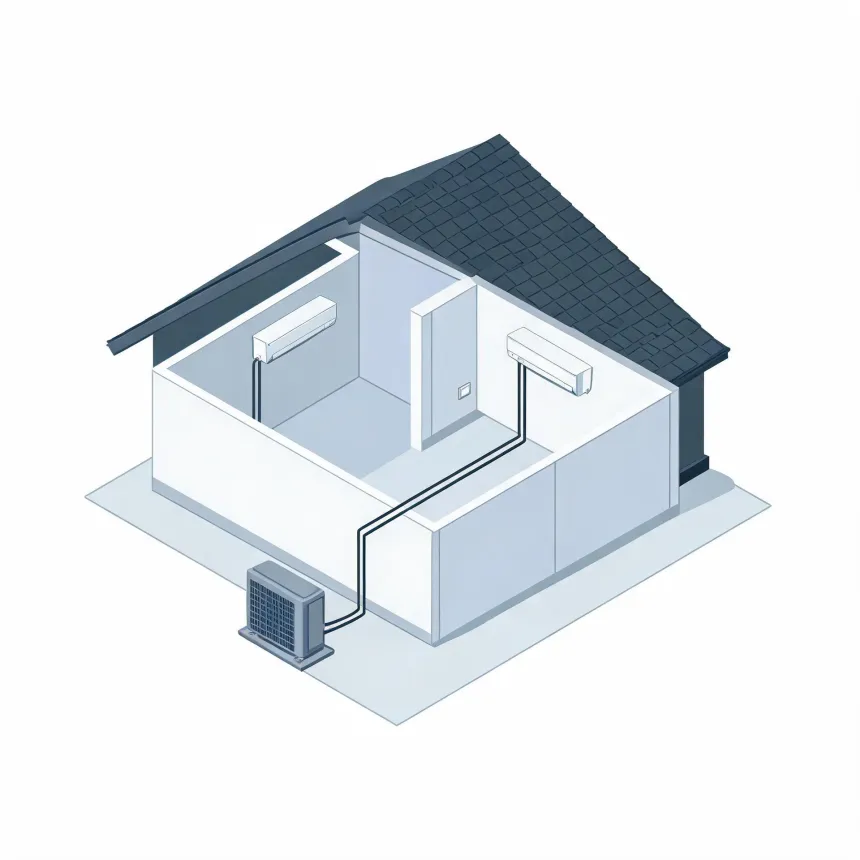
- A single outdoor unit can run one indoor head or several, depending on the system. A single-zone system covers one room or open area. A multi-zone system runs multiple indoor heads off the same outdoor unit, each with its own thermostat, so different rooms can be set to different temperatures at the same time. How many heads make sense for your house depends on the layout and how the rooms are used, which is something a contractor sizes for the home.
- Can a mini split heat a whole house?
- It can, if there are enough indoor heads placed to cover the rooms that need heat and the system is sized for how cold it gets here. Grand Forks needs heat nine months a year, September through May, with winter nights averaging 2°F, so the system has to be sized for those conditions, not for a mild day. A contractor will look at the size and layout of your house to work out how many indoor units it takes to heat all of it.