Mini Split Installation in Grafton, ND
A new system here will heat from September through May and cool from July through August every year. Tell us about the house, and a licensed contractor who covers Walsh County will get in touch.
Tell us about the job
It takes about a minute.
Grafton winters ask a lot of a mini-split
Winter nights here average 1°F from December through February. A mini-split has to pull heat out of air that cold, and it runs most days from September through May to do it. That is 9 months of the year the outdoor unit is working, not just the coldest weeks.
Summer only asks for two months of cooling, with afternoons averaging 78°F, so the heating side of the system carries most of the load here. Any mini-split installed new has to meet the federal minimum for a split-system heat pump, 14.3 SEER2 for cooling and 7.5 HSPF2 for heating. In a place where heating runs nine months and cooling runs two, that heating rating is the one that matters most for what you will notice.
- 9 months
- September through May, your system heats
- 2 months
- July through August, it cools
- 1°F
- the average winter night it heats against
- 78°F
- the average summer afternoon it cools against
NOAA nClimDiv, 1991–2020 normals
North Dakota requires HVAC contractors to hold a state license.
The license is issued by the state to the contractor's business, not job by job. It covers who they are, not a sign-off on this particular install. North Dakota also sets a $4,000 line. Work under that amount does not need a licensed contractor at all. A mini-split installation often runs above that line, which puts it under the licensing rule rather than outside it.
Most cities and counties require a permit for this kind of job and an inspection once the work is done. That inspection is what checks the installation itself, separate from whether the contractor holds a state license.
Sources: North Dakota Legislative Branch · North Dakota Secretary of State
- Is a mini split worth it?
- It depends on what you need it to do. A mini split cools in the summer and heats through the winter, so it can carry a room or a whole house through most of the year here. Winter nights in Grafton average 1°F from December through February, so ask the contractor whether the unit you're getting is rated to keep up on the coldest nights. For a room addition, a garage, or a house with no ductwork, a mini split often makes sense because there is no duct run to add.
- How many rooms can a mini split cover?
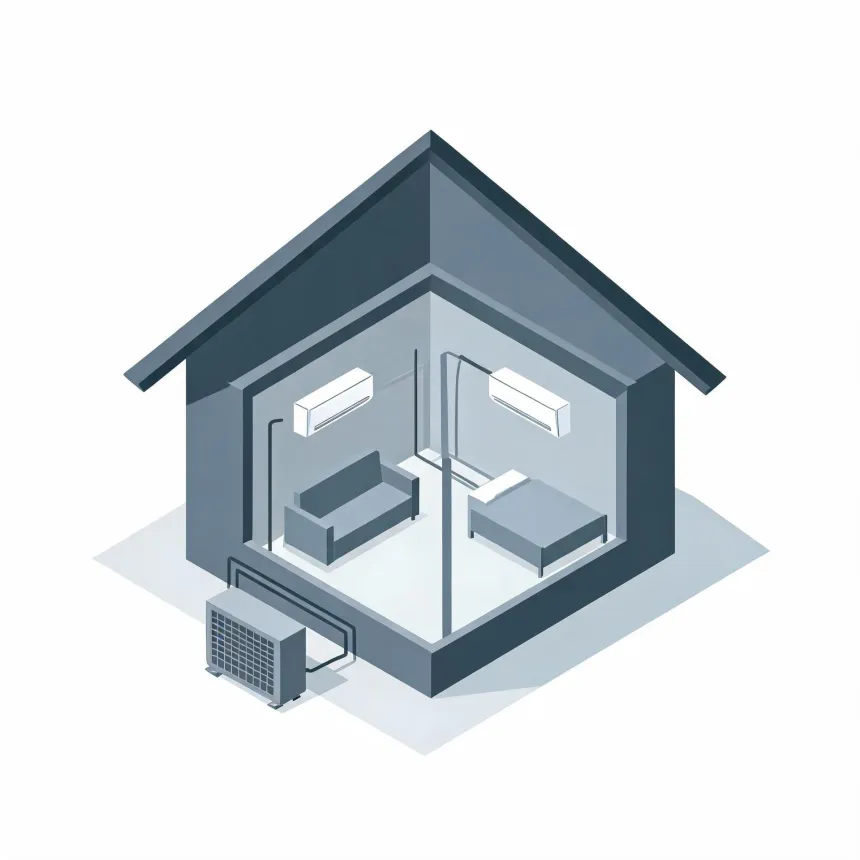
- That depends on how many indoor heads the outdoor unit runs. A single-zone system heats and cools just the one room it's mounted in. A multi-zone system runs several indoor heads off one outdoor unit, and each head has its own thermostat, so a bedroom and a living room can sit at different temperatures at the same time. A contractor can tell you how many zones a given outdoor unit supports.
- Can a mini split heat a whole house?
- It can, if there are enough indoor heads placed to reach every room. A house with an open layout might only need one or two heads to heat evenly, while a house with closed-off rooms and hallways needs a head in each space that doesn't get warm air from the others. A contractor sizes this by walking the house and checking how heat moves through it, not by square footage alone.