Send it once and finding someone is no longer on you.
Mold in a duct system doesn't stay put. Williston winters keep the furnace running for months at a stretch, and that fan pushes whatever is growing in the ducts into every room it feeds. If you've noticed a musty smell when the heat kicks on, or dust that seems to come back no matter how often you clean, that's usually where it's coming from.
Mold needs moisture to grow, and ducts that have picked up condensation or a damp crawlspace connection give it what it needs. Once it's established, running the system longer, which is most of the year here between the cold months and the warm ones, just keeps feeding it.
You don't have to figure out whether this is something to deal with now or something to watch. Send the request and a licensed contractor in Williams County, one who works on duct systems in this area all the time and knows how they get this way in a place with winters like Williston's, takes it from there. You're not stuck sorting through quotes from a list of companies. It's one contractor, matched to your situation, and from that point finding the right person for the job is off your plate.
Cleaning the ducts addresses what's already growing. It doesn't change what let it start, so if there's a damp spot feeding it or a vent that never gets warm air, that's worth mentioning when the contractor looks at the system. A thorough cleaning paired with fixing the source is what actually keeps it from coming back.
Fill out the form below and let someone who knows this equipment take it from here.
Mold in a duct usually means moisture got in somewhere and sat long enough for it to take hold. A duct that sweats where it runs through a cold crawlspace, a condensate line that backs up near the furnace, a bathroom fan vented into the attic instead of outside, any of these will do it. Once it starts, mold doesn't need much to keep going, just the dark and still air inside the metal. You won't see it unless you pull a vent cover and look, but you'll smell it, and anyone in the house with allergies or asthma will likely feel it before anyone else does. Cleaning the ducts gets rid of what's already growing. It doesn't fix whatever let the moisture in, so that part is worth finding before the system runs again through another Williston winter.
Ducts running clean carry warm air in winter and cool air in summer without adding anything to it along the way.
Ducts holding mold push a musty smell and spores into every room the system feeds, worse each time the furnace runs.
Wipe It Down or Clean the Whole System
Clean It Yourself
A vinegar or mild detergent wipe-down reaches the grilles and the first foot or two of duct behind them, nothing past where your arm goes.
Mold spores further back in the trunk line or the branch runs stay there, since household tools and sprays can't reach them.
Bleach and harsh chemicals inside a duct can corrode the metal or damage flex duct, and the fumes get pushed right into the house by the furnace fan.
Without pulling the registers and checking the coil and the drain line, you won't know if the moisture source is still feeding the mold.
Williston winters mean that fan runs for months, so any mold left behind keeps circulating long after you've wiped down what you could reach.
Professional Duct Cleaning
A contractor runs the full duct system under negative pressure, pulling mold and debris out of the branch lines and the trunk, not just the parts you can see.
Camera inspection shows where the mold is growing and whether it's reached the coil or the insulation inside the ducts, not only the metal walls.
A local contractor who works on Williams County systems every winter knows the usual culprits, a sweating duct in a cold crawlspace or a condensate line backing up near the furnace.
Treating the duct without finding and fixing the moisture source means the mold comes back, so the job includes tracking down where the water got in.
A licensed contractor handles the antimicrobial treatment safely in a closed duct system, at a strength that clears the mold without damaging the ductwork.
A licensed pro who works in Williams County gets your request.
No charge to send it. You decide if you hire them.
Why a sealed duct still grows mold
Ducts are dark and usually dry, which is why mold needs moisture to get started in the first place. Once it has a water source, a sealed duct actually helps it along. There's no light and almost no airflow in the branch runs, so a spot that gets wet behind a wall or above a ceiling can sit undisturbed for a long stretch. Williston's cold winters mean a duct running through an unheated crawlspace or attic can collect condensation on its own, without any leak at all, and that moisture is enough on its own.
What a camera finds that you can't
A technician checking for mold runs a camera into the trunk line and the branch runs feeding each room, not just the grille you can reach. That's how growth gets found a dozen feet back, past any bend a wipe-down cloth or a shop vac hose could reach. It also shows where the moisture is coming from, whether that's a sweating duct, a disconnected joint, or a condensate line near the furnace. Finding the source matters as much as finding the mold, since cleaning the ducts without fixing what's feeding the moisture just means it comes back.
How much does my furnace running almost all year matter?
Half the homes here were built by 2001
Half the homes in Williams County were built in 2001 or earlier. An older duct system has had more years to pick up a leak, a loose joint, or a damp patch where mold can start.
Heat runs September through June
Heat runs September through June here, about ten months out of twelve. Any mold sitting in the ducts gets pushed into your rooms on almost every day of the year.
Cooling runs July through August
Cooling only runs July and August. Those two months are close to the only stretch where the system sits idle long enough for a duct to actually dry out on its own.
ACS 2020-2024 · NOAA nClimDiv 1991-2020
Your furnace in Williston runs close to nine months a year, so a duct system holding mold doesn't get a break where the problem can dry out or fade on its own.
Every one of those months the fan is loading more spores into the bedrooms and the living room, so the smell you notice in November is worse by February.
Before you get your ductwork cleaningAfter you get your ductwork cleaning
Mold stays put
A duct cleaning reaches the full run of trunk line and branch ducts, not just what a cloth can reach, so the source gets pulled out instead of pushed further in.
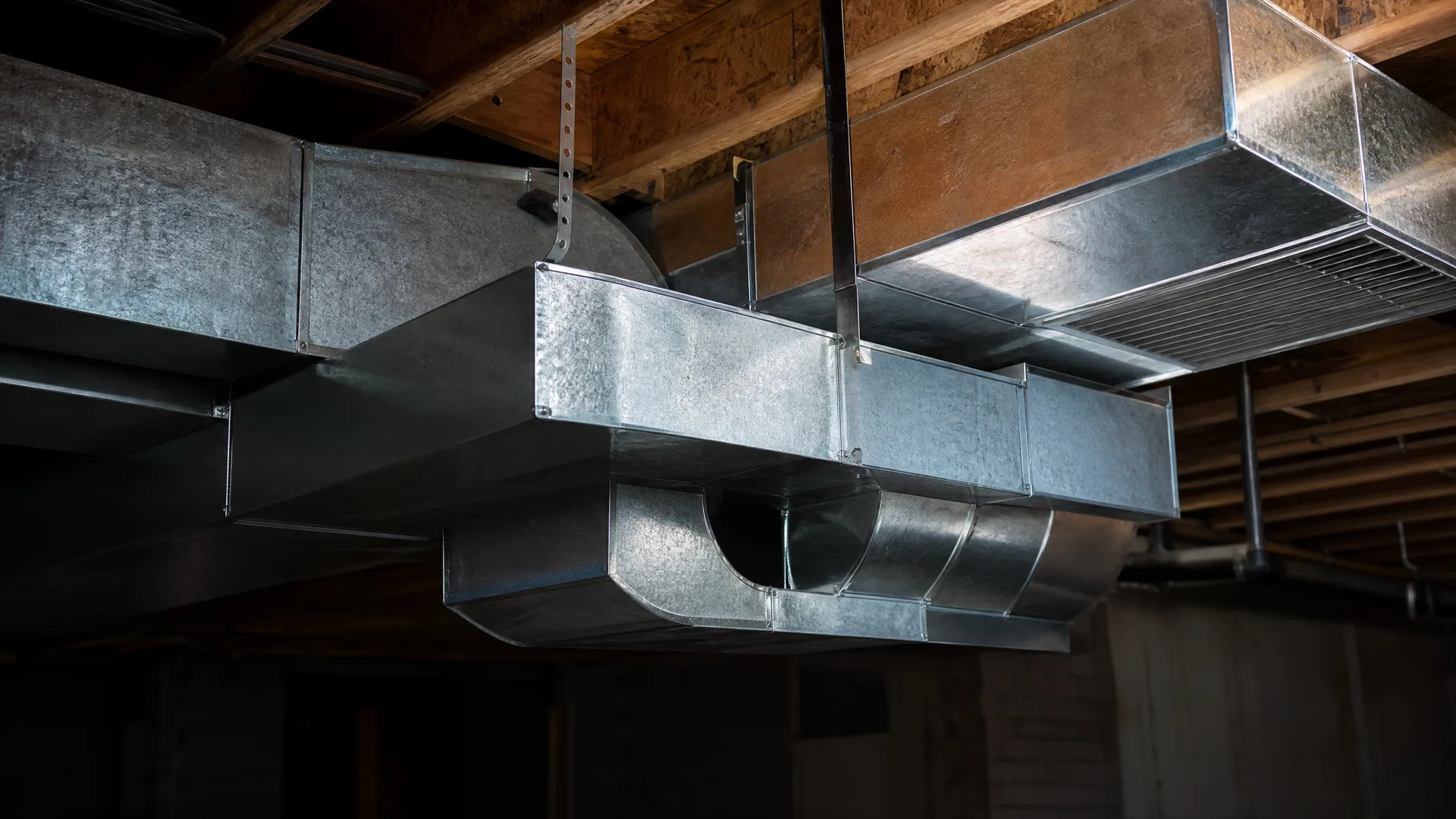
Galvanized trunk lines and flex runs overhead stay dry, with insulation in the walls doing its job and nothing damp sitting against the metal. Air moves through on its way to the registers and picks up nothing extra. A basement like this gives mold no place to start.
Ductwork holding moisture
Bare concrete walls and a slab floor hold dampness longer, and sheet-metal ducts running close to that concrete pick up the cold and sweat. PEX lines nearby are one more spot for a drip to land on a duct seam and sit there until something starts growing.
Power here costs 9.62 cents per kilowatt-hour
Power here runs 9.62 cents a kilowatt-hour, cheap enough that running the furnace fan longer than usual, or adding a filtration upgrade after a cleaning, won't show up much on your bill. That's worth knowing when a contractor suggests keeping the fan on to help clear the air once the ducts are clean.
EIA-861 2025
Getting your ducts back to clean
Mold in a duct system needs moisture to start, and once your furnace fan is running nine months a year it has nothing stopping it from spreading.
A full cleaning pulls the growth out of the trunk line and branch runs where a cloth or a spray bottle never reaches.
A contractor who services Williston furnaces all winter knows the spots that catch moisture first, from a crawlspace duct run to a condensate line near the unit.
You're matched with one licensed local contractor, so you're not fielding calls from a handful of companies before you've picked one.
Clean ducts carry air without adding anything to it, which is the point you're working back toward.
Williams County's older housing stock means plenty of duct systems have had years to develop the leak or damp patch mold needs, and that's worth having someone who knows the pattern take a look.
Mold in your ducts started because moisture found a way in and had time to settle. It spreads because your furnace runs most of the year here and the fan never stops moving air past it. The fix is a cleaning that reaches the full trunk line and every branch run, not just the grilles you can wipe down yourself. Once that growth is pulled out, your ducts go back to doing the one thing they're supposed to do: move air without adding anything to it.
Finding the right person for this isn't guesswork. A contractor who works on Williston furnaces through a full winter has seen where moisture tends to start, whether that's a duct running through a cold crawlspace or a condensate line that backs up near the unit. A lot of the duct systems around Williams County are old enough to have picked up exactly that kind of damp patch over the years, and someone who's seen the pattern before knows where to look first instead of starting blind.
When you send in the request, you're not handed off to a pile of companies competing for your callback. You get matched with one licensed, local contractor, so the next call you get is the one that matters. From there, the job is straightforward: clean the ducts, pull the mold out at the source, and let your system go back to running the way it did before any of this started.