Signs of a clogged dryer vent in Grand Forks, ND

A square stainless steel wall vent with four corner screw holes and a hinged flap cover, partly open to reveal a dark circular duct opening, shown against a plain light gray background.
Let a pro reach out

What are the signs of a clogged dryer vent?

You've noticed your towels take two or three runs to dry, or the top of the dryer feels hot to the touch. Before calling anyone, you want to know what to actually look for, since a clogged vent left alone can run up your power bill or worse. You're not looking for a sales pitch, just the plain signs that tell you the vent is the problem and not the machine itself.

Clothes come out hot but still damp, and the vent hood outside barely moves air

A dryer pushes hot, damp air out through the vent with every load. When that path is clogged with lint, the air has nowhere to go, so clothes finish a cycle hot to the touch but still damp. You'll run the same load twice just to get it dry. Check the vent hood on the outside of your house while the dryer runs. If the flap barely opens or you feel little to no air coming out, lint has built up somewhere in the line. The top of the dryer or the door may feel warmer than usual, and the laundry room can pick up a faint burnt-dust smell. Any one of these on its own might mean something else, but together they point to the vent.

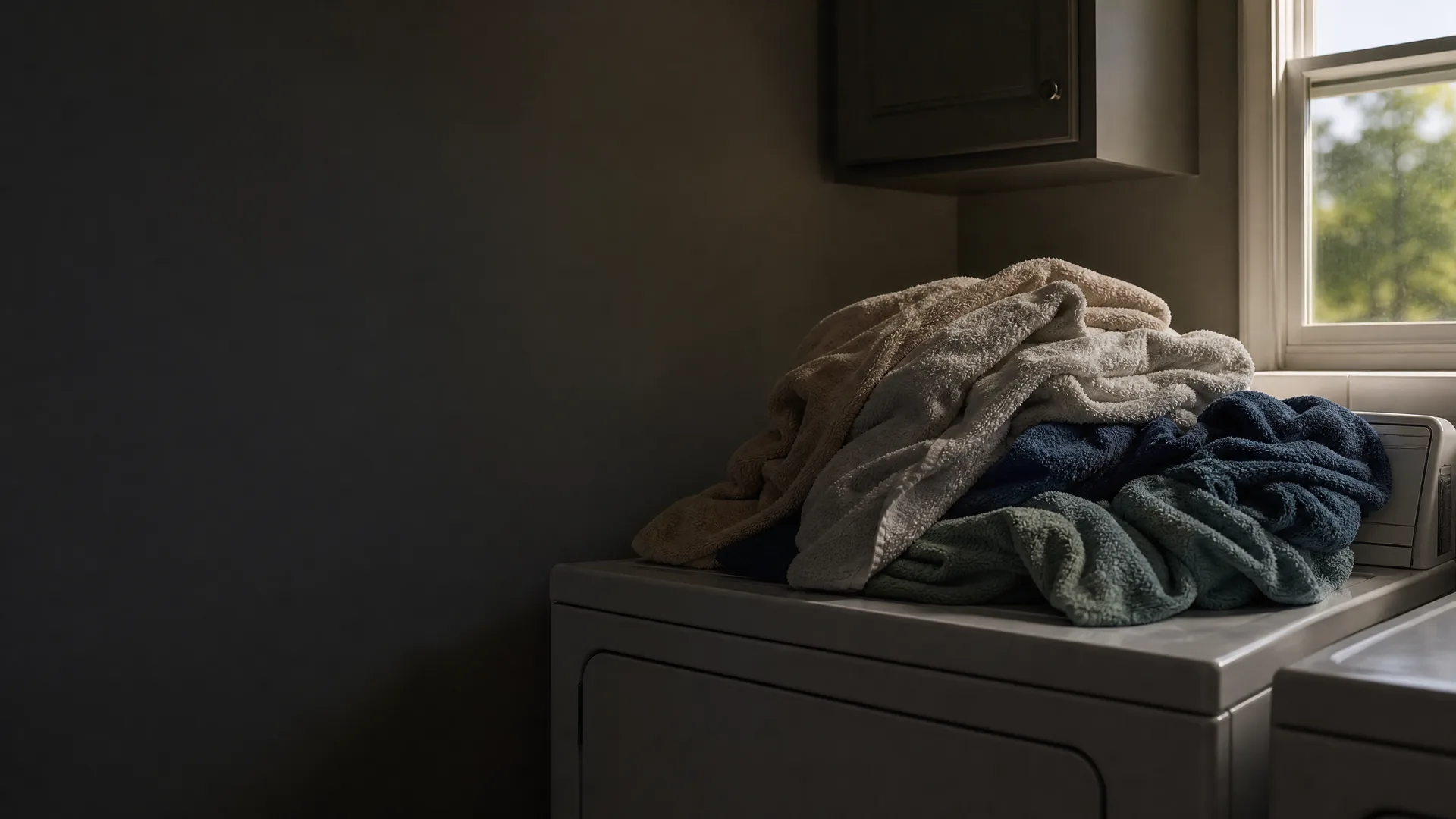
A pile of beige, navy, and teal towels sits on top of a washer or dryer in a dim laundry room with a window and an upper cabinet.

It's past eight on a Tuesday and you're still in the laundry room. The dryer's been running since before dinner and the towels on top of it are still damp enough to feel cold where they touch your hand. You run your palm along the top panel and it's warm, warmer than it should be after three cycles. Outside it's already dark, one of those long North Dakota winter nights, and the thought of hanging towels on every doorknob in the house to finish drying them doesn't sit right. You pull the lint trap again, even though you already cleaned it an hour ago. It's empty. The towels stay where they are.

Why does your vent clog faster than you'd expect?

  • 2.18 people per household on average

    With 2.18 people in the average household here, laundry runs often enough that lint builds up steadily, not once in a while.

  • Half the homes here were built by 1982

    Half the homes in Grand Forks County were built in 1982 or earlier, and older duct runs tend to have more joints where lint catches.

  • Power here costs 12.73 cents per kilowatt-hour

    Power here runs 12.73 cents per kilowatt-hour, so a dryer working harder against a clogged vent adds up on every single load.

ACS 2020-2024 · EIA-861 2025

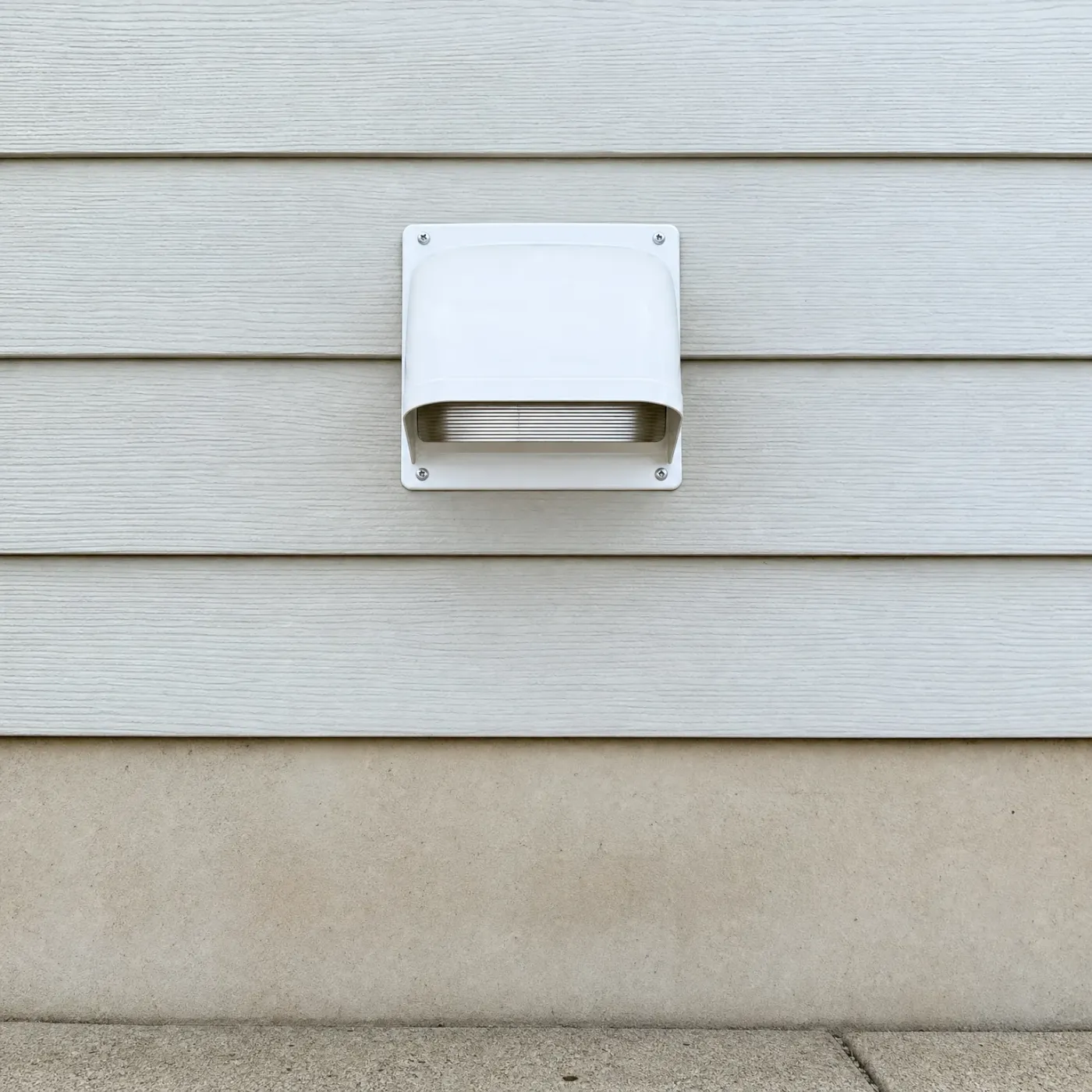
A white hooded dryer vent with a louvered opening mounted on light beige horizontal lap siding above a concrete foundation and sidewalk.

Vent clear and open

Air pushes straight out through the hood and the louvers swing open while the dryer runs. Lay a hand near the cap outside and you feel steady warm air moving. A load of towels finishes in one cycle, and the dryer shuts off on its own timer instead of running long.

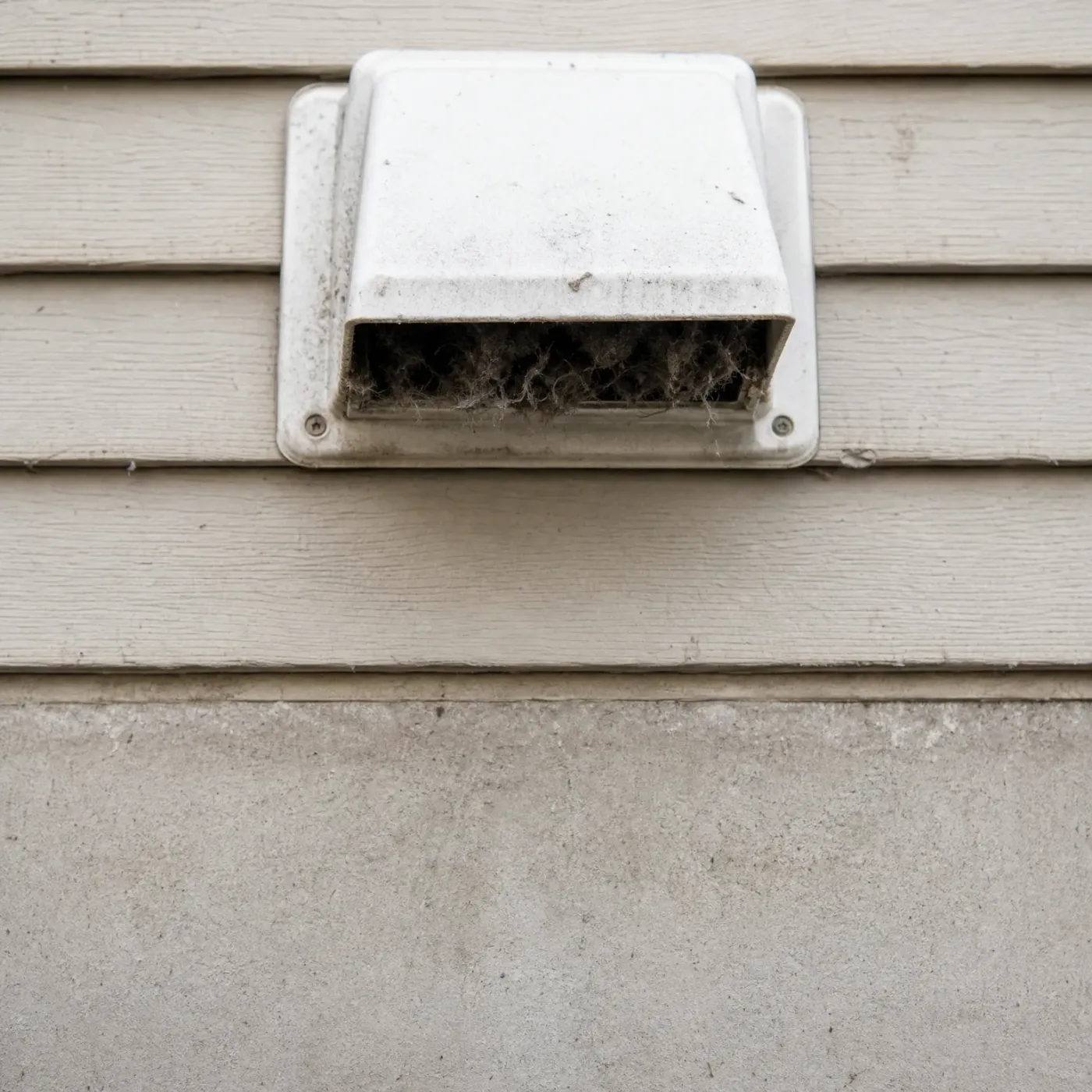
A white plastic dryer vent hood clogged with grey lint, mounted on beige horizontal lap siding above a concrete foundation wall.

Vent packed with lint

The hood you see here has lint built up across the opening, so the louvers can't swing open all the way. Air that should push outside backs up into the duct instead. That's what keeps towels damp after a full cycle and leaves the top of the dryer hot to the touch.

A closed laptop and a speckled ceramic mug sit on a wooden table beside a stoneware vase with a leafy branch, with a wooden chair, kitchen counter with cutting board and bowl, and dark upper cabinets in the dim background.

How a clogged vent actually heats up a dryer

A dryer doesn't just tumble clothes. It pulls room air across a heating element, pushes that hot air through the drum and out through the vent hose to the hood outside. The exhaust has to go somewhere. When lint narrows that path, the hot air backs up into the machine instead of leaving the house. That's why the cabinet gets hot to the touch and why a cycle that used to take forty minutes stretches into two or three runs. The thermostat inside is trying to compensate for air that isn't moving the way it should.

Some dryers have a thermal fuse built into this same airflow path, meant to shut the machine off if it runs too hot for too long. A vent that's been clogged for a while can trip that fuse, and then the dryer won't heat at all, clog or no clog. Once you're at that point it's not just a cleaning job anymore. Finding someone who handles both the vent and the fuse means another call, another explanation of what's wrong, another quote to compare. Sending one form here skips that part, so you're not the one tracking down who can do which half of the work.

A light gray sofa with gray and beige textured throw pillows and a cream knit blanket beside a white-framed window, with a small round side table holding a ceramic vase and potted greenery.
A smiling man in a dark green sweater sits at a wooden table with a light gray mug in a kitchen with white tile backsplash, pendant lights, and an adjoining living room visible.
A smiling man in a dark gray sweater stands indoors looking to the side, with a kitchen counter holding a ceramic mug and open wooden shelves behind him and a living area in the background.
A smiling man in a dark blue button-up shirt stands at a white kitchen island, with open shelving, a gas range, a potted plant and a window in the background.
A smiling man with dark wavy hair and a beard, wearing a dark green knit sweater, sits in an open-plan living room and kitchen with a brown sofa, large windows, and a counter holding a mug and a wooden bowl.

Finding a pro stops being your job

You've already checked the towels, felt the top panel, maybe pulled the lint trap and found it clean anyway. That's the point where most people start searching for someone to look at the vent itself, and that search usually means an hour of calling around, explaining the same thing three or four times, and trying to guess which company actually answers the phone in Grand Forks versus one that's booked out past the cold months. Winters here don't leave much room for a dryer that's working half as hard as it should, and a vent that's partly blocked now tends to be fully blocked by January. Sending the request through this page means one contractor who services Grand Forks County gets your information and reaches out, instead of you working down a list. You still have a dryer that's taking too long and a vent that needs eyes on it. That part doesn't change. What changes is you're done looking for who to call.

A clogged vent doesn't just slow drying. The motor and heating element keep running against trapped exhaust, and that strain is what shortens a dryer's life.

Lint is the fuel. A vent packed with it next to a heating element is how dryer fires start, and it's why the smell of hot dust in the laundry room is worth checking out the same day.

2.18 people per household on average

With just over two people in most households here, that dryer is running loads most days of the week, not once in a while. Lint builds up on that same steady schedule, so the vent is worth checking well before a load starts taking three runs to dry.

ACS 2020-2024

  1. The dryer pulls room air across the heating element.

  2. Hot air pushes through the drum, carrying lint with it.

  3. Air and lint travel through the vent hose toward the hood.

  4. Lint catches on the hose walls and starts to build up.

What is this actually doing to your house

Walk into the laundry room while the dryer's running and check for a few things. A burnt-dust smell, even faint, means lint is sitting somewhere it shouldn't. The room feels warmer and more humid than it used to, because exhaust that should be going outside is leaking back in through the door seal or a loose hose connection. Clothes come out smelling musty even though they just ran through a full cycle. Outside, press a hand near the vent hood while the dryer runs. Weak airflow, or almost none, means the path is blocked somewhere between the drum and the hood. Left that way, the dryer keeps heating against air that has nowhere to go, and that strain is what wears out a heating element early.

A white plastic hooded dryer vent cover mounted with screws on beige horizontal lap siding, next to a plain pale wall surface.

Checking it yourself today

Go outside and find the vent hood, usually on an exterior wall close to where the dryer sits. Start a load and watch the louvers. They should swing open and stay open while the dryer runs. Hold your hand a few inches from the opening. You should feel a steady push of warm air the whole cycle, not a weak puff at the start that fades. If the louvers barely move or flutter shut partway through, something between the drum and that hood is blocking the airflow.

A metal louvered exterior vent hood screwed to a beige horizontal lap siding wall, with a blank light-colored surface filling the left half of the frame.

Calling someone to check it

Some homes have a vent run longer than the usual straight shot, with a bend around a doorway or a second floor laundry room feeding down through the wall. Those runs hide lint further in than a hand at the hood or a flashlight down the hose can reach. A contractor brings a brush and rod sized for the full length of the duct, pulls what's built up at the bends, and checks the hood louvers move freely when the job's done. That's the only way to know a long or bent run is actually clear end to end.

Clean It Yourself or Call for a Full Cleaning

Clean it yourself

  • You can pull the hose off the back of the dryer and vacuum out what's reachable from both ends in under an hour.
  • A hood close to grade with a short, straight run to the dryer is the kind of layout a shop vac and a brush can actually clear.
  • You find out right away whether the louvers swing fully open, since you're the one watching them while the dryer runs.
  • It costs you nothing but time if the clog is sitting right at the hose or the hood where you can reach it.
  • A long run, a turn inside a wall, or a hood up high on a second story puts most of the vent out of reach of a vacuum and a brush.
  • If the smell or the heat comes back in a few weeks, the lint was further in than you could get to.

Have it cleaned

  • A full cleaning reaches lint sitting past any bends or long runs that a hose and vacuum from home can't get to.
  • The job covers the whole run from the drum to the hood, not just the two ends you can see.
  • Once it's done you're not left wondering if the smell or the slow drying will be back in a month.
  • You skip the hour of calling around and explaining the problem more than once to find someone who'll take the job.
  • A thorough cleaning also means a second set of eyes on the hood, the louvers, and the hose itself for damage you wouldn't otherwise catch.
  • For a vent that's never been cleaned since the house was built, this is the only way to know what's actually built up inside it.
A bearded man in a dark blue T-shirt sits on a gray couch, smiling and looking down to his left, with a bookshelf and a bright window behind him.
A bearded man in a plaid flannel shirt stands indoors beside a wood-framed, frost-covered window, looking outside, with a steaming brown mug on the sill and a wooden cabinet behind him.

The signs come down to this. Towels that take two or three runs instead of one, a dryer top that's hot to the touch, a burnt-dust smell in the laundry room, louvers on the outside hood that barely move when the dryer's running. Any one of these means air isn't moving through that vent the way it should, and the dryer is working harder than it needs to for every load. You don't need to guess at what's wrong or pull the hose apart yourself to know it's time to get the vent checked. What you don't want is to spend the next few days calling around Grand Forks for someone who services dryer vents, explaining the same symptoms to three different shops, then sitting with quotes trying to figure out who actually knows this job. Send the details once and that part of it is off your plate. Someone who clears vents for a living takes it from there, and you go back to running a normal load of laundry without checking the clock twice.

A single-story house with horizontal siding and large windows lit from within at dusk, beside a lawn, low path lights and a dark gravel driveway, with pine trees and a distant waterway under an orange and blue sky.

Dryer Vent Cleaning

Let someone else find the pro

Duct and vent cleaningGrand Forks County, ND
Step 1 of 3

What kind of equipment?

  • A gray upholstered sofa arm with a cream knit fringed throw sits beside a wooden side table holding a stack of books, a shallow wooden bowl, and a ceramic vase of leafy branches, on a wood floor near a window.
    • Get matched with someone who does this kind of work in Grand Forks County.
    • Get matched with a Grand Forks County pro who cleans dryer vents.
  • A living room corner with a cream upholstered sofa and cushion beside a wooden side table holding a ceramic vase of olive branches and a small dark bowl, with a framed landscape painting on the gray wall and a linen curtain at the window.
    • One request and the search for a pro is handled.
    • Send it once and finding someone is no longer on you.
  • A wood-framed armchair with a beige cushion and knitted throw sits beside a round wooden side table holding a ceramic mug, with a potted green plant near a window in the corner and a framed picture on the wall.
    • One form replaces the calls you'd make to find a dryer vent pro.
    • Skip calling around for someone who cleans dryer vents.
  • Interior corner with beadboard wainscoting, a gray cabinet with wood countertop holding a vase of greenery below a window, and a potted leafy plant in a woven basket on a wood floor with a fringed jute rug.
    • The pro who gets in touch is licensed in North Dakota and works in Grand Forks County.
    • A licensed pro who works in Grand Forks County gets your request.