
What to do when the AC goes out in North Dakota

RepairCentral ACNorth Dakota
Step 1 of 2

What ZIP code is the job in?

First, check the breaker and the thermostat batteries, since those cause more dead air conditioners than anything inside the unit. If power is fine, shut the system off rather than letting it keep trying to run. A compressor that keeps cycling against a real problem, a tripped capacitor or a frozen coil, can burn itself out in a single afternoon, and that turns a repair into a full replacement. North Dakota summers don't bring the humidity that wears on a system the way they do further south, so when a unit fails here it's usually a part giving out rather than the heat overworking it. The outdoor fan not spinning, ice on the lines, or a warm house with the system running are all signs worth noting before anyone looks at it, since they point a licensed technician straight to the problem instead of a long diagnostic. Getting it looked at quickly matters less for the heat itself and more for stopping a small failure from spreading to the rest of the system.

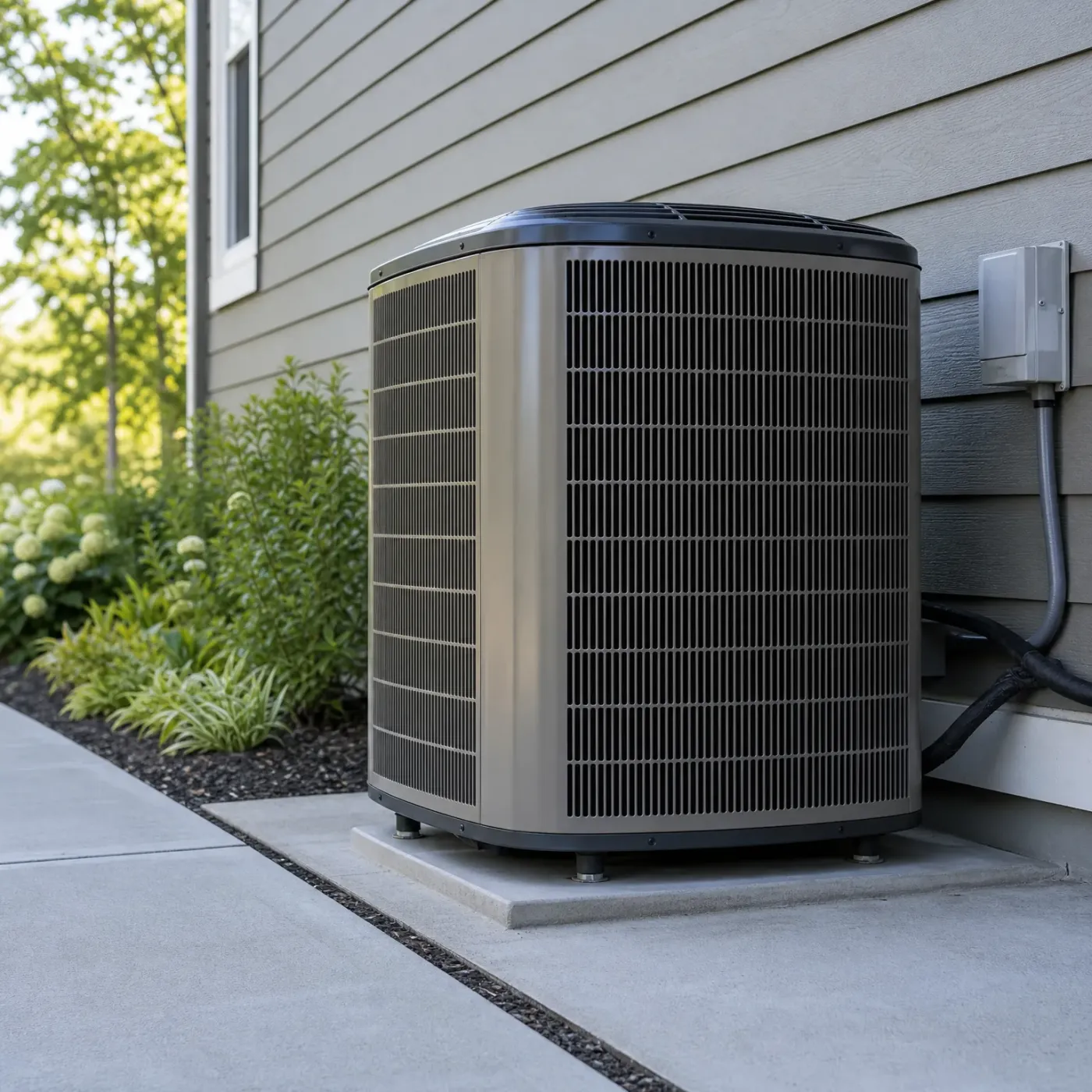
A gray outdoor air conditioning condenser unit on a concrete pad beside a house with horizontal lap siding, with a wall-mounted disconnect box and conduit, and shrubs to the left.

Running the way it should

A condenser that's doing its job sounds steady and low, nothing grinding or ticking. Air coming off the vents inside is noticeably cooler than the room. The pad outside stays clear, and the unit cycles on and off in normal stretches rather than running nonstop against a North Dakota afternoon.


An outdoor air conditioning condenser unit on a concrete pad beside a house with horizontal siding and a concrete foundation, with dry brown leaves on the ground to either side.

A unit in trouble

Leaves and debris piled against the cabinet block airflow across the coil, and years of grime on the fins make the unit work harder to move heat outside. If it's running constant with no real cooling to show for it, or the outside unit looks like this, a licensed contractor needs to look at it before something inside fails for good.

Why is my AC blowing warm air in my house

You walk past a vent and it's just room temperature air, or worse, it feels warm. Maybe the outdoor unit is running but you don't hear it cycle off like it used to. Maybe there's a smell, musty or burnt, coming from the vents. Maybe the thermostat says 72 and the house says otherwise. Any of these means the system is working without actually cooling, and that's hard on the compressor if it keeps running that way. North Dakota summers aren't brutal, but a house that can't shed heat gets uncomfortable fast, and a compressor pushed past what it can do is a bigger repair than the one you'd have called in for today.

  1. Thermostat calls for cooling and sends power to the contactor

  2. Contactor pulls in and starts the outdoor compressor and fan

  3. Compressor pumps refrigerant to the outdoor coil to release heat

  4. Indoor blower pulls warm house air across the cold evaporator coil

Call a Repair Tech or Wait

Call now

  • A repair tech can usually tell you over the phone if a breaker trip or a dead thermostat is worth checking yourself first.
  • If the compressor is short cycling or the air is only lukewarm, running it longer risks turning a repair into a replacement.
  • A local tech who works on these systems every summer usually knows the first two or three things that fail on your brand of unit.
  • Getting someone out while it is still warm out means less time with the house climbing past what the thermostat is set to.
  • One contractor means one visit, not three different companies calling to schedule around each other.

Wait it out

  • If the breaker was just tripped and resetting it brings the system back, there may be nothing else wrong right now.
  • North Dakota summers run warm but not the thick heat other states get, so a day or two without AC is uncomfortable rather than dangerous.
  • A unit that is still blowing cool air just not as cold as before can often hold on a few more days without harm.
  • Waiting costs you comfort now and, if something inside is already failing, lets that failure get worse before anyone looks at it.
  • Gas heat means the furnace side of the system is not affected, so there is no reason to rush out of worry about winter.
An outdoor air conditioner condenser unit on a concrete pad beside a house with beige horizontal siding and a stone-veneer base, with refrigerant lines running to a gray wall-mounted electrical box, surrounded by dark mulch, a flowering shrub and an evergreen on the left.

Normal operation

This is what a healthy condenser looks like sitting beside the house. It runs quiet, the fan turns freely, and the pad underneath stays dry and clear. Nothing around the disconnect box shows scorch marks or corrosion.

An outdoor air conditioning condenser unit on a concrete pad beside a house with light vinyl siding, an electrical disconnect box and conduit on the wall, bare shrubs and mulch to the right, and a concrete walkway in the foreground.

Something's wrong

Here the unit sits idle when it should be running, or it's cycling without cooling the house. Check the disconnect box is fully seated and the breaker hasn't tripped. If it's humming but not starting, a repair tech needs to look at it before you run it again.

A woman with shoulder-length brown hair wearing a beige knit cardigan sits in a gray upholstered armchair near a window, looking off to the side with a slight smile, with bookshelves blurred in the background.
A woman and a sleeping child wrapped together in a cream knitted blanket on a couch, with a potted plant, framed photo and lit lamp in the background.
An outdoor air conditioning condenser unit on a concrete pad beside a house with horizontal lap siding, with a gray electrical disconnect box and conduit on the wall and green shrubs and trees to the left.

Hand off the air conditioner problem

Your request stays with one local pro.

Send the request today and let an air conditioner pro reach out to you.

Get a licensed local pro

You only hire the pro if you want to.

An outdoor air conditioning condenser unit on a concrete pad beside a house with white horizontal lap siding, with an electrical disconnect box and insulated refrigerant line on the wall and a shrub over mulch to the right.
The coil and fan are clean, the lines are intact, and the pad shows no oil stains from a refrigerant leak.
An outdoor air conditioner condenser unit on a concrete pad beside a house with light horizontal lap siding, with an electrical disconnect box and conduit on the wall behind it.
Weathering like this around the disconnect often comes with corroded contacts or wiring a tech needs to check before the unit runs again.

Most no-cool calls trace back to one of a handful of parts, and knowing which one points to a different fix. Frost on the indoor coil usually means the charge is low, and that frost itself blocks the airflow that was supposed to carry cool air into the house. A compressor that hums but never starts is often a bad run capacitor, not the same thing as a breaker that tripped. Outside, a condenser coil caked with dirt or cottonwood can't shed the heat it just pulled out of the house, so the compressor runs longer and still falls short. Some systems shut down on purpose. A clogged condensate line trips a float switch as a safety measure, and the unit sits dead until that line is clear. Inside the contactor, years of arcing can pit the contacts until the thermostat calls for cooling and nothing happens. A weak blower motor capacitor shows up differently, as a fan that barely turns, so warm room air is what makes it out the vents. A tech checks these in order rather than guessing.

Why these failures happen

  • A low refrigerant charge makes the evaporator coil run cold enough to frost over, which then blocks airflow instead of cooling it.
  • A failed run capacitor can leave the compressor humming without starting, which is a different problem than a tripped breaker.
  • A dirty condenser coil outside traps heat the system needs to release, so the compressor works harder and cools less.
  • A clogged condensate drain line can trip a float switch and shut the whole system down as a safety measure.
  • Contactor points that have pitted or burned over time can stop sending power to the compressor even when the thermostat is calling for cooling.
  • A weak blower motor capacitor can leave the indoor fan barely turning, so what air does come out feels warm by the time it reaches the room.
An outdoor air conditioning condenser unit on a concrete pad beside a house with white horizontal vinyl siding, with a gray electrical disconnect box and refrigerant lines on the wall behind it.
Before you get your air conditioner repair
A gray outdoor air conditioner condenser unit on a concrete pad beside a house with white horizontal siding and a brick foundation, with a wall-mounted disconnect box and conduit, and a green shrub with mulch at left.
After you get your air conditioner repair

Power costs 11.82 cents per kilowatt-hour statewide

At that rate, running the system harder while something's wrong with it won't wreck your bill the way it might elsewhere. That's one less reason to put off getting the compressor or capacitor looked at once you notice it struggling.

EIA-861 2025 statewide residential average

When your AC quits

  • A dead breaker or a thermostat on dead batteries explains more no-cool calls than anything inside the compressor.
  • A system that keeps cycling against a real problem usually turns a repair into a replacement, so shutting it off is the safer move.
  • Warm air at the vents, frost on the coil, or a compressor that hums without starting all point to different repairs, not one fix.
  • Cheap power here means running the system while something's wrong won't punish your bill the way it would elsewhere.
  • A local tech who works on these systems all summer has usually already seen whatever is wrong with yours.
  • Sending one request means one licensed contractor calls, not a string of companies competing for the job.

Start with the breaker and the thermostat batteries. Those two things explain more dead air conditioners than anything inside the cabinet, and they cost you nothing to check. If power's getting to the unit and it's still not cooling right, turn it off rather than let it keep trying. A compressor fighting a low charge or a bad capacitor doesn't fix itself by running longer, and it can turn a repair into a replacement. What you're seeing tells you something. Warm air at the vents points one direction. Frost on the coil points another. A compressor that hums but won't start is its own problem, separate from a tripped breaker. These aren't the same repair, and guessing at which one you've got usually costs more than having someone look.

Power here is cheap, so none of this is about rushing to shut things down to protect your bill. It's about not running a system that's already struggling. Once you're at the point of calling someone, you're looking for a tech who's spent the summer on this exact equipment, who's probably already seen whatever's gone wrong with yours before. Send one request and one licensed contractor local to you picks it up, not a handful of companies chasing the same job. That's the part that matters once you've figured out it's not the breaker.

Kitchen corner with cream upper cabinets, oak lower cabinets, white marble-look countertop, beige tile backsplash, a ceramic vase of greenery, a wooden cutting board and bowl, and a black-framed window at right.
Interior corner of a room with a white-framed window and wide sill, beige walls with panel molding, a wooden cabinet holding a ceramic vase with a green leafy plant, and blurred shrubs and trees outside.
A wood-framed armchair with beige cushions and a woven lumbar pillow sits in a corner beside a large window overlooking green trees, with a tall ceramic vase holding leafy branches on the left and plaster walls and wood flooring.
Interior corner with a white-framed window above a sill, beige walls with baseboard molding, a greige shaker-style cabinet with brass knobs and a potted plant on top, light wood flooring and a woven jute rug.
A dark-framed six-pane window with white trim and sill set in gray horizontal lap siding, with hydrangea shrubs below and a white column and shingled roof section at left.

It's off your list after this

Your request goes to one pro, not a list of companies.

Send it today

Asking costs nothing, and the choice to hire stays yours.