
Dryer taking too long to dry in Minot, ND

Skip the calls

A dryer that takes two or three cycles to get clothes dry usually has a vent problem, not a broken machine, and that's worth knowing before you spend money on repairs you don't need. In Ward County winters, a clogged or crushed vent makes the problem worse, since the dryer is already working against cold air coming in through the duct. The usual fix is to find someone who can look at the vent run, clean it out, and check that it's actually venting outside the way it should. You could start calling around Minot yourself, explaining the same thing to every shop that picks up, then sorting through whoever calls you back. Or you could answer a few questions here and get matched with one licensed local contractor who works on vents like yours every winter and knows what tends to fail in this kind of cold. No flood of calls, no repeating yourself. Just one person who already knows what you're dealing with.

Why is my dryer taking two or three cycles to dry clothes?

You've started running the dryer twice, sometimes three times, just to get a load of towels or jeans actually dry. It's eating your evening and you're wondering if the dryer itself is wearing out or if something else is going on before you call anyone to look at it.

A blocked vent, not a broken dryer

Most of the time the dryer is fine. The vent is choked with lint, or the hose behind it got crushed when the machine was pushed back against the wall. Either way, the hot wet air from your clothes can't get outside fast enough, so the dryer keeps running without finishing the job. In Ward County winters, cold air pressing in from outside makes a tight or clogged vent work even harder, since the dryer has to push air through a colder, stiffer path to the outside wall. If your vent run is long, has several turns, or hasn't been cleaned in a while, that's likely where the extra cycles are coming from, not the heating element or the motor.

  1. Lint builds up inside the vent hose and the wall duct

  2. Airflow drops, so hot moist air can't escape the drum

  3. The dryer runs longer trying to finish the same load

  4. Extra heat and moisture strain the thermostat and the heating element

Why is your dryer working this hard to finish a load?

  • 2.35 people per household on average

    With 2.35 people in the average Ward County household, that's a load of towels or jeans most days of the week, so a vent that's slowing down gets tested constantly.

  • Half the homes here were built by 1984

    Half the homes here went up in 1984 or earlier, and a vent run that's been in place that long has had decades to pick up bends, sags or a crushed section.

  • Power here costs 11.37 cents per kilowatt-hour

    At 11.37 cents per kilowatt-hour, power here is cheap, but a dryer running two or three cycles to finish one load still adds up over a year.

ACS 2020-2024 · EIA-861 2025

The vent gets cleaned

A clogged vent gets cleared out, lint and all, from the hood outside back to where the hose meets the wall. Airflow comes back to what it was when the dryer was new. Loads that took two or three runs go back to one. The dryer stops working as hard, which matters once temperatures drop and it's running more often. You stop losing evenings to a machine that's only fighting its own exhaust. The vent cleaning itself is quick work for someone who does it regularly, and once it's done, you've got an answer either way: either drying times go back to normal, or you know the problem is something else.


The vent stays as it is

Nothing changes, so the dryer keeps pushing hot moist air against a vent that won't let it through fast enough. Loads keep taking two or three cycles, and every one of those extra cycles runs the heating element and thermostat harder than they're built for over time. Winters in Ward County make this worse, since a vent that's partly blocked is more likely to freeze or clog further when it's cold outside. You keep spending the evening time on laundry that a clear vent would have given back to you. The dryer doesn't fix itself, and the gap between what it's doing and what it should be doing only gets wider.

A smiling woman with long brown hair in a cream sweater sits at a stone counter with a glass of red wine, with a dimly lit living room, beamed ceiling and glass doors behind her.
A woman with shoulder-length dark wavy hair in a beige sweater laughs while looking off to the side, seated at a white marble counter with a glass of red wine, in a dimly lit home interior with a kitchen and sofa in the background.
A smiling woman with long dark hair in a black sweater sits at a white marble counter with a glass of red wine, in a dimly lit kitchen and living area with pendant lights, a potted plant, and flowers.
A smiling woman with long brown hair in a light knit sweater sits at a stone-topped counter with a glass of white wine, with a dimly lit living room, sofa, fireplace and round mirror behind her.
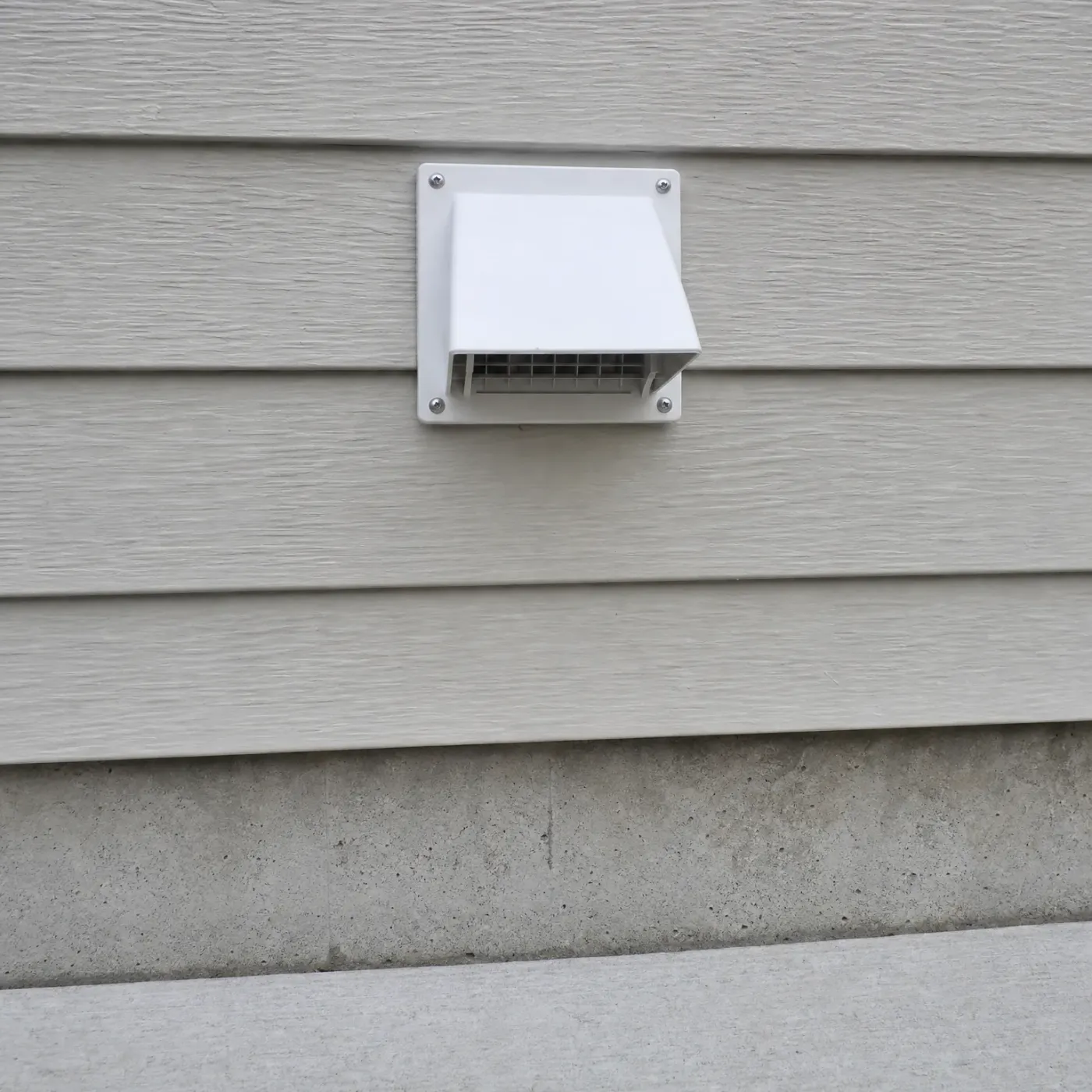
A white hooded dryer vent with a louvered opening mounted on light gray horizontal lap siding above a concrete foundation.

Vent clear

Air moves out through the hood without resistance. The louvers open when the dryer runs and close when it stops, keeping cold air and pests out the rest of the time. A load of jeans or towels finishes in one cycle because the moisture the drum pushes out actually leaves the house.

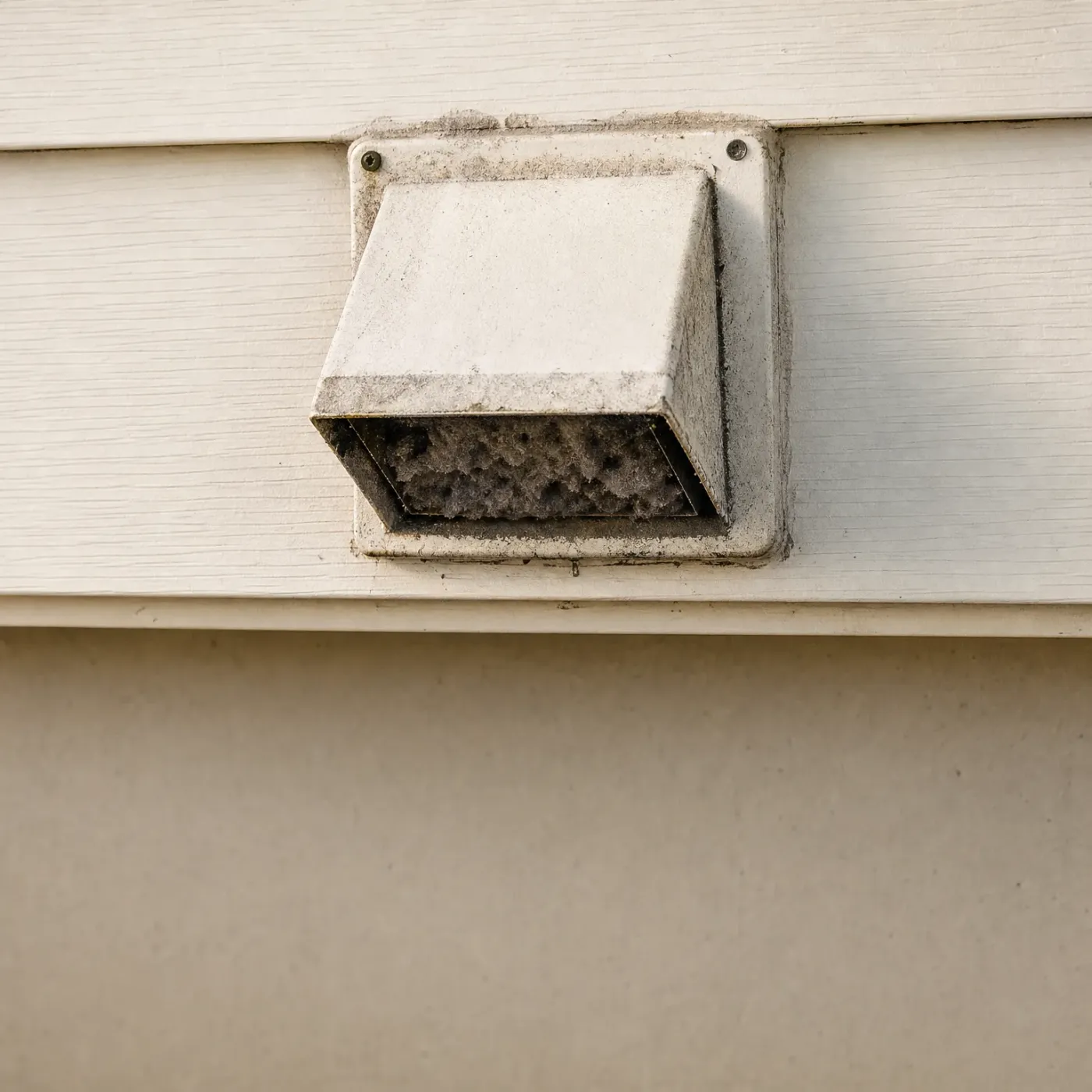
A white plastic hood-style dryer vent mounted on beige horizontal siding, with its opening clogged by thick gray lint.

Vent clogged

Lint has packed in around the opening until the louvers barely move. The cap and the siding around it are gray with dust the exhaust couldn't carry away. Moist air backs up into the drum instead of leaving, so the dryer keeps running and the same load goes through again.

What are you noticing when the dryer runs

The outside hood barely moves when the dryer is running, where it used to flap hard with warm air. The top of the dryer feels hot to the touch partway through a cycle. The laundry room picks up a warm, damp smell that wasn't there before. Clothes come out hot but not dry, especially heavier items like towels and jeans. You might notice more lint around the lint trap door or the hose connection than you remember. Left alone, a vent that can't push air out keeps the dryer running longer and hotter than it should, and that heat has nowhere to go but back into the drum and the room around it.

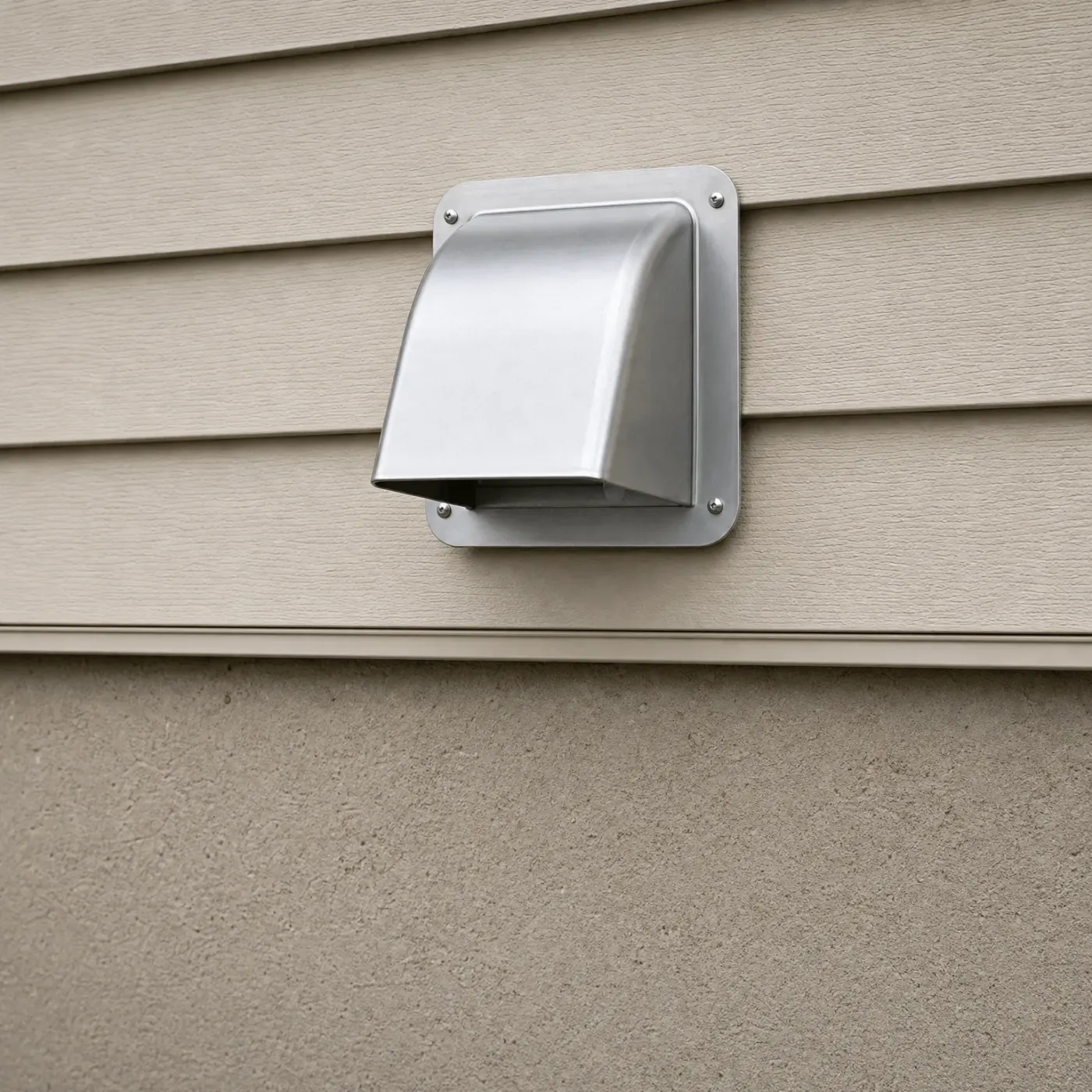
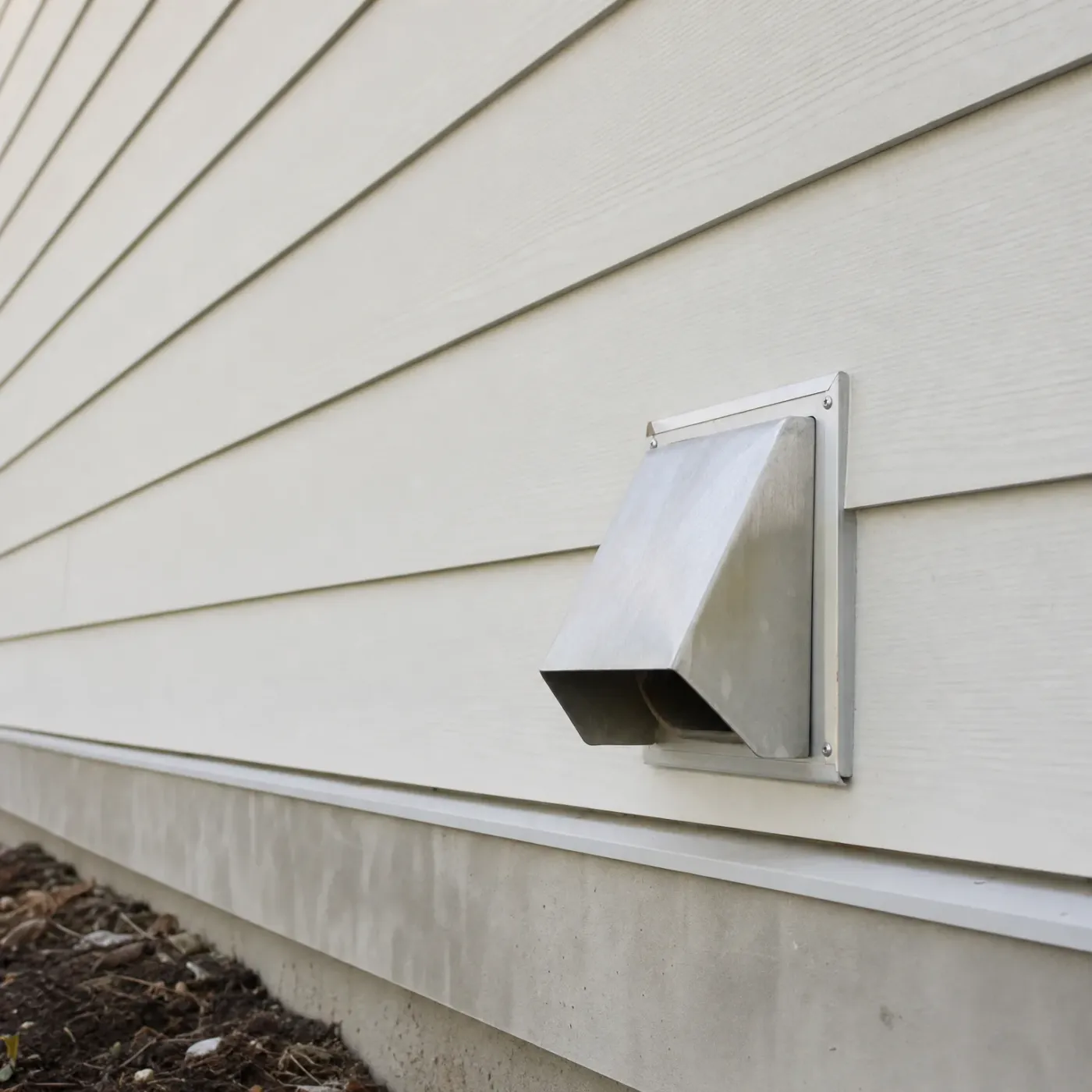
A metal hooded dryer vent cover mounted on beige horizontal lap siding above a textured concrete foundation wall.
Four screws, clean lines, and the hood swings open freely every time the dryer kicks on.
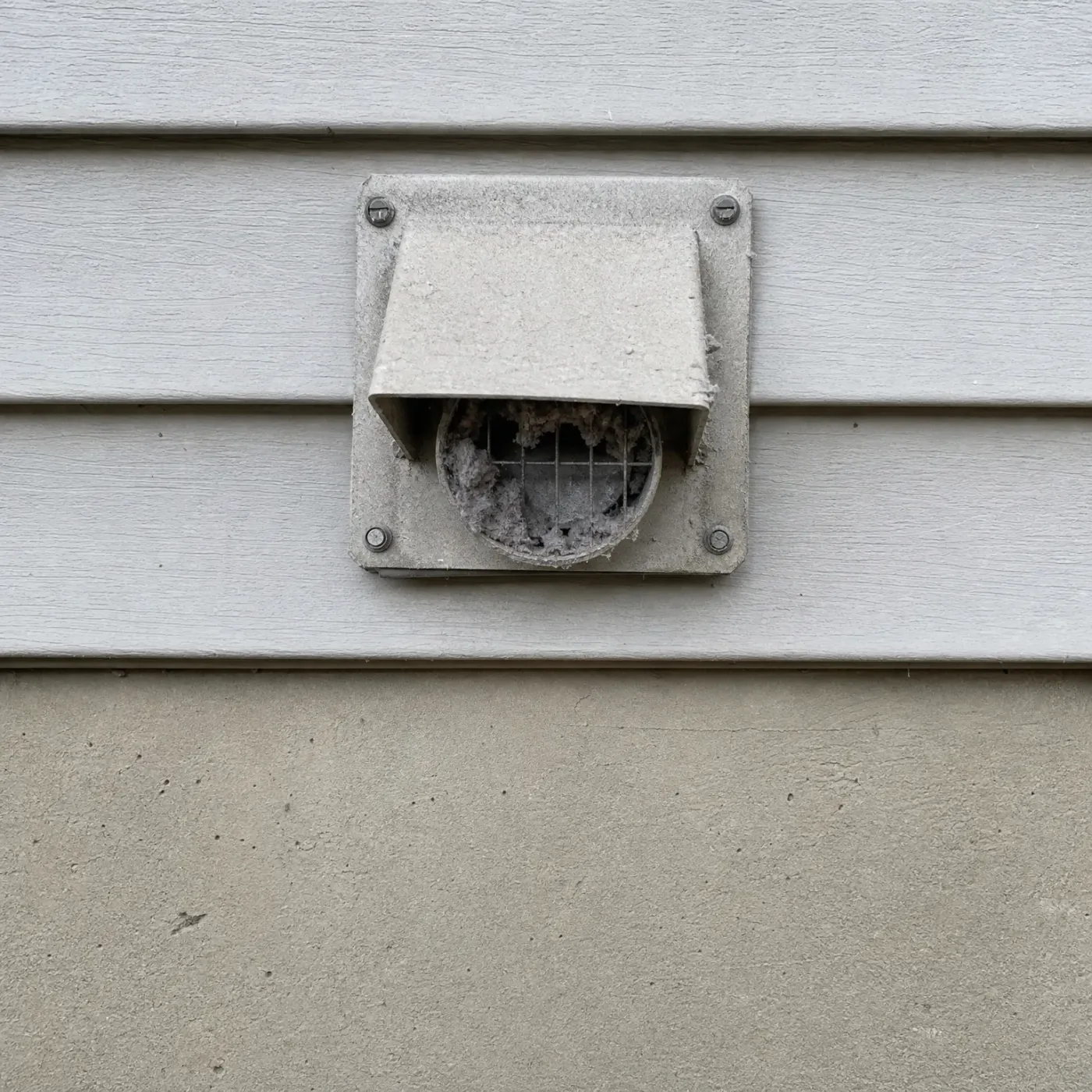
A metal dryer vent hood screwed to light gray lap siding, with lint clogging the round opening and a lower concrete wall below.
Lint has packed the screen solid, so the air your dryer pushes out has nowhere left to go.
A smiling man with curly graying hair and a dark knit sweater sits at a candlelit dinner table with a glass of red wine, a water glass and a bowl of salad in the foreground, in a dimly lit room with a lamp, framed picture and window behind him.
A woman in a cream knit sweater reclines on a gray sofa with her eyes closed and a slight smile, covered by a fleece blanket with a closed book on her lap, a lit table lamp and potted plants behind her.
A metal hooded dryer vent mounted on cream-colored horizontal lap siding above a concrete foundation, with bare soil at the lower left.

No calling every shop in Ward County

The pro who gets in touch is licensed in North Dakota and works in Ward County.

One form replaces the calls you'd make to find a dryer vent pro.

Answer a few questions

It costs nothing to send, and you don't have to hire anyone.

Clean the Vent or Keep Running Extra Cycles

Vent cleaned now

  • A load of towels or jeans finishes in one cycle instead of two or three, so the dryer isn't tying up your evening.
  • The dryer stops overheating, which means less strain on the thermostat and the heating element over time.
  • Someone local who services vents every winter knows where lint actually packs in Ward County homes and checks there first.
  • You make one call instead of hunting down a contractor, calling around, and comparing quotes from several companies.
  • One licensed local contractor handles it, so you aren't fielding calls from multiple companies for the same job.
  • The hood outside starts flapping hard with warm air again every time the dryer runs.

Vent left as is

  • Every load still takes two or three cycles, so laundry keeps eating into the time you'd rather spend on other things.
  • The heating element and thermostat keep working harder than they should, cycle after cycle, with no fix in sight.
  • Minot winters mean more condensation inside a clogged vent, and that moisture has nowhere to go but back into the drum.
  • The warm, damp smell in the laundry room doesn't go away on its own and tends to get more noticeable, not less.
  • You're still the one who'd have to search out a contractor, explain the problem, and sort through quotes when it finally gets bad enough.
  • The longer lint sits packed against the hood louvers, the harder the dryer has to push air that has nowhere to go.
A white hooded dryer vent cover screwed into beige lap siding above a concrete foundation wall, with a bed of rounded gravel at the base.

Hood opens, air moves

The flap swings open as soon as the dryer starts and drops shut when it stops. Nothing blocks it, inside or out. Warm moist air leaves the drum as fast as the dryer makes it, so a load of towels dries in one cycle.

A metal dryer vent hood mounted on light gray horizontal lap siding, with its opening clogged by gray lint, above a concrete foundation wall.

Hood packed with lint

The flap sits open because lint has built up behind it and won't let it close all the way. Air that should be pushing outside is backing up into the hose instead, which is why the same load now takes two or three runs.

A wooden table with a closed laptop, a ceramic mug of dark coffee, and a glass vase of eucalyptus stems beside a window, with a dark green kitchen cabinet, wooden counter, potted herb, cutting boards and bowl blurred in the background.

What this is doing to your house and your evenings

Every extra cycle pushes more warm, damp air into the laundry room instead of outside through the hood. In a Ward County winter, that moisture has nowhere easy to go, and a room that stays damp through January and February is a room where condensation sits on the cold window and the wall behind the dryer stays slightly wet. The dryer itself is working harder than it was built to, running its heating element and thermostat through a second or third cycle just to finish what one cycle used to handle. Gas is cheap here, but a dryer that runs three times as long still runs three times as long, and that's three loads of towels eating into the only hours you have free at night.

You don't need to track down who services dryer vents, call around to see who answers, explain the same two-cycle problem four times, or sit with quotes from different companies trying to guess which one actually knows vents and not just machines. One local contractor who works on vent systems in Ward County homes every winter can look at your hood, your hose, and the run through the wall, and tell you straight whether lint is the problem or something else is. That's one call instead of several, and one person who already knows what a packed vent looks like in a house like yours.

A living room with a cream sofa and knit throw beside a window, with a wooden coffee table in the foreground holding a round woven tray, a small bowl, and a speckled vase of green leafy branches.

2.35 people per household on average

At 2.35 people, most Ward County households are running a load of towels or jeans several times a week, not once in a while. A vent that's half clogged gets found out fast when the dryer is part of your regular routine.

ACS 2020-2024

A white plastic hooded dryer vent with a louvered opening mounted on gray horizontal lap siding, beside a plain light-colored wall surface.

Leaving it alone

The vent stays as it is, and every load keeps taking two or three cycles instead of one. You keep spending evenings waiting on a dryer that should have finished an hour ago. The heating element and thermostat keep working harder than they're built to, cycle after cycle. Lint packed in a wall duct doesn't clear itself out. By next winter the same vent is more restricted than it is today, not less.

A white hooded dryer vent cover screwed to beige horizontal lap siding on an exterior house wall, with a blank wall at left.

Getting it cleaned

A contractor who works on vents all over Ward County clears the hose and the duct back to the hood, pulls the lint out, and checks that the hood's louvers open all the way when the dryer runs. You call once, and it's one crew, not three competing bids to sort through. A load of towels goes back to finishing in a single cycle, and you get your evenings back instead of spending them standing over the dryer waiting for a second run.

A dryer that needs two or three cycles to finish a load almost always has a blocked vent, not a failing machine, and clearing that vent is what brings it back to one cycle. That's the whole answer. Someone who services vents and dryers across Ward County every winter has seen what a few seasons of lint and ice buildup does to a hood and a duct, and knows where to check first. You'll work with one contractor, licensed and local, not a handful of companies calling you back at once to compare notes on a job that doesn't need three opinions. Once the vent is clear, the hood swings open the way it did when the dryer was new, the laundry room stops holding onto that damp heat, and a load of towels dries in the time it's supposed to. You're not replacing a dryer. You're getting the one you have to do what it was built to do.

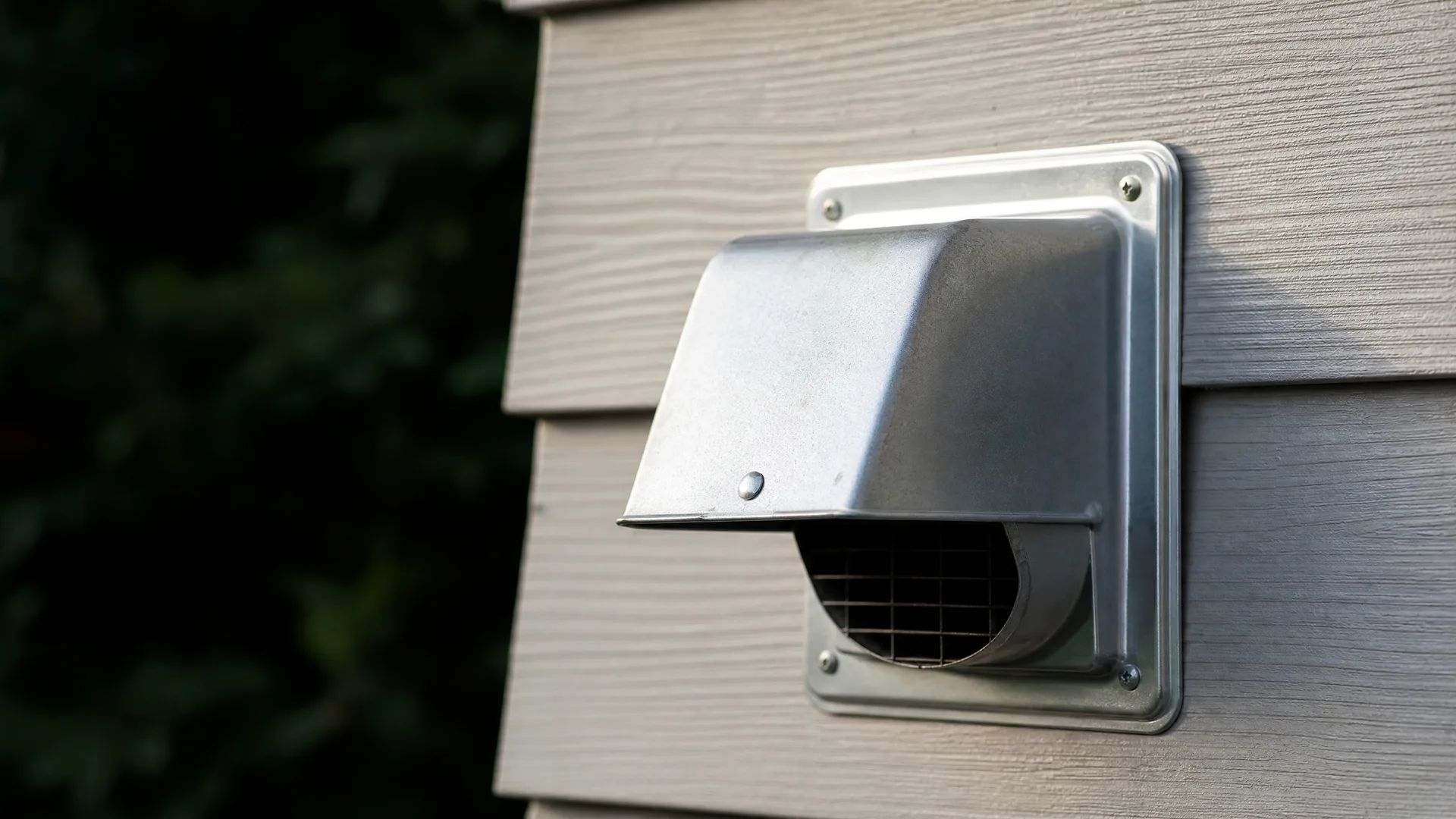
A metal hooded dryer vent with a screened opening screwed to gray lap siding, with dark blurred foliage in the background.

One form, no calling around

Duct and vent cleaningWard County, ND
Step 1 of 3

What kind of equipment?