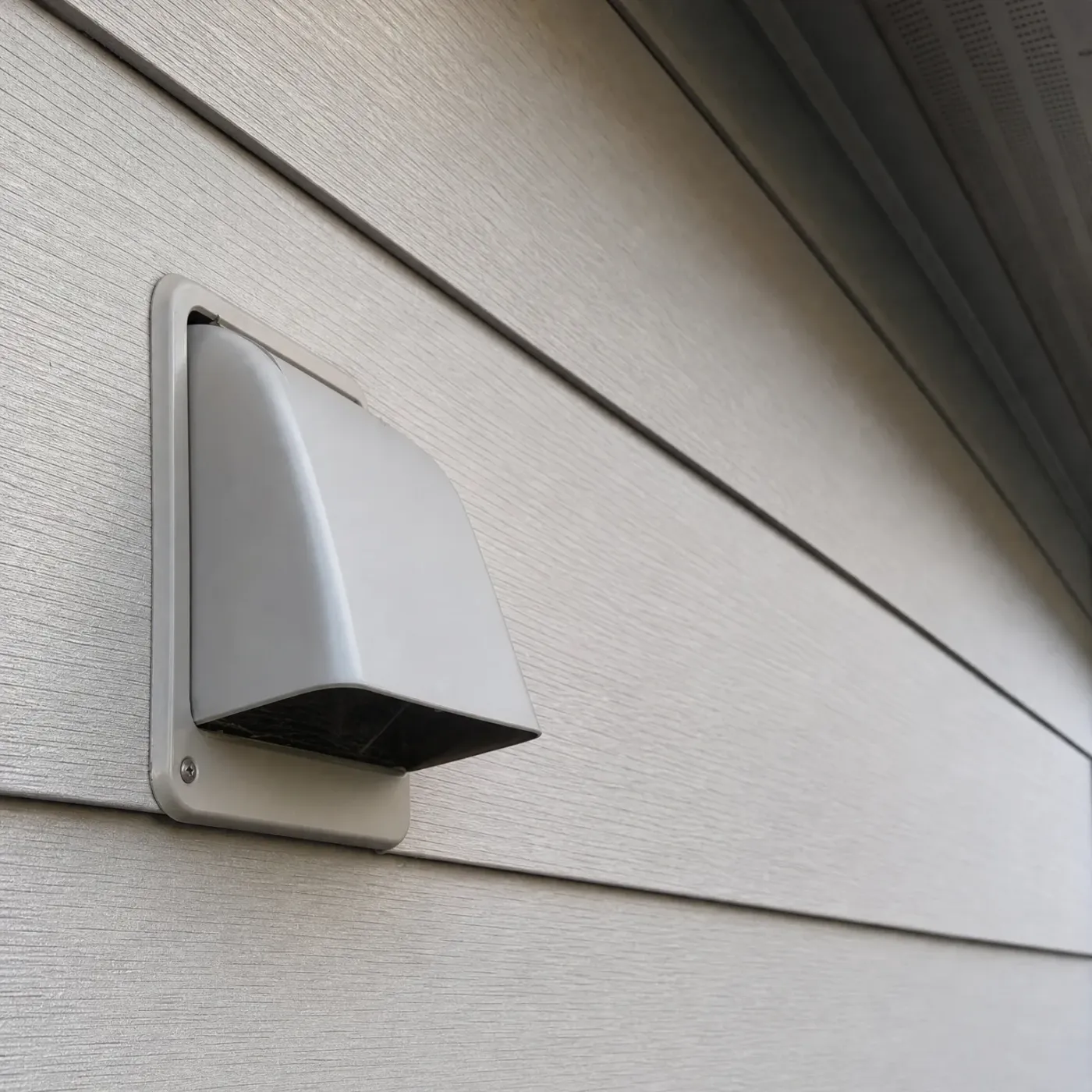
The hood moving the way it should
Air pushes the louvers open when the dryer runs and they fall shut when it stops. Lint doesn't collect at the opening because the duct behind it is clear enough to keep moving what the drum sends out.

You run a load of laundry most evenings, and lately it's taking two cycles to get clothes dry, or the top of the machine feels warm to the touch. You've heard that lint buildup somewhere in the vent can start a fire, and you want to know if that's really true, or if it's one of those warnings that gets repeated without much behind it.
Lint is the fuel. Every load sheds it, and most of it collects along the vent instead of blowing outside. Once enough builds up, hot air from the dryer can't escape, so the heating element keeps running hotter and longer trying to finish the cycle. That heat has nowhere to go but back into a line packed with dry lint, and that's what ignites. Gas dryers add another concern: a blocked vent can push exhaust back into the house instead of out. Cold winters here mean dryers run long, heavy loads most months, and a vent that was clear in October can be packed solid by February. A dryer that runs hot, a load that won't dry in one cycle, or a burning smell near the machine are signs the vent needs attention now, not at the next filter change.

Every load sends lint down the vent, and most of it rides the airflow out past the wall. What doesn't make it collects at the bends, at the hood flap outside, and anywhere the duct runs long. A vent that exits straight through a nearby wall clears itself better than one that runs up through the attic or turns twice to reach the outside. Longer runs and more turns mean more surface for lint to catch on before it gets out.

A dryer pushes hot, damp air out through that duct with every cycle. When lint narrows the path, the air backs up and the heating element keeps running longer to get clothes dry, which is why a load starts taking two cycles instead of one. That trapped heat has nowhere to go but back into the machine and the lint sitting in the duct, and lint ignites easily once it gets hot enough. A cleared duct lets that air out the way it's built to.

A dryer running two cycles instead of one isn't wearing out. It's pushing heat against a vent that can't clear itself fast enough, and that heat has to go somewhere. Some of it sits in the drum, some of it sits in the wall behind the machine. Check the vent hood outside while a load is running. If the flap barely moves or doesn't open all the way, the air you're paying to heat isn't leaving the house. That's the same air carrying lint, and lint doesn't stop building up because you're busy on a weeknight.
Finding someone to look at it shouldn't mean an evening lost to it too. You'd have to find a few local companies, call each one, describe the same warm-to-the-touch symptom three times over, then sit with three quotes trying to guess which contractor actually knows dryer vents and not just furnaces. Request through this page and that part is done. One licensed contractor near you gets the call, someone who clears these vents every year and knows whether your run is the short kind or the long kind that clogs twice as fast.


Air pushes the louvers open when the dryer runs and they fall shut when it stops. Lint doesn't collect at the opening because the duct behind it is clear enough to keep moving what the drum sends out.

This is what a blocked vent looks like from outside. The louvers can't sit flush or open fully because lint has packed the opening, and that gray buildup is a fuel source sitting right where hot air and sparks from lint friction pass through.


A vent cleared now means a dryer that shuts off when the clothes are dry, not when you catch the smell of hot dust and go check on it.
A vent left alone means more loads running longer, more heat built up with nowhere to go, and more nights you're listening for the dryer instead of trusting it.




You could start calling dryer vent cleaners yourself, explaining the two-cycle problem to each one, waiting on quotes, trying to tell which company actually knows North Dakota vents from one that just cleans ducts. That takes evenings you don't have, especially with laundry piling up because the dryer's already slow. Send the request here instead and it goes to one local contractor, someone who works on vents through winters like yours and knows how a long duct run or a stiff hood flap behaves once the cold sets in. You're not fielding calls from five different companies trying to win the job. You get the one who already knows what to check first. The vent isn't going to clear itself, and the longer it runs full, the more heat sits in that duct with nowhere to go. Handing it off now means the next load dries in one cycle instead of two.

It's past eight and you're still in the laundry room. The dryer's been through two cycles already and the towels on top of it are still damp at the fold, warm from sitting against the machine. You press a hand to the lid and it's warmer than it should be. Outside the window it's dark, a plain North Dakota evening, nothing on but the dryer's hum and the furnace cycling somewhere behind the wall. You open the door and feel for the heat coming off the drum, trying to decide if it's worth running a third cycle tonight or leaving the towels where they are until morning.
Clothes that come out hot but not dry. A burnt-dust smell when the dryer's been running a while. The vent hood outside barely moving air, or lint caught in the flap so it won't sit flush. Lint collecting fast around the lint screen housing, more than you remember scraping off before. The dryer itself running hotter than it used to, enough that the top or the cabinet feels warm well into the cycle. Any one of these means air isn't getting out the way it should, and the heat the dryer makes is staying where the lint is. Lint is the fuel. A blocked vent is what lets the heat sit there long enough to matter.
Lint narrows the duct until air barely moves through it.
The dryer runs hotter because that air has nowhere to go.
Heat builds against trapped lint instead of venting outside.
Lint is fine enough to catch and hold a flame.


At 11.82 cents a kilowatt-hour, running a dryer through two cycles instead of one costs you real money each week, not just time. A cleared vent gets clothes dry in one cycle again, so you're paying for the heat that actually dries them instead of the heat a clogged duct is holding back.
EIA-861 2025 statewide residential average
A clogged dryer vent is a fire risk, and a dryer taking two cycles to dry a load is telling you the vent is already narrow enough to matter. That's the whole answer. What you do with it is clear the duct before lint has a chance to catch, not after. Someone who cleans dryer vents in North Dakota every week of the year knows which hood styles ice up and sit shut, which duct runs clog first, and how fast lint packs in once a dryer starts running long. That's a different visit than a general duct cleaning call. You'll get one contractor, local, licensed for this work, not a handful of companies bidding on your address and working your phone for the next hour. The vent gets checked, the lint gets cleared, and the dryer goes back to shutting off when the clothes are actually dry.
Your request goes to one pro, not a list of companies.
No charge to send it. You decide if you hire them.