Mini Split Installation in Bismarck, ND
A new system here will heat from September through May and cool from July through August every year. Tell us about the house, and a licensed contractor who covers Burleigh County will get in touch.
Tell us about the job
It takes about a minute.

What a mini-split in Bismarck has to handle
Homes here need heat from September through May and cooling in July and August. That's 11 months of the year when the system is working, with only a short stretch left alone.
Winter nights average 5°F from December through February. That's the load the heat pump side has to answer, pulling warmth out of air that cold, not the mild-day numbers on a brochure. Summer afternoons average 80°F, a lighter demand on the cooling side by comparison. Any mini-split installed new has to meet the federal minimum of 14.3 SEER2 for cooling and 7.5 HSPF2 for heating, but those ratings are measured well above 5°F. How the unit performs down at that temperature matters more than the rating on the label.
- 9 months
- September through May, your system heats
- 2 months
- July through August, it cools
- 5°F
- the average winter night it heats against
- 80°F
- the average summer afternoon it cools against
NOAA nClimDiv, 1991–2020 normals
North Dakota requires HVAC contractors to hold a state license.
The state license is held by the contractor, not issued per job, so the same license covers this installation and any other HVAC work that contractor takes on. Work under $4,000 falls outside the licensing requirement, but a mini-split installation runs past that threshold, so the contractor doing this job needs to hold the state license.
That license is what stands behind the contractor's name on this job. It does not mean an inspector checks the work once it is done. For that, most cities and counties in North Dakota require a permit for an installation like this, with an inspection when the work is finished, separate from anything the state license covers.
Sources: North Dakota Legislative Branch · North Dakota Secretary of State
- Is a mini split worth it?
- For most homes here, yes, especially if you're heating a room or addition that isn't on the main duct system. Winters average 5°F here and run September through May, so the heat pump needs to work hard almost all year. A cold-climate mini split can still pull heat from outside air at those temperatures, but a contractor should confirm the unit is rated for it before you install one.
- How many rooms can a mini split cover?
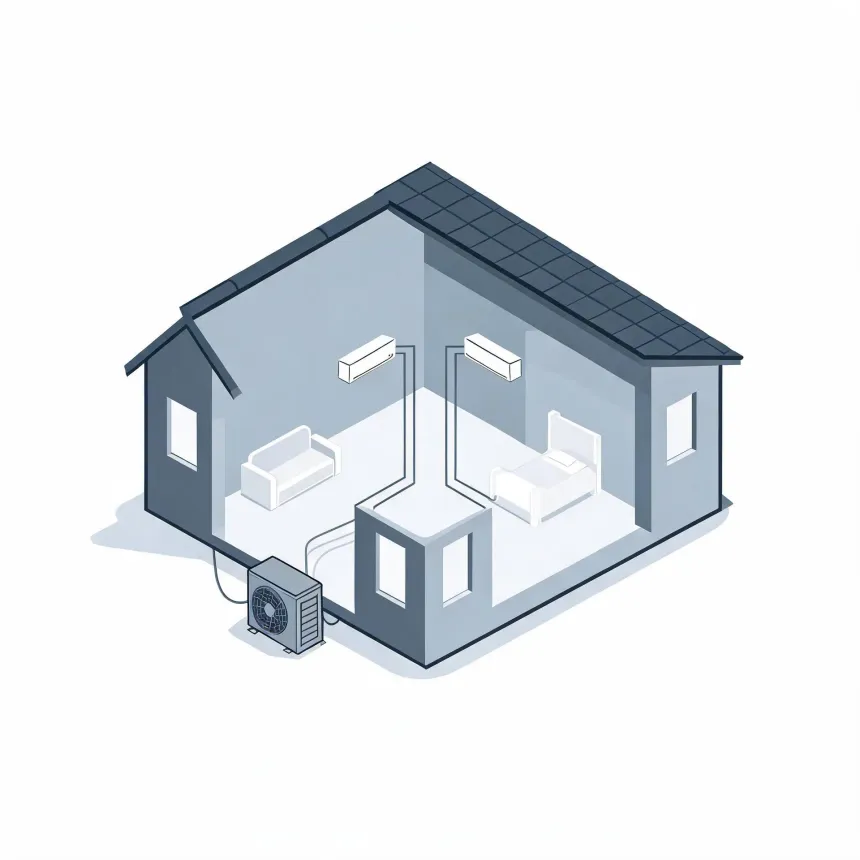
- A single outdoor unit can run one indoor head or several, depending on the system. Each indoor head heats and cools the room it's mounted in, not the rooms around it. If you want coverage across several rooms, a contractor sizes the outdoor unit and the number of heads to the square footage and layout of your house.
- Can a mini split heat a whole house?
- It can, if there's an indoor head in every room that needs heat, sized correctly for that room. A single head only heats the space it's in, so a whole-house install means multiple zones tied to one or more outdoor units. Given how many days a year homes here need heat, September through May, the system has to be sized for the coldest nights, not just an average day. A contractor can work out how many zones your house needs and confirm the equipment is rated for 5°F lows.