Mini Split Installation in Mandan, ND
A new system here will heat from September through May and cool from July through August every year. Tell us about the house, and a licensed contractor who covers Morton County will get in touch.
Tell us about the job
It takes about a minute.
Mandan asks a mini-split to work most of the year
Winter nights here average 6°F from December through February, and homes need heat from September through May. That is nine months of the year the system has to keep up, against cold that goes well below zero. A mini-split installed here needs to be sized for that low end, not just for a mild fall day.
Summer only asks for two months of cooling, with afternoons averaging 81°F, so the bigger job for a new system is the winter side. Any mini-split installed new has to meet the federal minimum for split-system heat pumps, 14.3 SEER2 for cooling and 7.5 HSPF2 for heating, whether it runs on electricity alone or backs up a furnace.
- 9 months
- September through May, your system heats
- 2 months
- July through August, it cools
- 6°F
- the average winter night it heats against
- 81°F
- the average summer afternoon it cools against
NOAA nClimDiv, 1991–2020 normals
North Dakota requires HVAC contractors to hold a state license.
The state license comes from the Secretary of State, and it covers the contractor, not the job itself. That means the person or company doing the work has gone through the state's process to hold that license. Work under $4,000 does not need a licensed contractor at all, so the size of the job decides whether this rule applies.
A mini-split installation involves running refrigerant lines and setting an outdoor unit, work that costs enough in most cases to fall under the license requirement. Beyond the state license, the local building office will typically require a permit for the installation and an inspection once it's finished, checking that the work was done correctly.
Sources: North Dakota Legislative Branch · North Dakota Secretary of State
- Is a mini split worth it?
- For the right room or addition, yes. A mini split heats and cools without ducts, so it works well for a room that runs hot or cold no matter what the rest of the house does, or a space that was never connected to the main system. Winters here average 6°F overnight, so check that the unit you're looking at is rated to perform at that temperature, since not all of them are. A contractor can tell you whether it fits your situation better than a furnace repair or a separate zone on your existing system.
- How many rooms can a mini split cover?
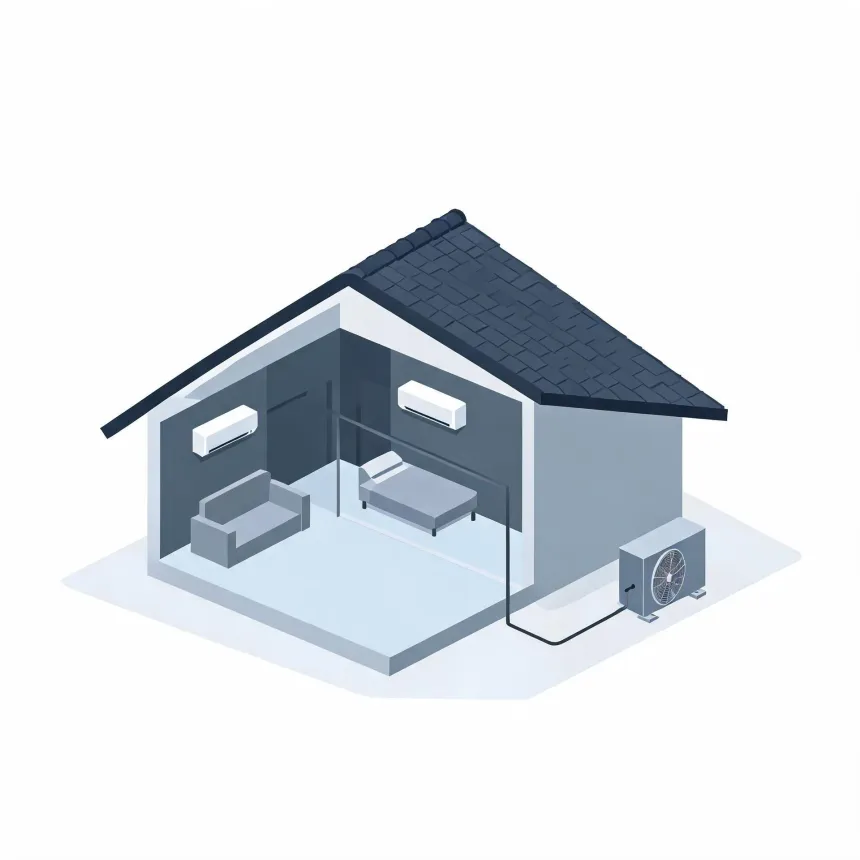
- A single indoor unit is sized for one room or an open area, and a multi-zone system runs several indoor units off one outdoor condenser to cover more of the house. Each zone gets its own thermostat, so you can heat or cool only the rooms in use. The right number of zones depends on the square footage and layout of your house, which is something a contractor works out by measuring the space, not by a rule of thumb.
- Can a mini split heat a whole house?
- It can, but it takes enough indoor units placed to cover every room in the house. Homes here need heat from September through May, nine months of the year, with winter nights averaging 6°F, so a whole-house setup has to be sized to keep up on the coldest nights, not just mild ones. A contractor can look at your house and tell you whether a full mini split system or a smaller number of zones alongside your existing heat makes more sense.