Mini Split Installation in Beulah, ND
A new system here will heat from September through May and cool from July through August every year. Tell us about the house, and a licensed contractor who covers Mercer County will get in touch.
Tell us about the job
It takes about a minute.
Beulah asks a mini-split to work almost all year
Winter nights here average 6°F from December through February, and that is the real test for a mini-split. A cold-climate model has to keep pulling heat out of air that cold, night after night, across a heating season that runs September through May, nine months in all.
Summer only asks for two months of cooling, with afternoons around 80°F, so the unit you install will spend most of its life heating, not cooling. Any mini-split installed new has to meet 14.3 SEER2 for cooling and 7.5 HSPF2 for heating, but in a climate like this, how it performs on the coldest nights matters more than the label alone.
- 9 months
- September through May, your system heats
- 2 months
- July through August, it cools
- 6°F
- the average winter night it heats against
- 80°F
- the average summer afternoon it cools against
NOAA nClimDiv, 1991–2020 normals
North Dakota requires HVAC contractors to hold a state license.
The Secretary of State licenses HVAC contractors in North Dakota, and that license covers the contractor, not each individual job. It means the state has tested and recorded the business before they ever pick up a wrench. Work under $4,000 falls outside that requirement, but a mini-split installation typically runs above that threshold, so this job calls for a licensed contractor.
The license says who is allowed to do the work. Whether that work was done correctly is a separate question, and in most cities and counties that answer comes from a permit and inspection through the local building office. A mini-split installation usually needs both, with the inspection happening once the unit is in and running. That inspection is where the refrigerant lines and electrical connections get checked, not the license itself.
Sources: North Dakota Legislative Branch · North Dakota Secretary of State
- Is a mini split worth it?
- For most homes it comes down to what you're heating with now and what rooms need help. A mini split gives you heat and cooling from one system, and it works well as the main source in a room or addition that doesn't get comfortable air otherwise. Here, with heat needed September through May and winter nights averaging 6°F, a mini split has to be sized and rated for real cold, not just mild days. Look for a unit rated to keep producing heat well below freezing, since some models drop off hard once it's near zero outside.
- How many rooms can a mini split cover?
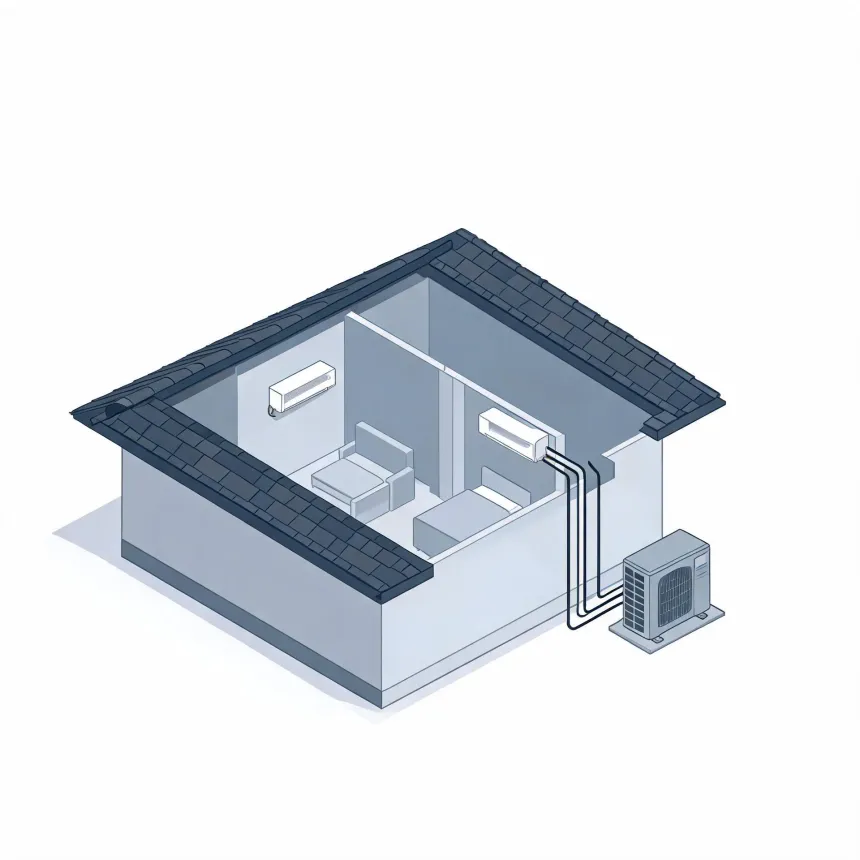
- A single indoor head is built for one room or one open area. If you need more rooms covered, a multi-zone system connects several indoor heads to one outdoor unit, and each head runs on its own thermostat. How many zones one outdoor unit can run depends on the model, so a contractor will match the equipment to the rooms you want covered.
- Can a mini split heat a whole house?
- It can, if it's sized and laid out for the whole house rather than just one or two rooms. That usually means a multi-zone system with an indoor head in each main area, chosen for the size and layout of the home. With winter lows here averaging 6°F, the equipment also has to be rated to keep up at that temperature, not just handle a mild fall day. A contractor can size a system against the actual square footage and room layout of the house.