Ducts running clean
Air moves through the metal without carrying anything with it. No haze around the supply vents, no smell when the furnace cycles on. You run a cloth along the inside edge of a vent cover and it comes back close to clean.
A pro who works on ducts
Dust on the vent covers is easy to spot. What's harder to judge is whether it means the ducts themselves need attention, or what's actually moving through them with gas heat running most of the winter. This page covers what to look for and when it's worth getting a local contractor who works on North Dakota duct systems to take a look.
Connect with a proA few signs point to it straight. Dust that resettles on furniture within a day or two of cleaning, even though the vents look fine. A musty smell when the furnace kicks on, especially after the system has sat idle for a while. Visible dust blowing out of the registers when air first starts moving. Rooms that seem dustier than they should be given how often you clean. With gas heat running from October into spring, air is pushed through the same ducts for months without a break, and whatever has settled in there, dust, pet hair, debris from construction, gets carried into the rooms you live in every time the furnace cycles. It's not about the ducts looking dirty. It's about what keeps circulating once the system runs most of the day. If you're seeing dust return fast, smelling something musty on startup, or noticing more buildup than the house itself would explain, that's worth having someone look at before another winter of heavy furnace use sets in.




Why does dust come out of the vents when the furnace turns on?
Air only moves through your ducts when the furnace is running or the blower is on. The rest of the time, dust inside the ductwork just sits there, settling on the bottom of the trunk lines and in the elbows. The moment the burner fires and the blower starts pushing air again, whatever has collected gets stirred up and carried out through the vent covers. With gas heat running most days from fall through spring in North Dakota, that blower is cycling on and off constantly, which means any dust sitting in the ducts gets moved around a lot more often than it would in a system that barely runs.
Air moves through the metal without carrying anything with it. No haze around the supply vents, no smell when the furnace cycles on. You run a cloth along the inside edge of a vent cover and it comes back close to clean.

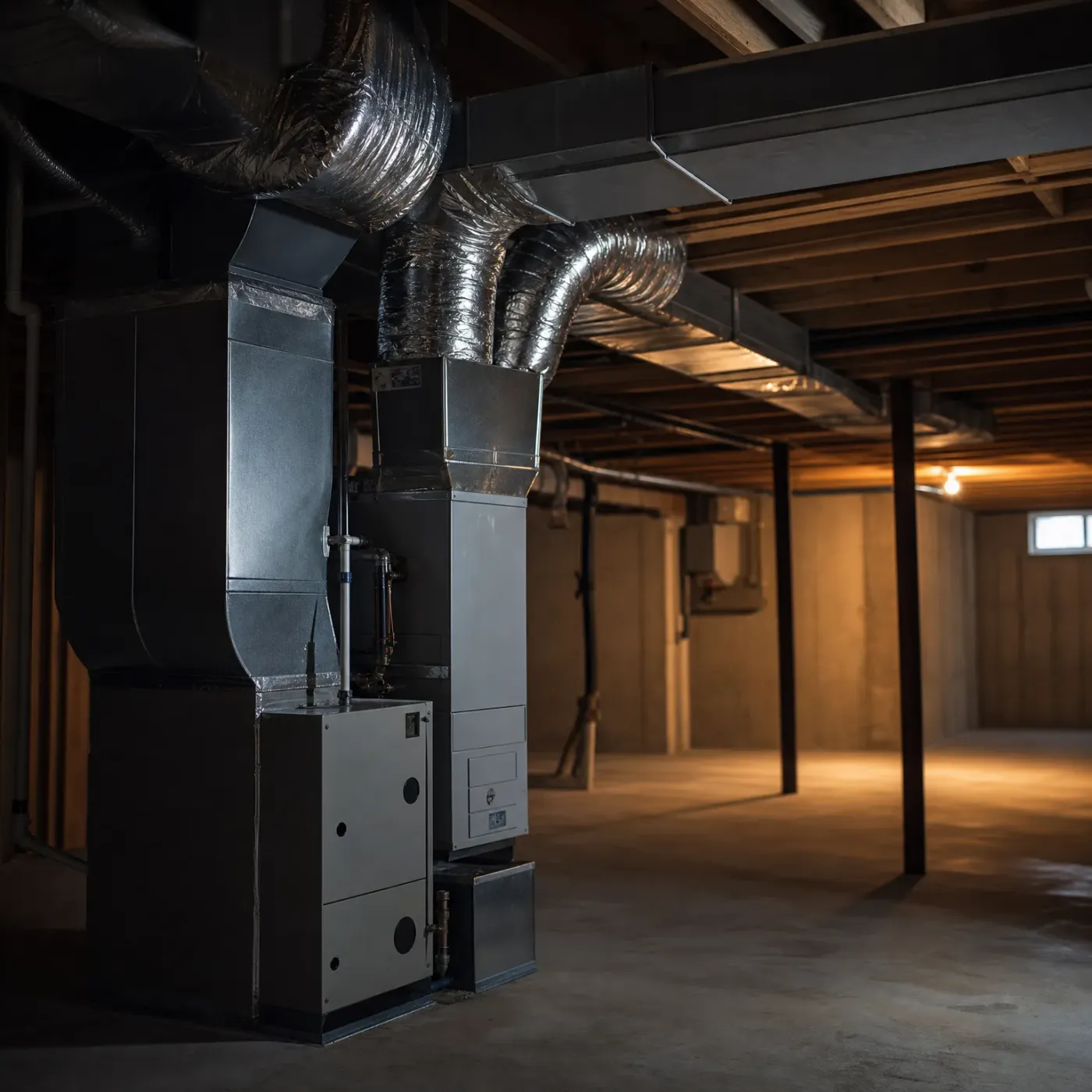
The spiral duct and the metal runs overhead are doing their job moving air, but dust has built up inside and rides along with it. Vent covers go gray again days after you wipe them. Rooms at the end of a run get less air than the ones close to the furnace.


A technician checks each duct run with a camera first.
A vacuum line connects to the ductwork to create suction.
An agitation tool knocks loose dust stuck to duct walls.
Loosened debris pulls through the line and out of the house.
Cheap power at 11.82 cents a kilowatt-hour means running the furnace blower longer isn't what hits your bill. If dust keeps circulating, your furnace just works harder pushing it through the house, which wears on the system itself more than your wallet.
EIA-861 2025 statewide residential average

Late April, early afternoon, and the sun is coming in flat across the living room. You notice it on the ceiling vent first, a gray felt of dust along the grille slats, thicker than you remembered. The furnace has mostly gone quiet for the season, just a short cycle now and then on the cooler nights. You run a finger along the top of the TV console below the vent and it comes away dusty too, the same day you wiped it down. You stand there a second, looking up at the grille, thinking about how many nights of gas heat pushed through there since November, and what else came out with the warm air.
A furnace running most of a North Dakota winter moves a lot of air through those ducts, and whatever is loose in there gets carried into every room you heat. You can run a cloth along a vent cover yourself and see what's settling. Deciding whether that calls for a full cleaning, or just a filter change, is harder to judge from the living room. A contractor who works on ductwork in this area through the winter has seen what gas heat does to a system that hasn't been cleaned in years, and what it looks like when it's fine as is. Getting matched means one local contractor looking at your situation, not a handful of companies working off the same description. If the dust keeps coming back after you've wiped it away, that's worth having someone look at directly rather than guessing from the vent cover.
The signs are straightforward enough to check yourself. Dust back on the furniture a day or two after you clean. A musty smell when the furnace starts up after sitting idle. Visible dust at the vents, or a gray film along the grille when you run a cloth over it. None of that takes special equipment, just a few minutes of paying attention while the furnace is running.
What's harder to judge from the living room is what's actually built up inside the duct runs themselves, and that's where a local contractor earns the call. Someone who services furnaces and ductwork across this area all winter has seen which runs in these houses tend to collect dust and which don't, and why. That's not guesswork from a vent cover. It's knowing the equipment because you work on it every season.
When you request a match, you're connected with one contractor, not a handful competing for the job. That means one technician coming out, looking at your actual ducts with a camera, and telling you straight whether cleaning is worth doing now or can wait. No sorting through competing quotes from companies that don't know your house.
The dust you saw on the vent cover was the easy part to notice. Whether it means something for the whole system is the part worth having someone local actually look at.

The right pro for this job