



Signs your ducts need cleaning in Grand Forks, ND

A galvanized steel round duct with a 90-degree elbow and a white louvered vent cover on one end, shown against a plain gray background.
Start one form

What are the signs my ducts need cleaning?

You've noticed dust settling back on furniture a day after cleaning, or a musty smell when the furnace kicks on, and you're wondering if the ducts behind your walls are the reason. With winters here running the furnace hard for months, anything sitting in that ductwork gets pushed through the house a lot before spring.

Dust buildup, a musty smell from the vents, and weaker airflow are the main signs

If dust keeps settling back on surfaces soon after you wipe them down, or you catch a musty smell when air first comes through the vents, that points to buildup inside the ducts. Weaker airflow from a vent that used to blow strong is another sign, since debris inside the duct narrows the path air has to travel. Visible dust or debris around the vent covers themselves is worth checking too. Grand Forks winters keep the furnace running for months at a time, so whatever is sitting in the ducts gets circulated through the house on a regular basis rather than sitting still. That steady use is also why buildup tends to show itself here as airflow or smell rather than staying hidden.

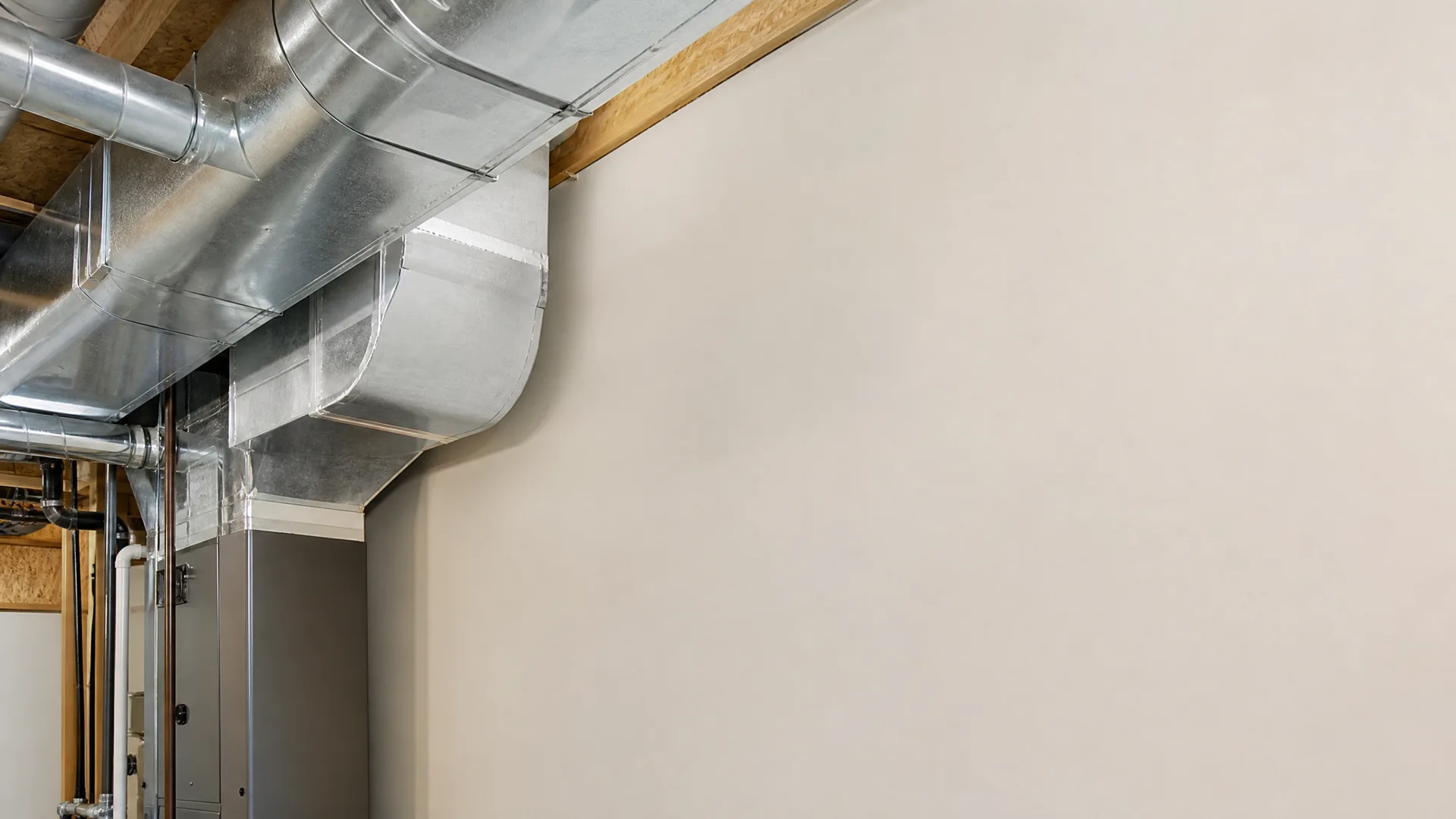
Galvanized sheet-metal ductwork and pipes running along an unfinished basement ceiling beside a plain beige wall, with a gray equipment cabinet below.

What the furnace cycles through

Your furnace runs long hours from October through April, and every one of those cycles pulls return air through the duct system before it ever reaches the burner. If there's dust, pet hair, or debris sitting in that ductwork, the furnace is pulling it through the house and blowing it back out through every vent on every cycle. The longer a North Dakota winter runs, the more passes that air makes.

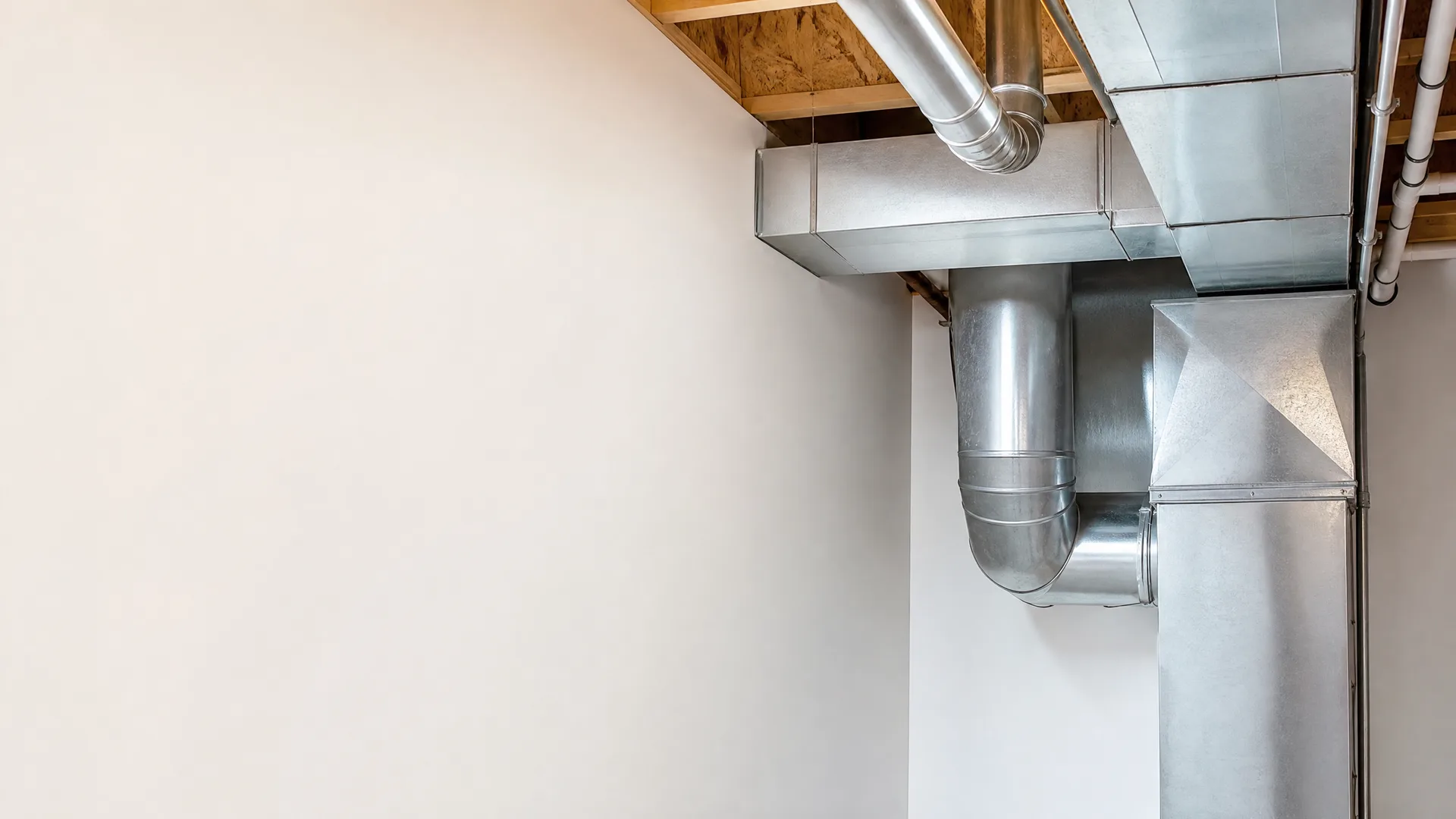
Galvanized sheet metal rectangular and round HVAC ducts running along a ceiling and down a white interior wall, with exposed wood joists and subfloor above.

Check the supply vents by hand

Pull a supply vent cover off in a room you use often and look at the inside of the duct a few inches back. A thin gray film is normal. A thick, matted layer of dust and hair, or grit you can feel on your fingers, means it's been building for a while and the blower is moving it every time it runs. This is the most direct check you can do yourself, no tools needed.

Why is the dust in your house so bad this winter

You run a rag over the end tables and by the next evening there's a film back on them. Some mornings the furnace kicks on and you catch a stale, musty smell for the first minute or two before it fades. Maybe someone in the house has been sneezing more since the furnace started running steady, or a vent cover looks gray and matted when you pop it off to check. One room might feel stuffier than the rest no matter how high you turn up the heat. None of this is dangerous on its own, but a duct system loaded with dust and debris makes your furnace work harder to push air through it, and that shows up on your gas bill before anyone notices anything else.

A smiling woman in a cream knit sweater sits at a marble counter with a glass of red wine, with a dining table, pendant lights, and French doors in the dim background.
A smiling woman with long dark hair in a cream sweater sits in a dimly lit open-plan home interior, with a glass of red wine in the foreground and a dining table, fireplace and shelving behind her.
A woman with long dark hair in a black turtleneck laughs while seated at a light stone counter with a glass of red wine, in a dimly lit interior with a potted plant, framed pictures and a hanging lamp behind her.
A woman in a dark sweater laughs while seated at a white marble counter with a glass of red wine, in a dimly lit open-plan interior with a pendant lamp and dining table behind her.

Why does duct buildup hit Grand Forks homes so hard?

  • Half the homes here were built by 1982

    Half the homes in Grand Forks County were built in 1982 or earlier, per the Census Bureau. Ductwork that old has had decades to collect dust and pet hair, and most of it was never cleaned.

  • Heat runs September through May

    Furnace runs here stretch from September through May. That's nine months of air moving through the same ducts, every cycle pushing whatever's built up back into the rooms you live in.

  • Cooling runs July through August

    Cooling only runs July and August here. For most of the year the furnace is the one doing the work, so whatever sits in the ducts gets stirred up on the heating side, not the cooling side.

ACS 2020-2024 · NOAA nClimDiv 1991-2020

Dusty ducts you can check yourself

Pull a vent cover off a return and look inside with a flashlight. If you see a gray layer coating the metal, or pet hair caught in the seams, that's buildup the furnace has been pulling through all winter. Check a supply vent too, the ones blowing air into each room. A light coat of dust just inside the opening is normal. A thick layer, or dust that's built up enough to fall when you tap the register, means the ductwork has been collecting it for a while. You can also hold a tissue near a supply vent when the furnace is running. If it picks up grit instead of just moving with the airflow, that's debris coming through the system.

When cleaning won't fix it

Not every dust problem in a Grand Forks house is a duct problem. If the dust is worst in one room only, check that room's filter and vent first, since a closed damper or a torn filter can cause the same symptom without any buildup in the ducts. If you've already replaced the furnace filter recently and the dust came back within days, that points more strongly at the ductwork itself rather than what's passing through the filter now. And if the musty smell only shows up during humid stretches in July or August, that may be condensation in the ductwork rather than debris, which a cleaning won't resolve on its own.

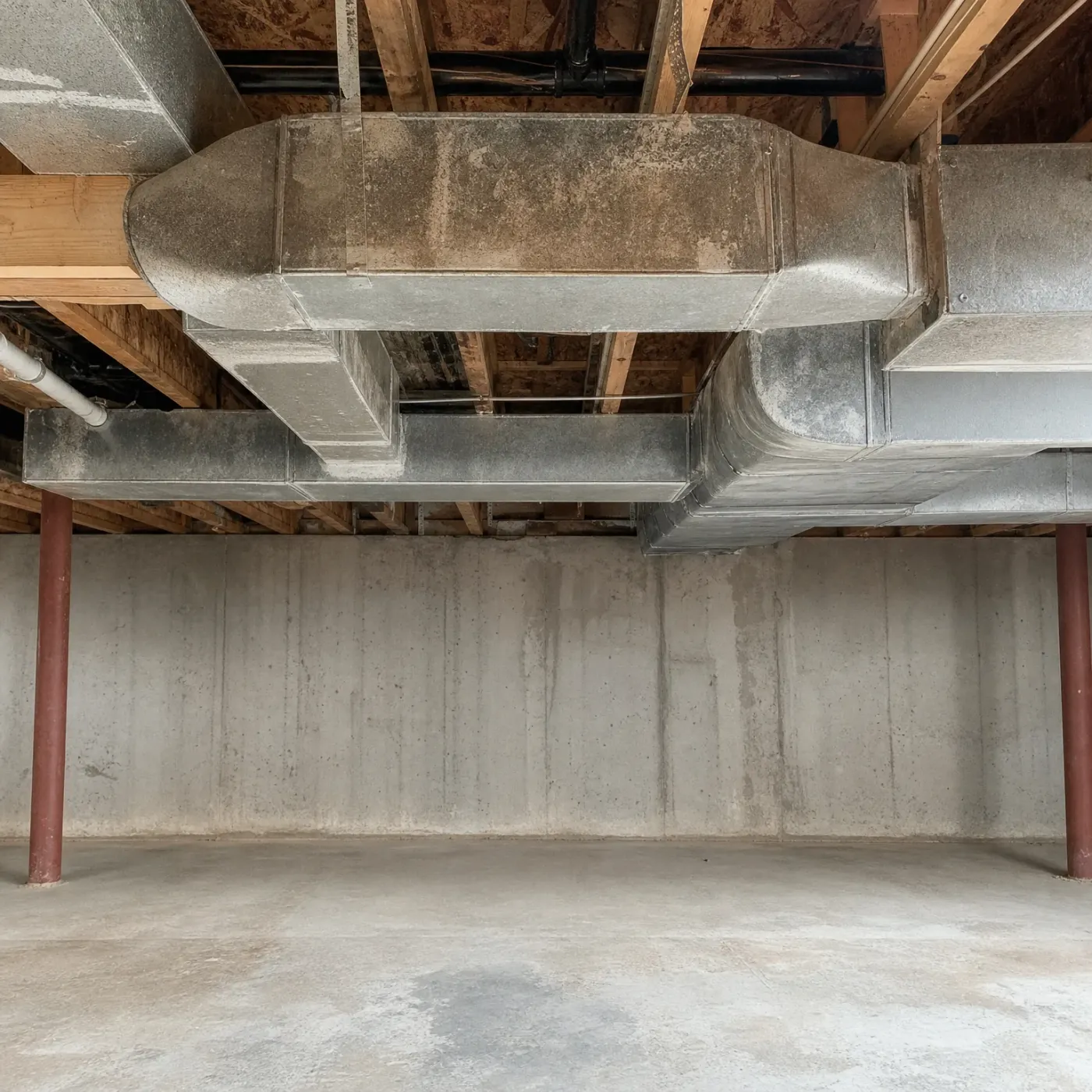
Unfinished basement with bare concrete walls and floor, galvanized sheet-metal HVAC ducts running beneath wooden floor joists, and two red steel support columns.
Before you get your ductwork cleaning
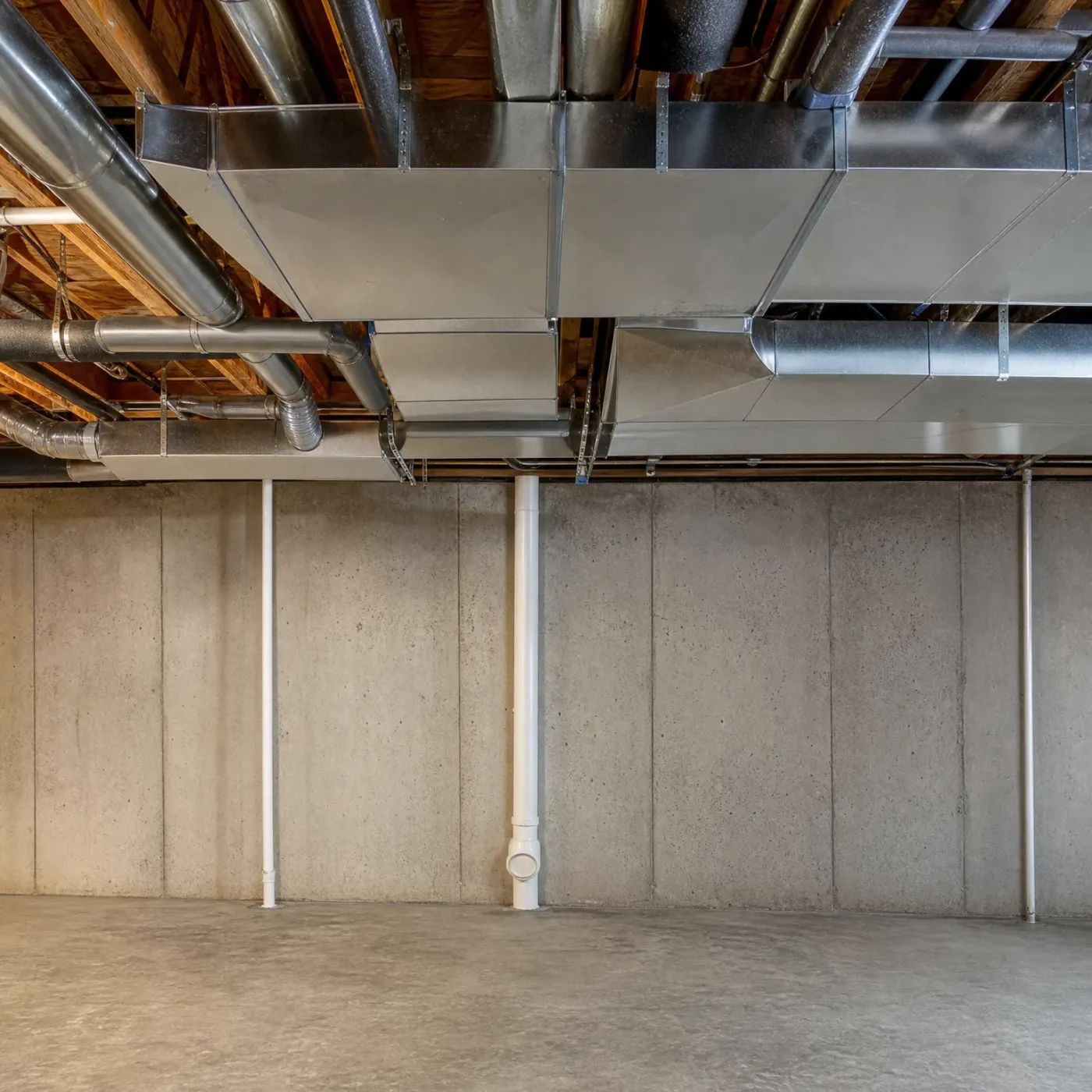
Unfinished basement with poured concrete walls, a bare concrete floor, white PVC pipes running down the wall, and exposed sheet-metal HVAC ductwork beneath wood floor joists.
After you get your ductwork cleaning
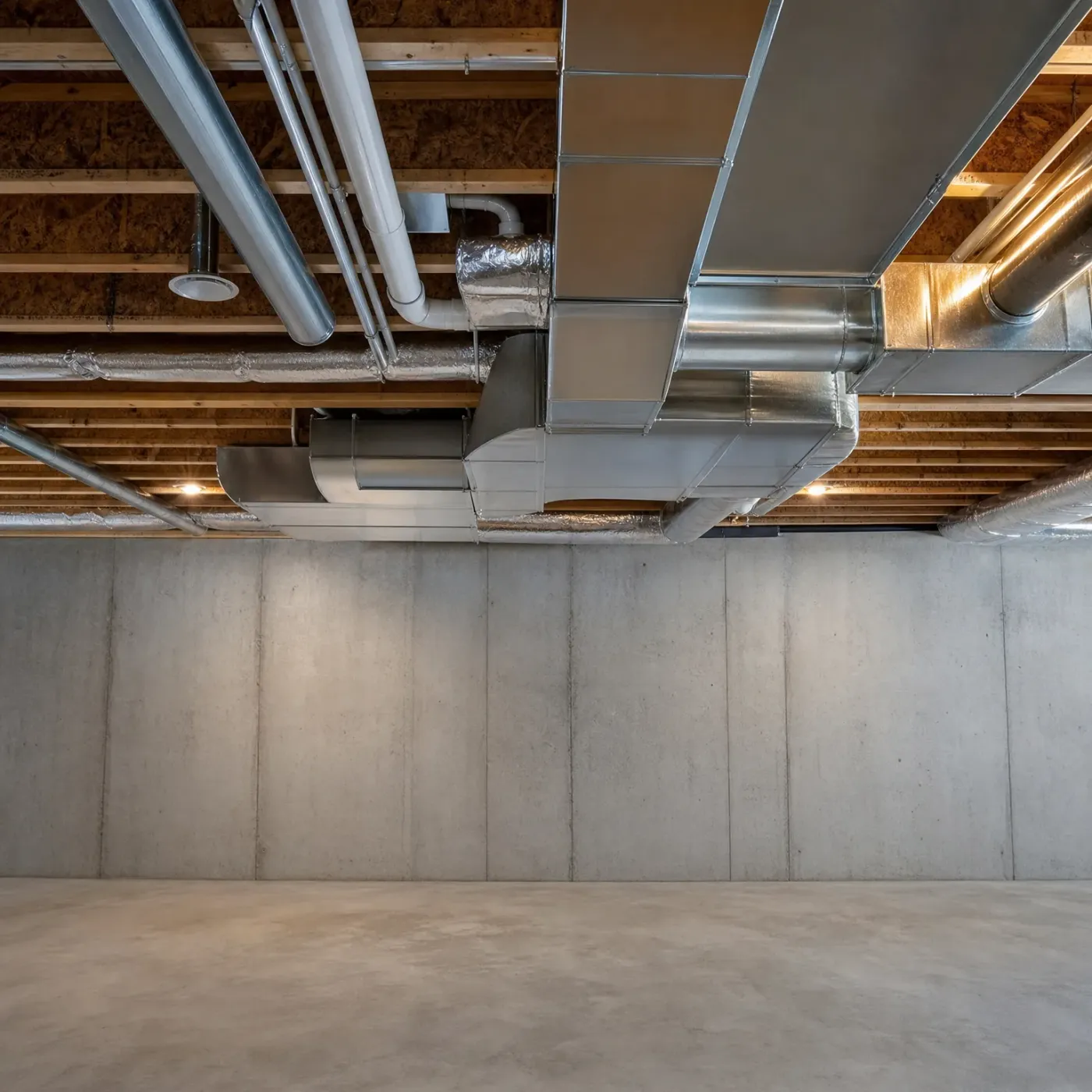
Empty basement room with bare concrete walls and floor, and an exposed wood-joist ceiling carrying sheet-metal ductwork, insulated pipes, and recessed lights.

Ductwork moving clean air

These trunks and branches sit tight against the joists, no gaps at the seams, no dust ring around the register boots. Air moves through metal, not past a buildup lining it. This is what a system looks like after the furnace has been cycling all winter without a problem underneath.

Basement ceiling with galvanized sheet metal ductwork, round pipes and rectangular plenums running between wooden joists above a bare concrete foundation wall and floor.

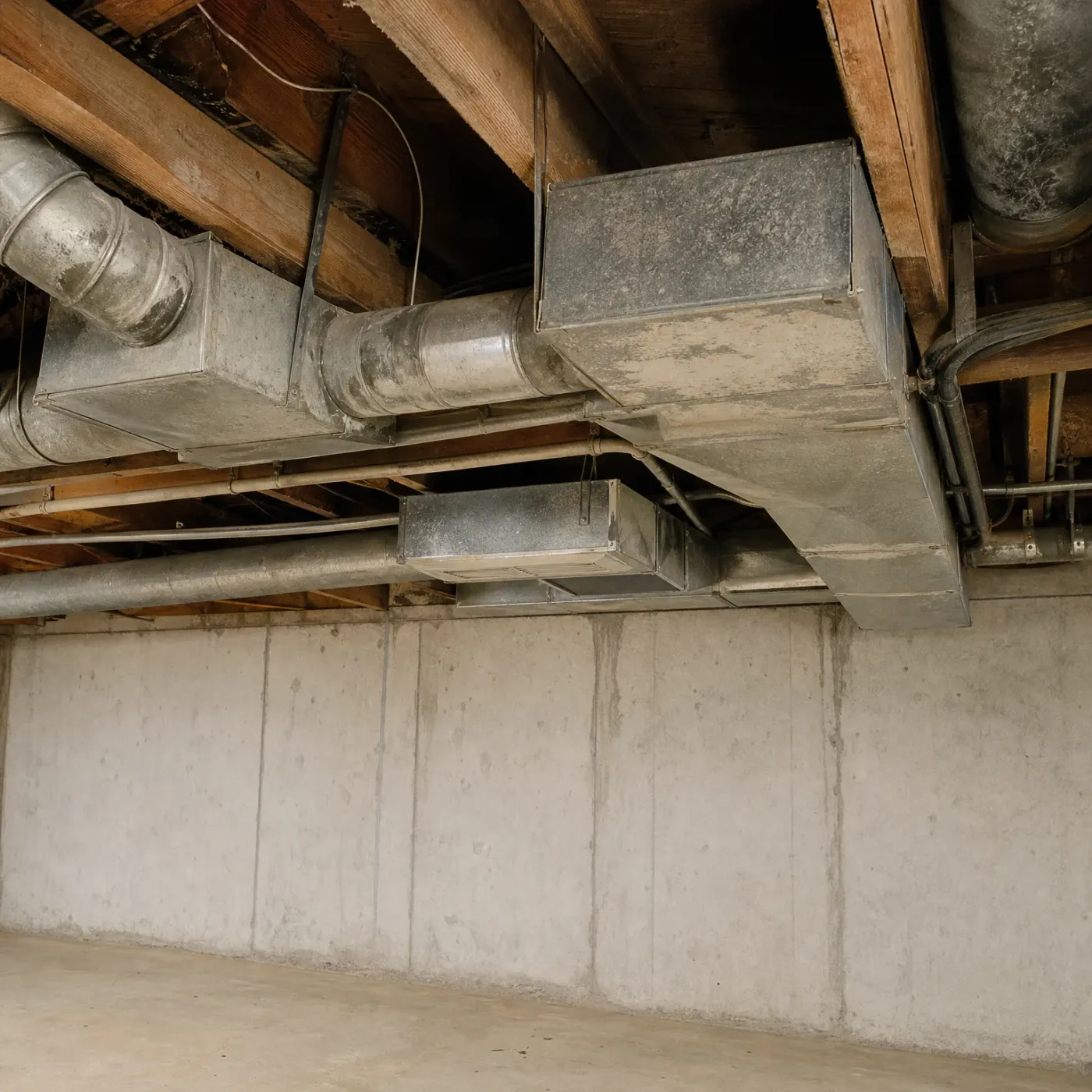
Ductwork carrying a problem

Look at the seams and the transition fittings here. That's where dust and pet hair collect first, and once it builds up the furnace pushes a little of it into every room on every cycle. A system like this is why the dusting never seems to hold.

A smiling man with dark wavy hair and a short beard, wearing a navy crewneck sweater, sits at a candlelit dinner table with a bowl of food, wine glass and a lamp and framed art behind him.
A woman with wavy brown hair sits on a beige couch with her eyes closed and a slight smile, a knit blanket over her lap and a closed dark-covered book resting on it, with a lit lamp and plant in the dim background.

No calling every shop in Grand Forks County

Finding someone to clean ductwork usually means a search, a handful of calls, explaining the gray film on the registers and that musty smell each time, then waiting on quotes to compare. That work is what this request skips. It goes to one contractor, local to Grand Forks County, who works on duct systems through winters like yours every year and knows what decades-old ductwork in homes here tends to be carrying by this point in the season. You've already checked your own vents and heard the furnace run that musty cycle. The next step is getting someone out who can look at the whole run, not just what a flashlight shows at the register. Submitting the request here is what moves you from wondering about the dust on your end tables to having someone qualified look at the ducts behind your walls.

How a duct cleaning actually works

  • A duct cleaning works the return side first, pulling debris back toward a collection point instead of pushing it further into the supply runs.
  • A vacuum unit connects to the trunk line and holds the whole system under negative pressure while each branch is agitated loose.
  • Technicians run a brush or air whip through the metal to knock buildup off the walls of the duct, not just the open center.
  • Every register boot and the plenum above the furnace gets opened and cleared, since that's where dust tends to collect in piles.
  • The furnace blower compartment and coil get cleaned separately, since the main vacuum draw doesn't reach past the supply plenum.
  • A camera check afterward through the access points confirms the metal is bare, not just the visible run near the register.

A cleaning doesn't just run a hose down the nearest vent. It starts on the return side, because that's where air enters the system and where the heaviest buildup usually sits. A vacuum unit hooks to the trunk line and pulls the whole system into negative pressure, so loosened material travels toward the collection point instead of getting pushed deeper into the branches that feed your rooms. From there, a brush or an air whip goes through each run to knock material off the duct walls themselves, since a vacuum alone only pulls what's already loose in the open center. Register boots get opened too. That's the bend where the duct meets the floor or wall, and it's a spot where dust and pet hair tend to pile up rather than blow through. The plenum above the furnace, the sheet metal box the blower pushes air into, gets cleared the same way. The blower compartment and the coil are handled separately, since the main vacuum draw stops at the supply plenum and doesn't reach the furnace's own components. Once the physical work is done, a camera run through the access points shows whether the metal is actually bare or just cleared along the parts you can see from the register. That last step is what separates a full cleaning from one that only reaches the first few feet of duct.

Power here costs 12.73 cents per kilowatt-hour

At 12.73 cents a kilowatt-hour, running the furnace blower harder than it needs to doesn't hit your bill the way it might elsewhere. The cost that adds up instead is the furnace working through a winter's worth of buildup lining the ducts, cycle after cycle, from October to April.

EIA-861 2025

The signs come down to this: dust that resettles within a day, a musty smell in the first minute the furnace runs, and a gray coating when you look inside a vent with a flashlight. Any one of those means the ductwork is holding onto what the furnace keeps pulling through it. A contractor who works on furnaces and duct systems around Grand Forks every winter has seen what forty-year-old ductwork collects, and knows the difference between buildup that needs a real cleaning and a filter that just needs changing. Your request goes to one local, licensed contractor, not a handful of companies competing for the job, so you're not fielding five calls to explain the same gray film and the same smell. You checked the signs. Now someone who deals with this equipment all season takes it from here.

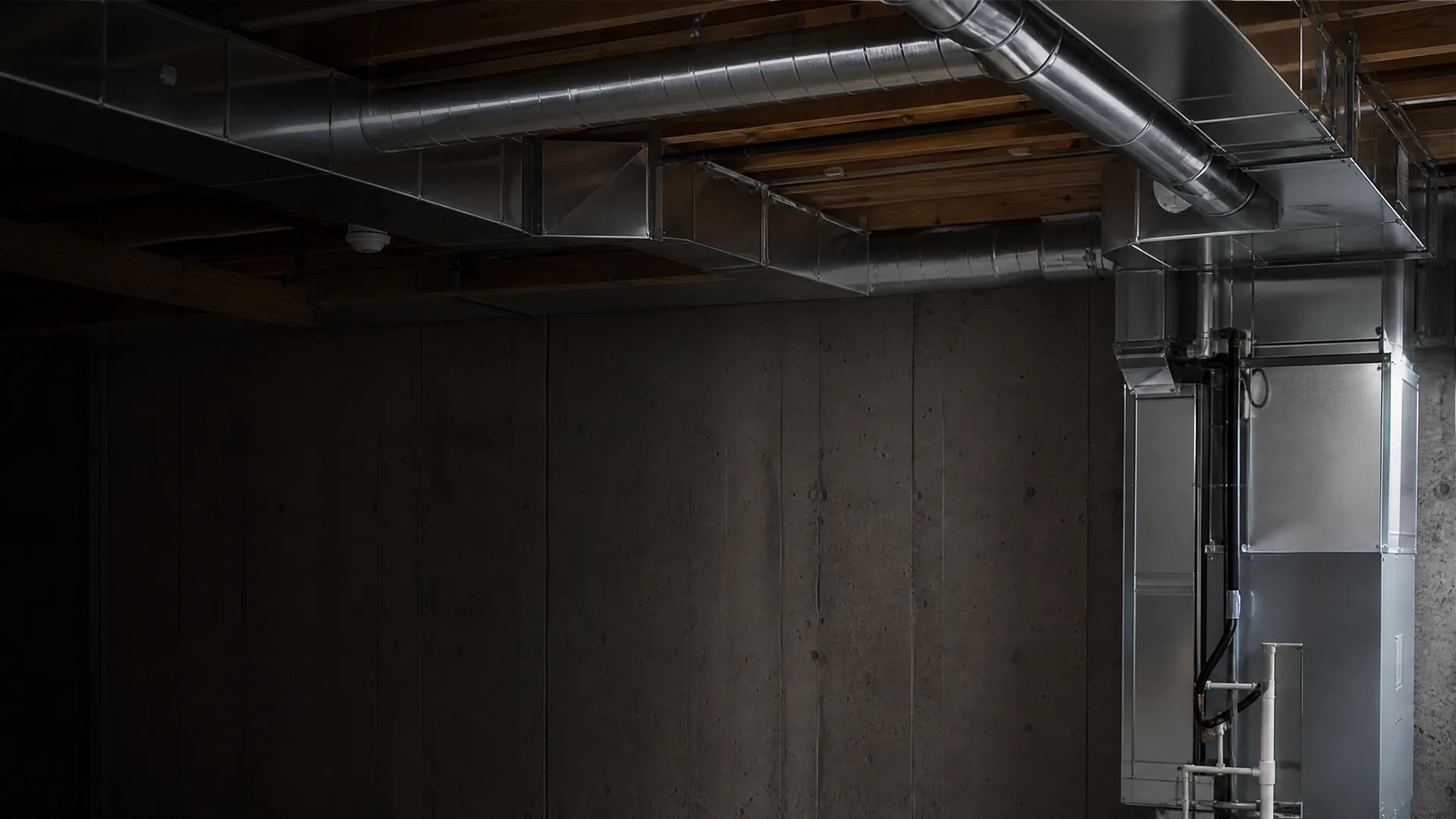
Unfinished basement with poured concrete walls, exposed wooden joists, and galvanized sheet-metal supply ducts and round pipes running along the ceiling to a furnace unit at right.

Skip the search

A licensed pro who works in Grand Forks County gets your request.

Duct and vent cleaningDucts or ventsGrand Forks County, ND
Step 1 of 2

What ZIP code is the job in?