



Birds nesting in a dryer vent in Bismarck, ND

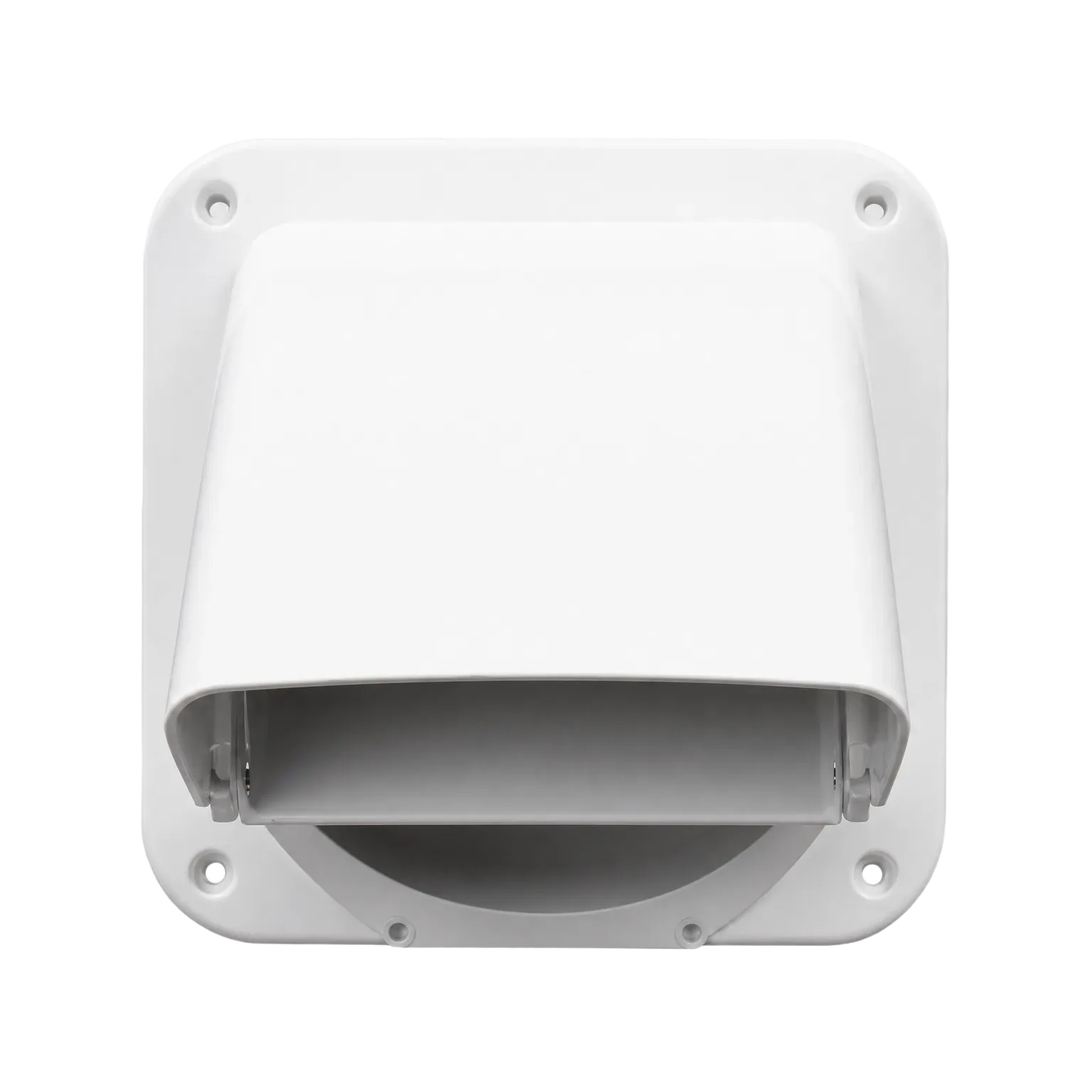
A white plastic wall vent with a square mounting flange, hooded cover, and round duct collar visible beneath, shown against a plain light gray background.
Hand off the search

A bird in your dryer vent usually means a sparrow or starling built a nest in the duct between the dryer and the outside hood. It happens most in spring, when birds look for a tight, sheltered spot to raise a brood, and a vent hood with a weak or broken flap gives them an easy way in. Once the nest is built, the vent is partly or fully blocked. You'll notice the dryer taking longer to dry a load, the outside the house running hot to the touch, or a burning smell when it runs. Nesting material is dry and sits right in the path of hot exhaust air, which is a real fire risk, not just a nuisance. It needs to come out of the duct, not just off the vent hood, since birds often push material several feet in. This isn't something to leave until next season.

A smiling man in a green long-sleeve shirt stands at a dark kitchen counter with a ceramic mug, with wood cabinets, white tile backsplash, and a window and dining table behind him.
A smiling man with wavy dark hair and a beard, wearing a navy sweater, sits at a kitchen counter with a gray mug, with a dining table, potted plant and windows behind him.
A bearded man in a dark green sweater smiles and looks to his right while seated at a white kitchen counter with a gray mug, with windows and greenery behind him.
A smiling man in a dark navy sweater stands in a home interior beside a counter with a white mug, with a kitchen, hallway and potted plant in the background.

The flap on your outside vent hood is meant to stay shut except when the dryer is running. If it's bent, stuck, or missing, there's an open door right into the duct. A sparrow or starling doesn't need long to take advantage of it. They bring in twigs and grass a few beakfuls at a time, and within days there's enough material to block the airflow. The dryer keeps running, but the hot, wet air has nowhere to go. Lint catches on the nest as it passes through, and dryer heat bakes it all together, so what's clogging the duct is usually lint packed tight around twigs, not just the nest itself. Because the hood is only where the duct meets the wall, a bird can carry material several feet back before anything shows from outside. From then on, your dryer works harder to push air through a duct that's half blocked, and that means longer run times and more heat and moisture trapped inside the vent with nowhere to go.

How a Nest Blocks Your Vent

  • The vent hood's flap should close on its own when the dryer is off, and a bent or missing flap is what lets a bird get inside in the first place.
  • Sparrows and starlings carry in twigs and grass a few beakfuls at a time, so a nest can block the duct within days once they start.
  • A nest partway down the duct does not stop the dryer from running, but it stops the hot, damp air from getting out.
  • Lint sticks to nesting material and dryer heat dries it further, so the blockage left behind is often lint packed around twigs, not twigs alone.
  • The hood sits at the outside wall, but a bird can push a nest several feet back into the duct before you ever see anything from outside.
  • A dryer forced to push air against a blocked vent runs longer per load and pushes more heat and moisture back into the duct itself.
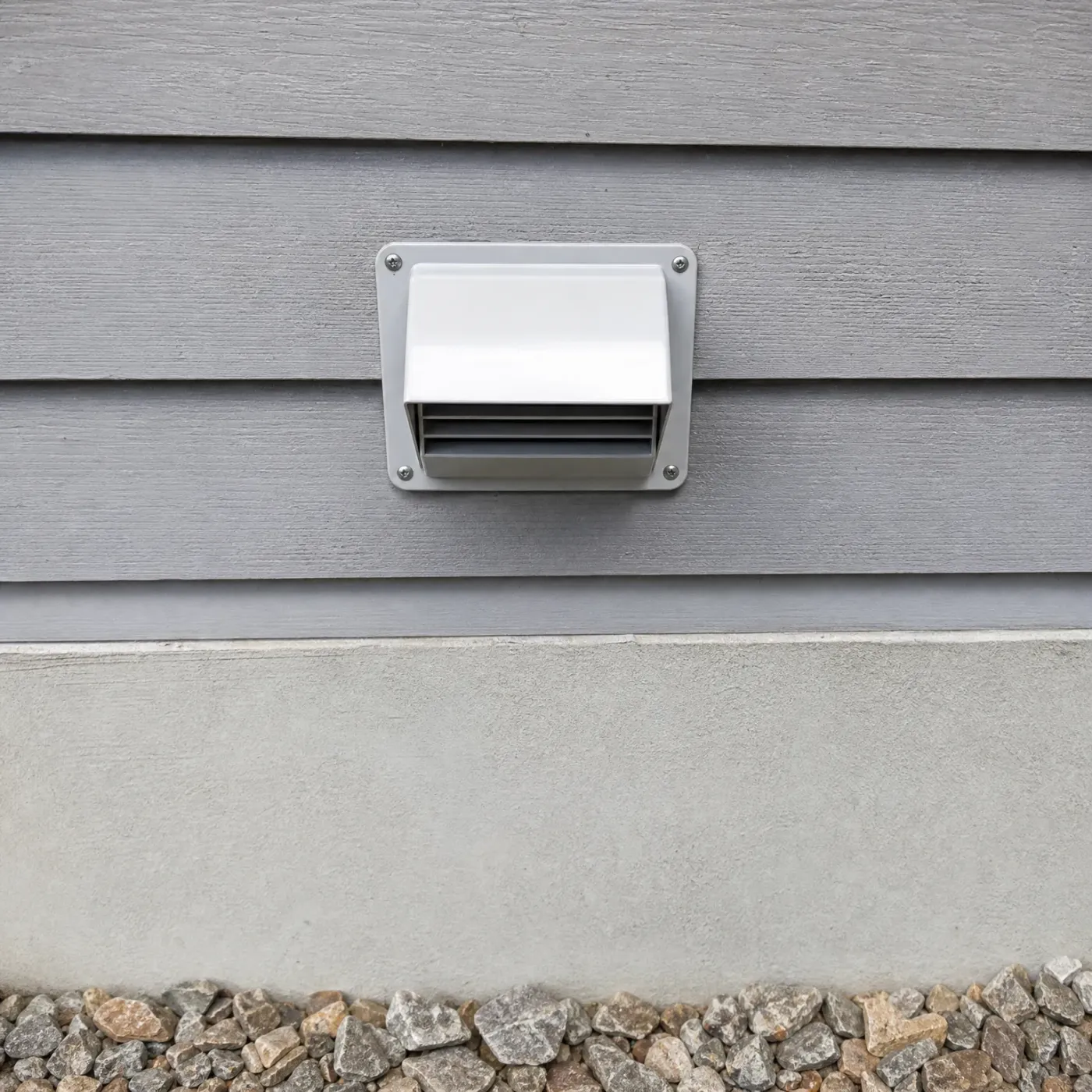
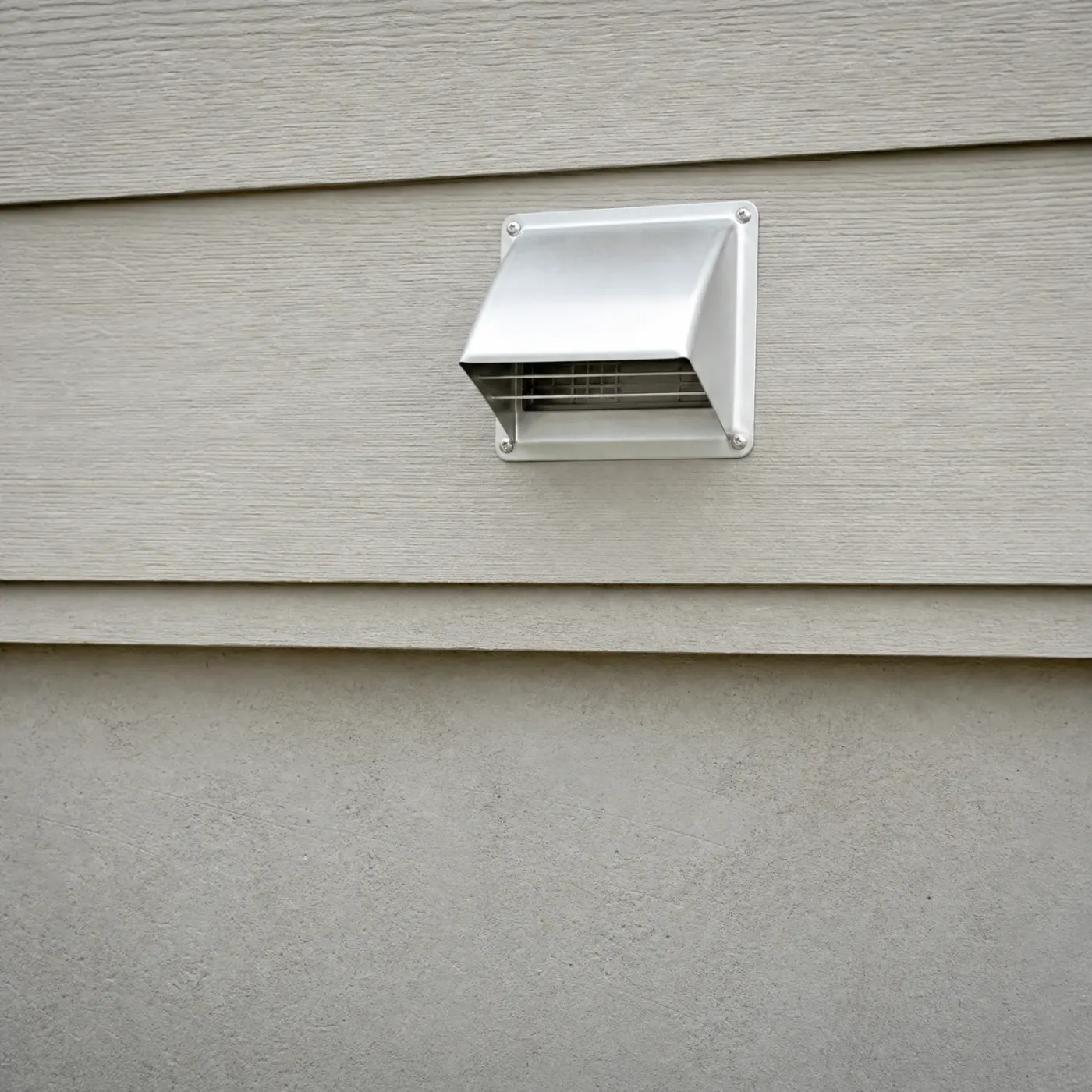
A white hooded louvered vent screwed to gray horizontal lap siding above a concrete foundation wall, with gravel along the ground.
The flap closes, the louvers sit clean, and air passes through without a fight.
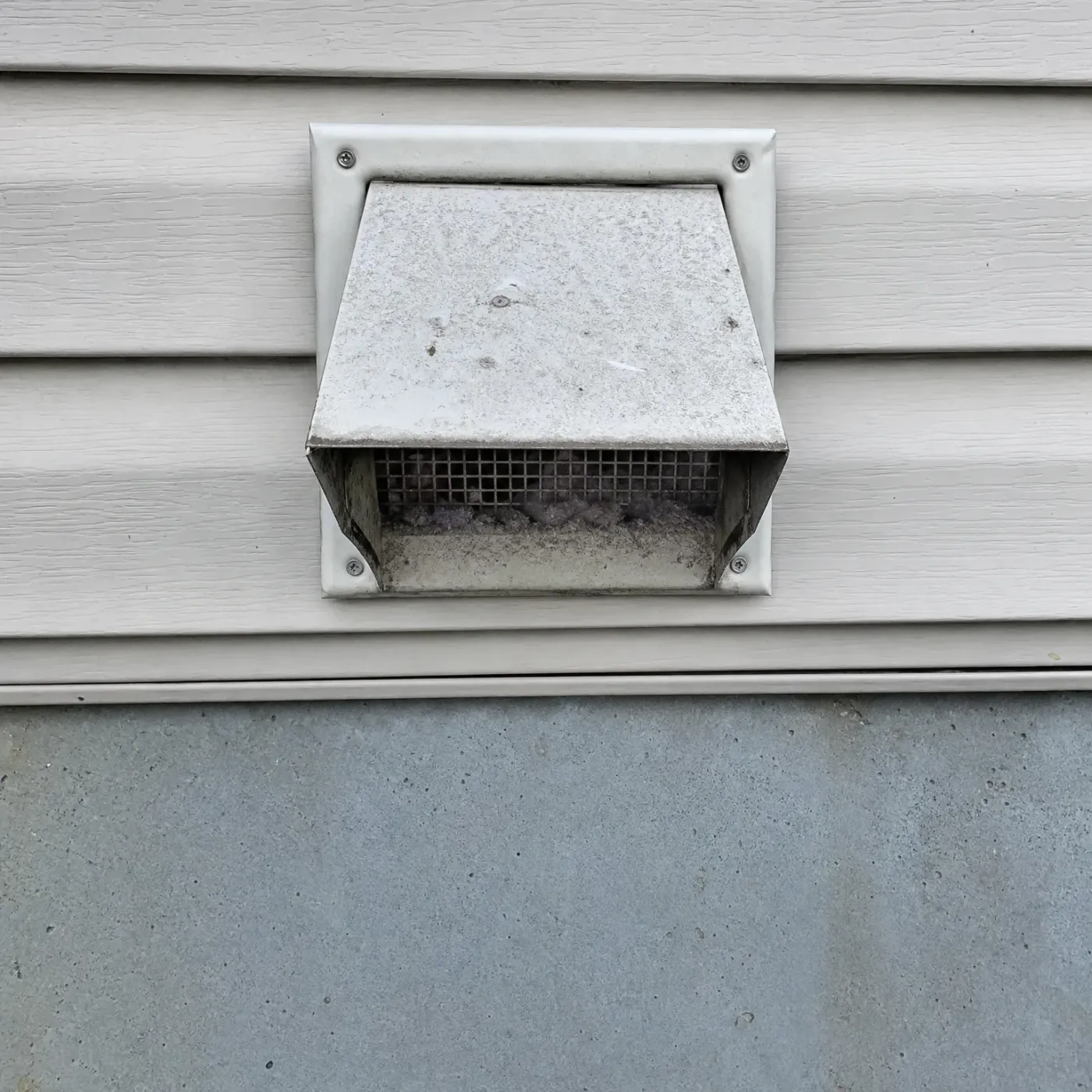
A metal dryer vent hood with a screened opening clogged by gray lint, mounted on light gray horizontal vinyl siding above a concrete foundation wall.
Lint has caked over the hood and mesh, the kind of buildup a nest needs to take hold.

What a Nest Costs Your House

  • A dryer that used to dry a load in one cycle and now takes two is pushing air against something blocking the duct.
  • Nesting material is bone dry and sits right where the hot air from your dryer passes, which is a fire risk.
  • A clogged vent keeps the moisture from your laundry inside the duct instead of outside, and that moisture has to go somewhere.
  • You may notice a burning or musty smell near the dryer, or hear scratching from the wall where the vent runs.
  • Lint and feathers packed into the hood can freeze solid once Bismarck winter sets in, sealing the vent shut until spring.
  • Left alone, a nest only grows as more material gets carried in, so the blockage gets worse, not better, on its own.

A nest in the vent does not stay the same size. Every trip a bird makes adds more material, and the duct that was half blocked last week is fuller this week. You feel it first in the dryer itself: a load that dried in one cycle now needs two, because the air has nowhere to go. That trapped air carries the moisture out of your wet clothes, and if it cannot leave through the vent, it sits in the duct instead. Over time that moisture meets dry twigs and grass sitting inches from the heat, which is not a combination you want behind a wall. You might pick up a burning smell, or something closer to musty, standing near the dryer. Some homeowners hear scratching or rustling from inside the wall where the duct runs, which is the clearest sign something other than lint is in there. Bismarck winter adds its own problem. Once temperatures drop, any lint and feathers packed into the hood can freeze solid, and a vent that was merely slow in October can be sealed shut by December. None of this clears up by waiting. A bird does not remove what it brought in, so the blockage you have today is the smallest it will be.

What does your Bismarck-area home mean for vent risk?

  • 2.34 people per household on average

    With 2.34 people in the average Burleigh County household, most homes run a dryer daily, so a nest blocking the duct gets found fast once loads start taking longer.

  • Half the homes here were built by 1988

    Half the homes in Burleigh County were built in 1988 or earlier, and an older hood and duct run are more likely to have a flap that's bent, stuck, or gone.

  • Power here costs 11.91 cents per kilowatt-hour

    At 11.91 cents per kilowatt-hour, power here is cheap enough that a clogged vent won't spike your bill the way it would elsewhere, but the fire risk stays the same.

ACS 2020-2024 · EIA-861 2025

A white hooded dryer vent with a screened opening mounted on beige horizontal lap siding.

A vent that's clear

The hood sits flush against the siding, screws tight, screen behind the louver intact. Air pushes the flap open when the dryer runs and it falls shut when the cycle ends. Nothing nests here because there's nothing to grab onto and no gap to crawl through.
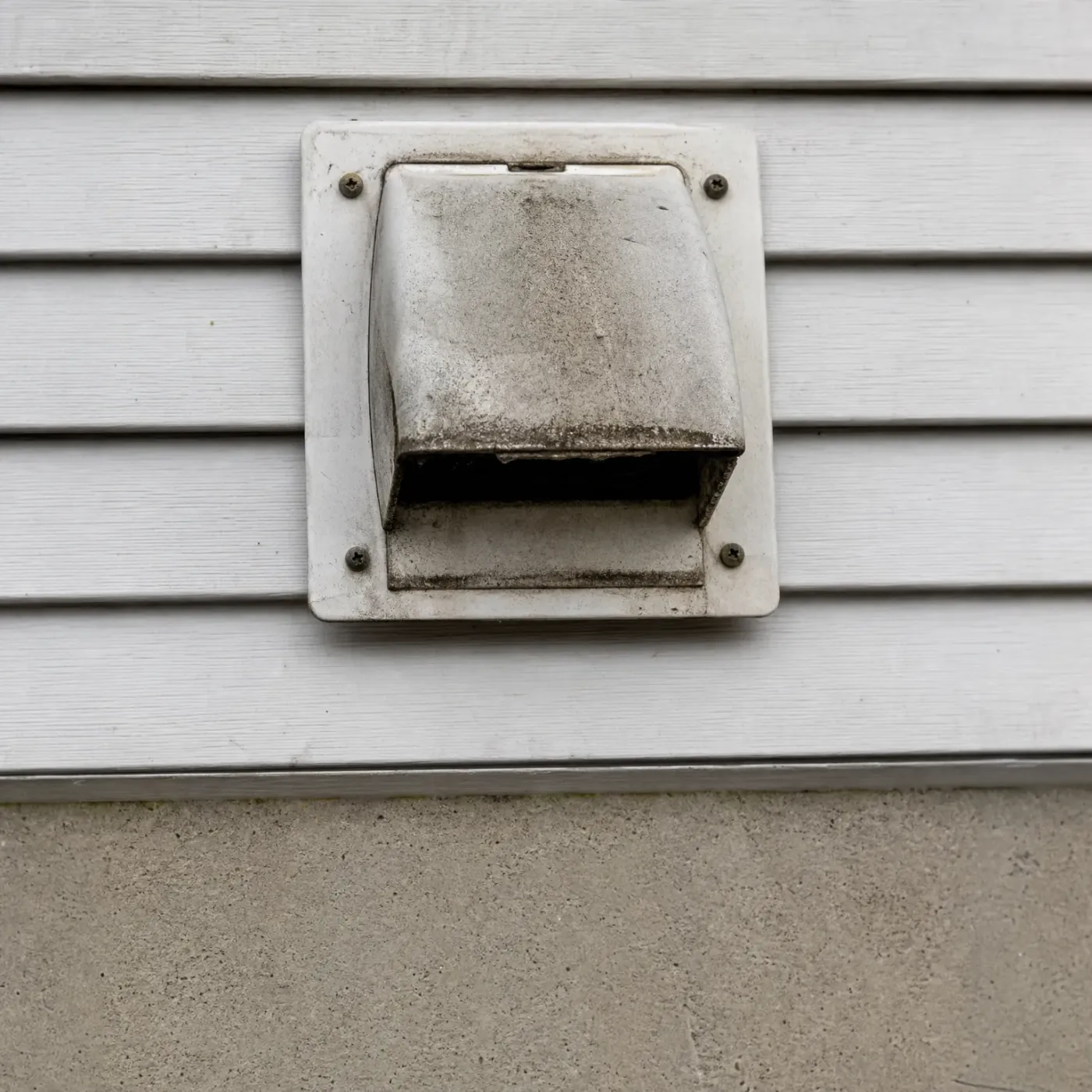

A dirt-streaked white plastic dryer vent hood screwed to light gray horizontal lap siding above a concrete foundation wall.

A vent that isn't

Lint has built up around the flap opening and across the mesh, coating the hood in gray film. That buildup gives a bird something to perch on and pull at. Once the flap can't seat right against the grime, the opening stays wide enough for a sparrow to get in and start building.

Why is the dryer taking two cycles to dry a load?

You load the dryer, run the normal cycle, and pull out clothes that are still damp. You run it again. Some loads now come out hot to the touch but not dry, and the laundry room feels warmer and stickier than it used to. Lint shows up on the floor around the hood outside, or you catch a chirping sound through the wall when the dryer kicks on. The lint trap is clean, so the filter isn't the problem. What's blocking airflow is further down the duct, and with a nest in the way, the dryer is pushing hot, wet air against dry twigs and grass sitting right at the point where that heat is most concentrated.

A bearded man in a navy t-shirt sits on a beige sofa, laughing while looking toward a laptop screen visible in the lower foreground, with a houseplant, shelves, and a framed picture behind him.
A bearded man in a plaid flannel shirt stands indoors looking out a condensation-covered window at a snowy landscape, with a speckled mug on the sill and kitchen shelves behind him.

It's off your list after this

Describe your dryer vent job once, to one pro.

You're not committing to anything by asking.

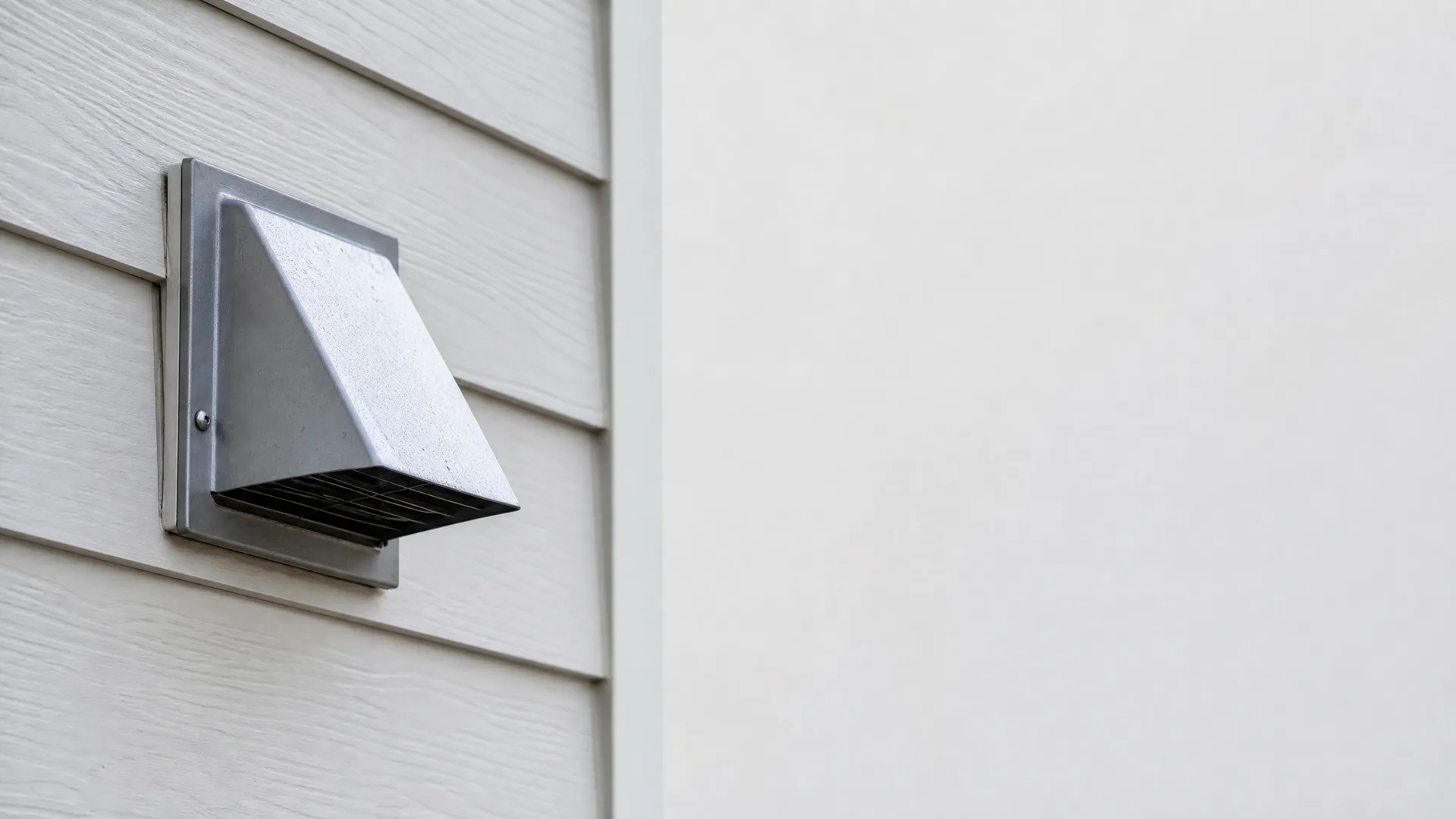
A metal hooded exterior vent cover with louvered underside mounted on light gray horizontal lap siding, next to a plain pale wall at an outside corner.

Why a nest blocks so fast

A sparrow builds in layers, not all at once. Each trip adds a few twigs and some grass, packed against the first bend in the duct where the wind stops pushing them further. Four feet of duct can hold a nest the size of a softball within a couple of weeks. The duct narrows a little more every day the birds keep building, so a dryer that ran fine in April can be straining by May without anything else changing.

A white hooded dryer vent cover screwed to beige horizontal lap siding on an exterior wall corner, with a blank wall surface at left.

What a clear duct looks like

Run the dryer and watch the outside hood. Air should push the flap open within a few seconds and hold it open until the cycle ends. The lint screen behind the louver should show bare metal, not a gray mat. A duct moving full airflow carries lint straight out past the hood instead of letting it settle, which is part of why birds look for a vent that's already slowed down with buildup.

2.34 people per household on average

With close to two or three people in most Burleigh County households, a load of laundry goes in most days, sometimes more than once. That means a dryer struggling to push air through a blocked vent gets noticed within a load or two, not weeks later.

ACS 2020-2024

A white hooded exterior dryer vent with a mesh screen, screwed to light gray horizontal lap siding above a concrete foundation.

Vent working right

The flap hangs loose and swings open the second the dryer kicks on. Air pushes straight out through the screen with no resistance. Screws sit tight in the corners, siding flush all around. Nothing in the way, nothing to catch a twig or a blade of grass.

A metal dryer vent hood mounted on beige horizontal lap siding, with gray lint clogging its open flap, above a lighter textured foundation wall.

Vent gone bad

The flap sits stuck half shut under a mat of lint and debris. Air that should push it open just backs up against the buildup. That same buildup is what gives a bird something to grip and pack material against. Once the flap won't seat, the duct behind it stays open to anything that wants in.

A beige plastic dryer vent hood mounted on horizontal vinyl siding, with clumps of gray lint protruding from the open flap.
Before you get your dryer vent cleaning
A white hooded exterior vent cover with a louvered underside, screwed to beige horizontal lap siding above a lighter stucco lower wall.
After you get your dryer vent cleaning
  1. A sparrow or starling finds a gap at the vent hood flap.

  2. The bird carries in twigs and grass over several trips.

  3. Material packs against the first bend in the duct.

  4. Lint drifting through the warm air sticks to the nest.

A closed silver laptop and a light ceramic mug of dark coffee sit on a wooden table, with a window showing a sunset at left and a kitchen counter with a cutting board and potted plant in the background.

A blocked vent doesn't clear itself

A nest in the duct stays there until someone pulls it out. The flap won't fix itself, and running the dryer more won't push a softball of twigs and grass out through the hood. If your loads are taking two cycles, or the laundry room feels warmer than it should, the duct between the dryer and the outside wall is the place to look.

Finding out who actually clears a dryer vent in Burleigh County takes its own time, between searching, calling a few numbers, and explaining the same problem twice before someone can come out. Send the form here and that part is done. You won't be the one tracking down a contractor or repeating yourself on the phone.

A dark ceramic vase holding a leafy green branch sits on a round wooden table, with a blurred cushioned wooden armchair, woven basket, window and shelving with pottery in the background.
A single-story white stucco house with dark roof, stone-clad entry tower and three dark garage doors, lit from within at dusk, with a curved concrete driveway and dark mulch beds with boulders and bare young trees in the foreground under an orange and blue sunset sky.

Dryer Vent Cleaning

Stop chasing a dryer vent pro

Duct and vent cleaningBurleigh County, ND
Step 1 of 3

What kind of equipment?

  • A pale ceramic vase holding leafy green branches sits on a wooden side table beside a linen-covered chair with a throw blanket, below a wood-framed window.
    • Get matched with a Burleigh County pro who cleans dryer vents.
    • Get matched with a pro who works on dryer vents in Burleigh County.
  • A large woven basket with rope handles holding a draped cream fringed blanket stands in a room corner on a wood floor, with sunlight from a nearby curtained window and a dark wood cabinet at right.
    • After this form, you can stop searching for a dryer vent pro.
    • One request and the search for a pro is handled.
  • A leafy green plant in a woven basket sits in a sunlit corner beside a beige sofa with a knit throw, sheer curtains, a window, and a wooden coffee table.
    • Fill out one short form instead of calling around.
    • Explain the job once and skip repeating it on every call.
  • A ceramic vase holding olive branches and a wooden bowl sit on a wooden windowsill beside a white-framed window, with a framed picture leaning against the grey wall.
    • The pro who reaches out is licensed in North Dakota.
    • Only one pro gets your request, so you hear from one company.