Mini Split Installation in Williston, ND
A new system here will heat from September through June and cool from July through August every year. Tell us about the house, and a licensed contractor who covers Williams County will get in touch.
Tell us about the job
It takes about a minute.
A mini-split here works almost the whole year
Williston needs heat from September through June and cooling only in July and August. A mini-split installed here spends most of its life in heating mode, not cooling mode. Winter nights averaging 4°F ask a lot of a heat pump. It has to pull warmth out of air that cold and push it inside, night after night, for ten months straight.
Any new mini-split has to meet the federal minimum for split-system heat pumps, 14.3 SEER2 for cooling and 7.5 HSPF2 for heating. The cooling number matters less here, with summer afternoons averaging 80°F for just two months. The heating rating is the one carrying the load most of the year.
- 10 months
- September through June, your system heats
- 2 months
- July through August, it cools
- 4°F
- the average winter night it heats against
- 80°F
- the average summer afternoon it cools against
NOAA nClimDiv, 1991–2020 normals
North Dakota requires HVAC contractors to hold a state license.
The state license is held by the contractor, not issued per job, so it covers the business doing the work rather than any single installation. Work under $4,000 in North Dakota does not need a licensed contractor at all, so a mini-split job priced below that line can fall outside the license requirement on the headline.
A mini-split installation is the kind of job that needs a permit from the local building office in most cities and counties, with an inspection once the work is finished. That inspection is what checks the installation itself, separate from whatever the license covers.
Sources: North Dakota Legislative Branch · North Dakota Secretary of State
- Is a mini split worth it?
- For most homes it comes down to what you're heating or cooling and what's there now. A mini split handles both heat and air conditioning from one outdoor unit, and it doesn't need ductwork, so it's a good fit for an addition, a garage, or a house that's never had central air. Here winters get down to 4°F on average, so the contractor needs to size a unit rated to keep up at that temperature, not just one rated for average days. A mini split built for cold climates can do it, but not every model is.
- How many rooms can a mini split cover?
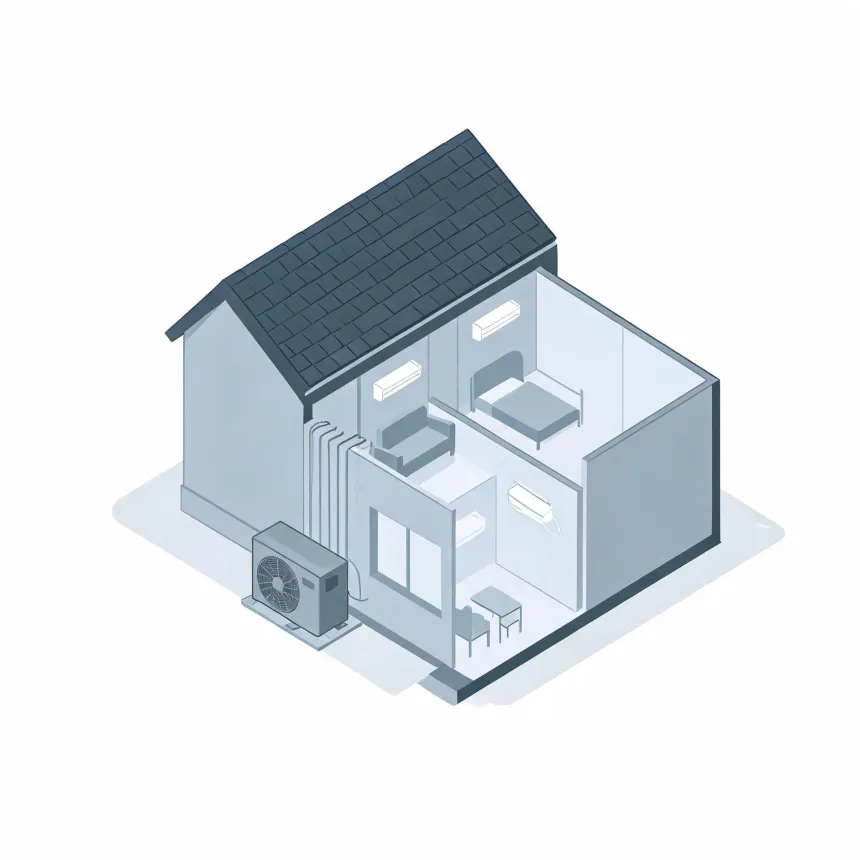
- A single outdoor unit can run one indoor head or several, depending on the system. Single-zone systems cover one room or one open area. Multi-zone systems split the output across several indoor heads, each with its own thermostat, so you can heat or cool rooms separately. How many a given outdoor unit can support depends on its size and how much output each room needs, which is why a contractor works this out room by room rather than guessing at a number.
- Can a mini split heat a whole house?
- Yes, with the right setup, but it takes more than one indoor head in most houses. A multi-zone system with a head in each main area can heat the whole place, and the outdoor unit has to be sized for the coldest nights, not the mild ones. Since homes here need heat from September through June, the system is doing most of its work in cold weather, so it matters that it's rated to keep producing heat down near 4°F rather than losing capacity when it's needed most. A contractor can work out how many zones the house needs and size the unit for the coldest nights here rather than an average.