Send the form and the air conditioner tune-up stops being something to remember.
Dust coming out of your vents usually means the duct work or the blower is pushing it into the air instead of the filter catching it. A dirty filter is the first thing to check, but if dust keeps showing up on a filter you just changed, something else is letting it through.
Loose duct connections, a filter that doesn't seal tight against its frame, or a blower compartment that's collected dirt over the years can all do this. In a lot of North Dakota homes, the furnace and AC share the same ducts and blower, so dust from months of not running can get stirred up fast once the system kicks on for summer.
None of this sorts itself out from the filter aisle. It takes someone looking at the actual duct connections, the blower wheel, and the coil to find where the dust is getting in. That's a maintenance visit, not a guess.
Finding that person yourself means searching around, calling a few places, explaining the same dust problem three or four times, then sitting with quotes trying to figure out who actually knows what they're doing. Most people don't have time for that in the middle of a warm stretch.
Send the form on this page and that search is done. You're not left digging through listings or waiting on hold to describe a dusty vent to someone who might not even work on AC systems. A licensed contractor gets your information and the finding-someone part of this is off your plate.
Power is cheap here and summers aren't the brutal kind, so a lot of homeowners let the AC run without much thought until something like this shows up. Dust in the air is worth sorting out properly, not just patched over with a new filter every few weeks.
Why is my AC blowing dust into my house?
You keep changing the filter and the dust keeps coming back. It's showing up on the furniture, on the floor near the vents, and you're starting to wonder if it's actually the air conditioner doing this or something else in the house. You want to know what's pushing it through before you spend money guessing.
It's usually the blower pulling air past a loose seal or through ductwork that isn't clean
A new filter stops catching dust once the air finds a way around it. That happens at a loose duct joint, a return that pulls air from a dusty attic or crawlspace, or a blower compartment that's collected dirt over time and keeps feeding it back into the airflow. In North Dakota, homes run the furnace blower most of the year since gas heat is common here, and that same blower moves the air for your AC in summer. Whatever is loose or dirty in the duct work gets stirred up either way. A contractor doing maintenance can check the seals, the coil, and the blower housing, and find where the air is picking up dust before it reaches your rooms.
Clean coil, clear air
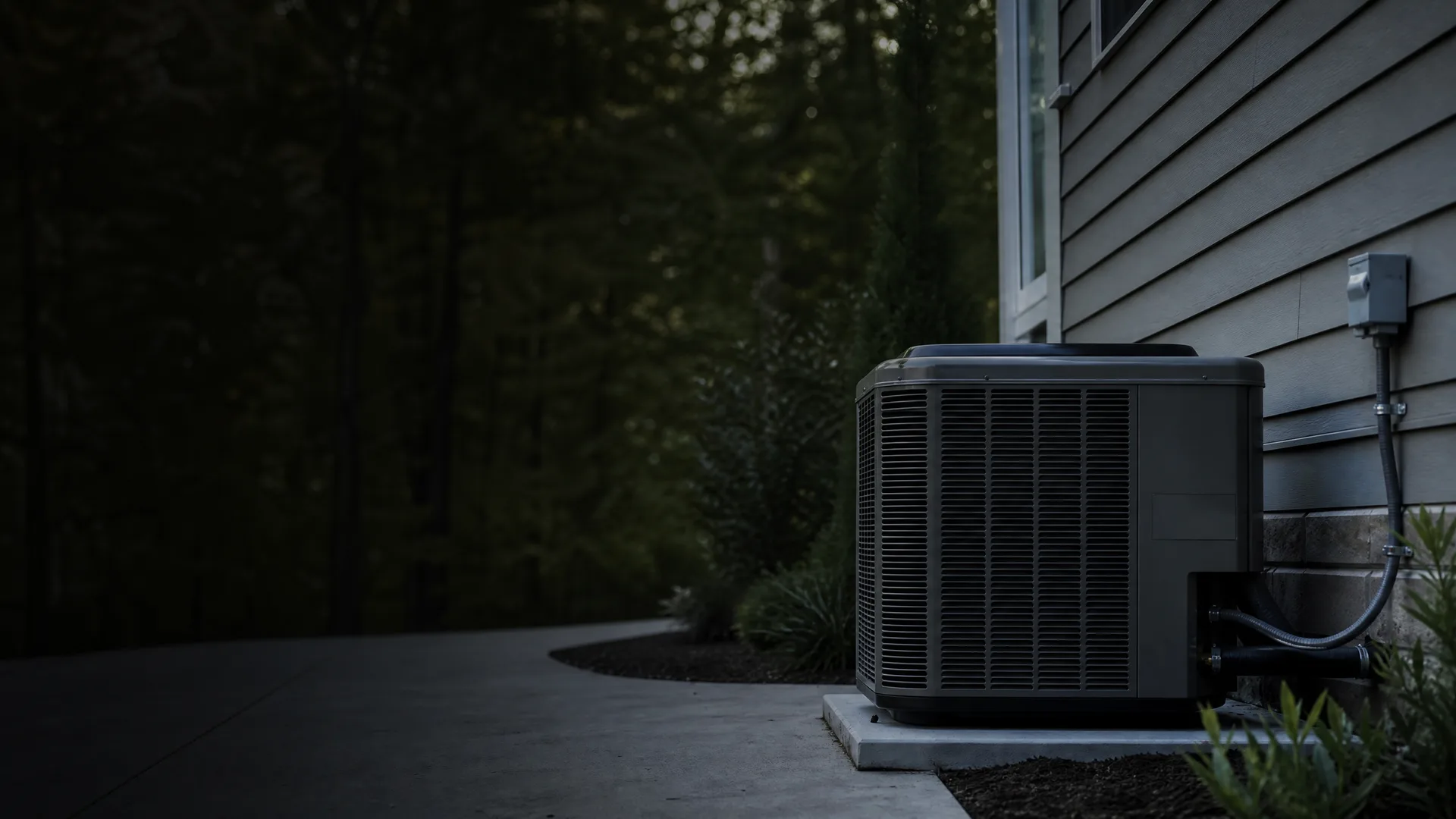
A clean condenser coil pulls heat out of your house without straining. Air moves through it the way it's supposed to, and nothing gets forced back into the ductwork. The disconnect box and wiring stay dry and sound, and the unit just runs.
Dirty coil, dusty rooms
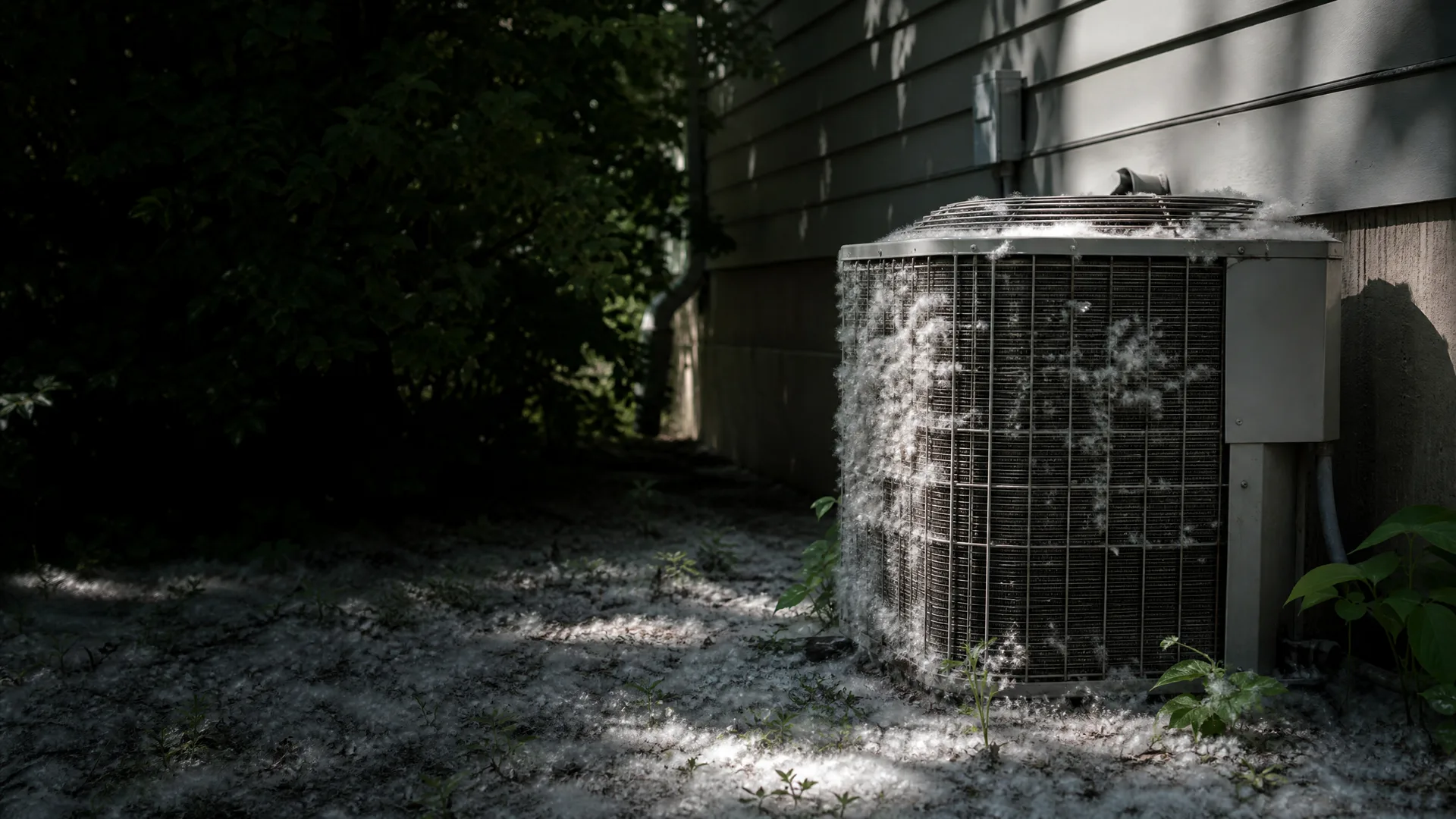
A coil caked with dirt and buildup like this makes the system work harder to move the same air. That strain can push more dust back through your ducts and out the vents. The grime on the guard here didn't happen overnight, and it won't clear on its own.
What that dust means for your house this summer
A thin layer on the windowsill a day after you dusted is dust the air handler is pushing out faster than it should. In a North Dakota house running the AC through a warm, dry summer, that usually settles near the vents first, then spreads to the furniture, the TV screen, the floor by the register. If you or anyone in the house deals with allergies, you'll likely notice it in the air before you see it on a shelf.
Left alone, it adds up in two ways. The dust that isn't getting caught is landing inside the blower and the coil, which makes the system work harder to move the same air. And you're the one stuck figuring out why: searching for a contractor who services your area, calling a few, explaining the same thing three times, then comparing quotes before anyone even looks at the unit. Sending the form here skips that part. You still need someone out to look at the coil and the ducts, but you're not the one tracking down who's available.
Running clean
This condenser sits on its pad with clear space around it and nothing blocking the fan grille. Air pulls through the louvers and out the top the way it should, so the system isn't straining to move the same amount of air through your ducts.
Running dirty
This older unit has weeds grown up against the housing and gravel built up around the base. When the coil underneath that housing is caked with debris like this, the blower works harder to push air through the house, and it can force dust back out through the vents instead of past the filter.
Before you get your air conditioner maintenanceAfter you get your air conditioner maintenance
Skip calling around to set up an air conditioner tune-up.
No charge to send it. You decide if you hire them.
Where the dust is really coming from
A clogged filter does not vanish the dust, it just stops catching it. Air still has to move through your system, so it finds a way around the filter instead of through it, and whatever it's carrying gets pulled past and out your vents. Loose duct joints work the same way, pulling in dust from your attic or crawlspace. Once there's a gap for air to leak through, dust has a way in that never touches the filter at all.
Why a tune-up catches it
A maintenance visit checks the filter fit, the duct connections at the air handler, and the blower itself, not just whether the unit cools. A blower spinning faster than it should move more air than your ducts and filter were sized for, and that extra push is what forces fine dust through gaps a slower system would leave alone. Finding that during a seasonal check means it gets caught before a full North Dakota summer of running pushes more of it into your house.
Your blower is built to move a certain amount of air across the coil. When the coil's dirty or the filter's clogged, the blower doesn't stop, it just works harder, and that extra pull finds weak spots. A seam that was never sealed, a boot that's come loose where it meets the floor or ceiling, a gap at the edge of the filter itself. Air takes whichever path costs it less, and if that path runs through your attic or a crawlspace instead of through the filter, whatever's up there comes with it. Some of what you're seeing isn't coming from outside your ducts at all. The blower wheel itself collects a coating of dust over time, and pieces of it break off and go straight into the supply side, out through your vents, onto your furniture. None of this shows up by looking at the filter. You'd have to see the coil, the duct joints, the blower wheel itself to know which one is doing it, and usually it's more than one.
How the dust gets in
The blower pulls air across the coil at a set speed, and a dirty coil or a restricted filter makes it work harder to move the same volume.
A return duct with a loose seam or a gap at the boot pulls air from the attic or a crawlspace instead of the room, and that air carries dust with it.
Dust that collects on the blower wheel itself breaks off in small amounts and gets thrown straight into the supply ducts.
A filter that fits loosely in its slot leaves a gap along the edge where unfiltered air slips past instead of through the media.
Static pressure that's too high for the system forces air through any crack in the ductwork that offers less resistance than the filter does.
If the ducts were never sealed at the joints, every length of warm summer running time adds another chance for dust to get pulled in and pushed back out.
Skip maintenance and the dust keeps returning every few weeks no matter how often you change the filter, because whatever is letting it in stays open.
Get the system checked and a contractor finds the actual gap or the dirty coil causing it, so the filter goes back to being the only thing catching dust.
Power costs 11.82 cents per kilowatt-hour statewide
At 11.82 cents a kilowatt-hour, running your AC harder than it needs to costs you something real every month. A dirty coil or a blower working against a clogged filter pulls more power to move the same air through your house, and that shows up on the bill before you ever see the dust stop.
EIA-861 2025 statewide residential average
You're out pulling weeds along the side of the house in late May, and you notice the hum from the condenser sounds a little strained. You walk over and see why. The fins are packed white with cottonwood fluff, thick enough that you can't see the metal underneath in places. It's drifted in from the trees down the block and caught on the unit like lint on a screen. You run a hand across it and a chunk comes loose, but most of it's matted in tight against the coil. The unit's still running, fan spinning, but it's pulling air through that mess instead of around it.
A disconnect box feeds the unit cleanly, the pad is clear, and the fan pulls air straight through without a fight.
The same setup gets crowded by mulch and shrubs pressing in, and the unit works harder just to breathe.
Summer air here isn't heavy. The dew point averages 53°F across June, July and August, according to NOAA climate records, which is dry as these things go. A dry summer means your AC doesn't run long, steady stretches the way it would somewhere muggy. It cycles on and off more, short bursts rather than hours at a time. Every start pulls air across the coil and through the filter hard for a minute before settling into a rhythm. If the filter's clogged or the coil's dirty, those short, frequent starts are exactly when air gets pushed around the blockage instead of through it. That's part of why dust keeps turning up even when you just changed the filter.
NASA POWER T2MDEW county cells weighted by homes
The dust in your house is coming from somewhere specific, either a gap in the ductwork pulling in attic or crawlspace air, or a dirty coil and blower straining to move air through a clogged filter. Changing the filter again won't fix either one. A contractor who checks the coil, the blower, and the duct connections can find which one it is and close it off, and once that happens the filter starts catching dust again instead of losing the fight. You don't have to track down who does this kind of work, call a few names, explain the same thing about the windowsill and the vents twice over, and sort through estimates to see who actually answers the question you asked. Send the request once and that part is handled. What's left is the actual fix, the gap sealed or the coil cleaned, done by someone licensed to do it in a North Dakota house built for this climate. The dust stops coming back once the real cause is gone, not before.
Done looking for an air conditioner pro
One form instead of hunting for a pro who does air conditioner tune-ups.