Profile view of a bearded man wearing a dark green baseball cap and a dark gray T-shirt against a plain light background.

Why your furnace is blowing dust in North Dakota

Tune-up, service, or cleaningFurnace or heatingNorth Dakota
Step 1 of 2

What ZIP code is the job in?

Dust coming through your vents usually means the filter isn't catching what it should, or air is bypassing it altogether. A filter that's clogged or the wrong size lets fine particles pass straight through instead of getting trapped. Loose duct connections do the same thing, pulling in dust from your attic or crawlspace every time the blower runs. With gas heat running hard through the cold months here, that air moves through your system constantly, so even a small gap or a dirty filter gets more dust into your rooms than you'd expect. Cracked ductwork or a return leak can pull in insulation fibers too, which looks like dust but isn't. None of this points to anything wrong with the furnace itself. It's about what's letting dust past the filter and into the air you're breathing. A look at the filter fit, the duct seals, and when the system was last serviced will usually tell you where it's coming from.

A gray furnace cabinet in a basement with sheet-metal ductwork, white PVC vent pipes, and black gas piping against a concrete wall and wood-framed partition on a bare concrete floor.
A clean filter fits snug in its slot and the furnace pulls air through it, not around it.
A gray metal furnace with two white PVC vent pipes stands on a concrete floor beside galvanized sheet-metal ductwork in a basement or utility space with wood framing.
Rust on the cabinet and plenum often means a worn seal or gap letting dust bypass the filter.
A woman in a cream cowl-neck sweater sits by a window with snow outside, in a dimly lit living room with a sofa, lit lamp, mirror, candles and a fireplace.
A woman in a gray turtleneck sweater sits beside a large window looking out at snow-covered evergreen trees, in a dimly lit living room with a lit fireplace, lamps, couch and houseplant.
A woman in a cream turtleneck sweater stands beside a large window with snow-covered ground and bare trees outside, in a dimly lit living room with lamps, a sofa and framed art.
A woman in a grey cowl-neck sweater stands indoors near a window, looking out at falling snow, with a lamp, framed picture and couch in the warmly lit room behind her.
A woman in a cream sweater and jeans stands in the open doorway of a white stucco house, holding the dark door, while a man in a dark quilted jacket seen from behind walks toward the entry past potted plants.

What that dust is doing to your house

You're probably dusting the same shelves twice a week now. It settles on the TV, the windowsills, the furnace registers themselves, faster than it used to. If anyone in the house has allergies or asthma, gas heat running most of the winter through a leaky duct or a bypassed filter means they're breathing that fine grit for months, not days. That adds up in a North Dakota winter when the furnace barely shuts off.

It's also wearing on the furnace itself. Dust that should be caught in the filter settles on the blower wheel and the coil instead, and a dirty blower moves less air for the same electrical draw. Power's cheap here, but a furnace working harder than it should still shows up on the bill. Catching this now, before the duct gap or the seal problem gets worse, is the kind of thing worth having a contractor look at directly. Getting matched with one who already knows gas furnaces in this climate means you explain the problem once, not five times to five different companies.

Interior corner of a living room with a beige upholstered sofa and dark cushion in the foreground, a ceramic vase of leafy branches on a dark side table by a curtained window, a framed picture on the wall, and a wood-surround fireplace at right.
A beige high-efficiency furnace stands on a concrete basement floor beside sheet-metal ductwork, with white PVC vent pipes and a gas line running along an insulated wood-framed wall.

Clean side of the system

This is what a filter doing its job looks like. Air gets pulled through the filter, not around it, so the furnace and ductwork behind it stay clear. No dust on the cabinet, no buildup near the flue pipes or gas line. Check the filter size against the slot if yours doesn't look like this.


An older metal furnace with a louvered front panel stands against a concrete basement wall, connected to sheet-metal ductwork and a flue pipe, with copper and steel pipes running alongside.

Where dust gets in

Dust like this on the cabinet points to a gap somewhere, not just a dirty filter. Could be a seal around the blower door, a loose panel, or a connection in the ductwork above it letting air skip past the filter entirely. A maintenance visit can trace where it's actually getting in.

A beige gas furnace in a basement with a metal flue pipe, galvanized sheet-metal ductwork to its left, and gas and water pipes along the concrete wall to its right.
Before you get your furnace maintenance
A gray high-efficiency furnace with white PVC vent pipes stands on a concrete pad in a basement, beside sheet-metal ductwork, copper piping and a poured concrete wall with wood framing at left.
After you get your furnace maintenance

Is this new, or has it been building for a while

Think back to when you first noticed it. If it crept in gradually, a filter that was fine six months ago may have loaded up with everything your furnace has pushed through it since, or slipped out of its track enough to let air sneak past the edges. If it showed up all at once, check the filter first. It may be the wrong size for the slot, seated wrong, or missing altogether if someone pulled it for a look and didn't get it back in straight. Either way, the longer dust bypasses the filter, the more it builds up inside the ductwork itself, where it's harder to reach and keeps feeding dust back into the rooms you've already cleaned.

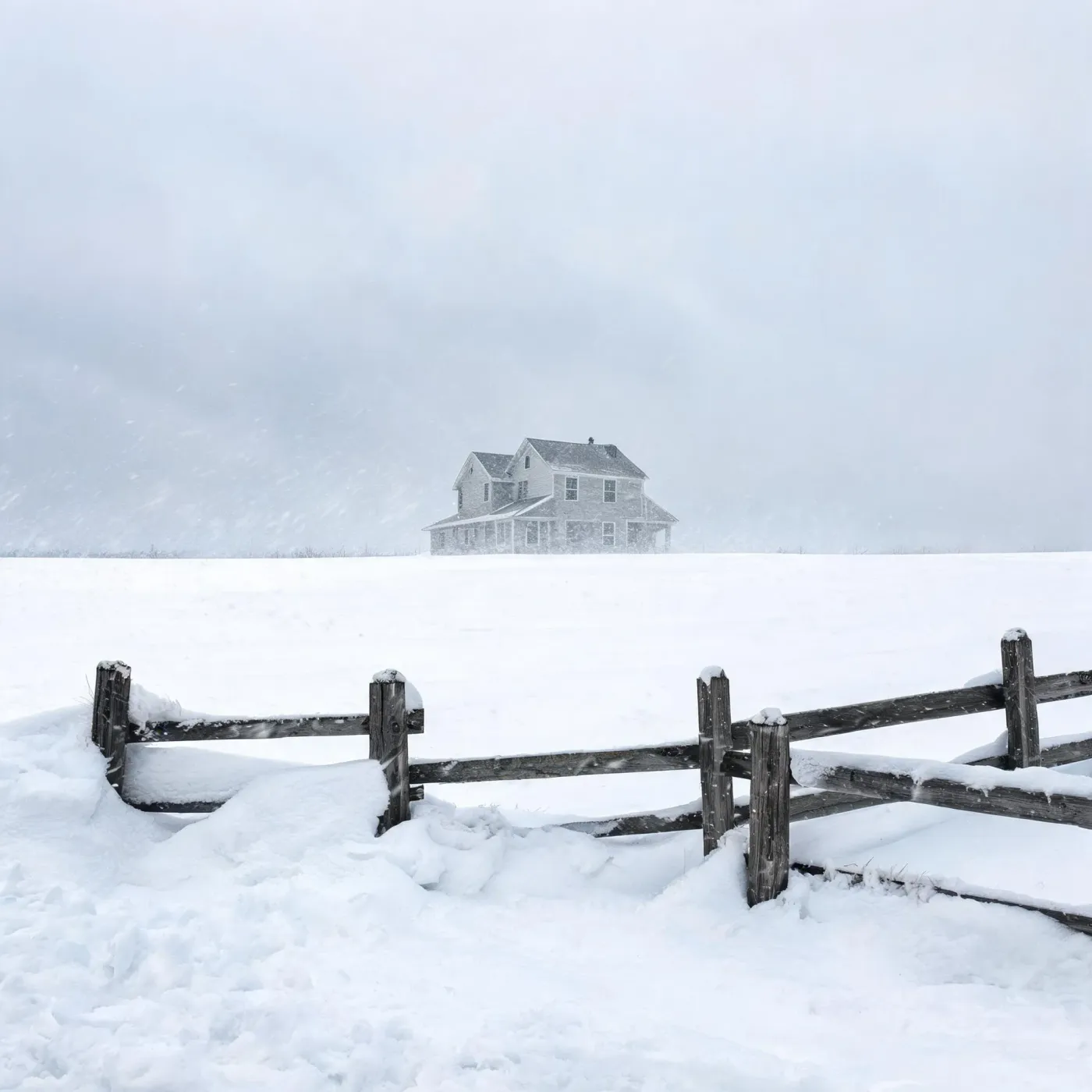
A two-story house with a porch stands alone on a snow-covered field during falling snow, with a weathered wooden split-rail fence partly buried in drifts in the foreground.

Winter nights here average 4°F, according to NOAA climate data for North Dakota. At that temperature your furnace is running long stretches, sometimes most of the night, to hold the house steady. A furnace running that much moves a lot more air through the filter than it does in October or March. If that filter is loaded up or sized wrong, this is the stretch of winter when you'll see dust show up on registers and windowsills, because the system has no break to go easy on a weak spot. Skipping a look at the filter now costs you more than it would in a milder month.

NOAA nClimDiv 1991-2020 county normals weighted by homes

Matched to your furnace job

Fill out one form instead of calling around for a furnace tune-up.

It costs nothing to send, and you don't have to hire anyone.

A gas furnace with two gray access panels stands against a plain wall in a basement, connected to sheet-metal ductwork, white PVC vent pipes, and a yellow gas line.

What a tech checks beyond the filter

A filter swap doesn't tell you if the blower door seals shut, or if the return plenum has a gap pulling in air from the basement instead of the house. A tech can check the return side, the cabinet seams, and the connection at the furnace itself for the gaps a new filter alone won't fix. That's often where dust keeps coming from even after the filter's been changed.

A gray high-efficiency furnace in a basement corner with white PVC vent pipes, copper and black gas piping, and sheet-metal ductwork beside a plain white wall and wooden stair framing.

What gets missed without a look inside

Dust can also come from inside the furnace, built up on the blower wheel or coating the heat exchanger after months of running most of the night. That buildup doesn't clear itself when you swap a filter. It gets stirred back into the air every time the blower kicks on. Clearing it out means opening the cabinet, which isn't something most homeowners do on their own.

Winter nights average 4°F statewide

At 4°F your furnace isn't cycling on and off, it's running almost nonstop to keep the house at temperature. That long runtime pulls far more air, and whatever dust is riding along with it, through your ducts and registers over a single night.

NOAA nClimDiv 1991-2020 county normals weighted by homes

You could keep swapping the filter every month and hope it's enough. That costs you nothing but a reminder on your phone, and it catches the problem before dust builds up in the ducts and cabinet.

Or you could get someone to check why it's happening at all. A tech can find the gap or seal letting dust bypass the filter, something a new filter alone won't fix no matter how often you change it.

A bearded man in a plaid flannel shirt stands in a kitchen looking out a window toward snow-covered shrubs, with a steaming mug on the windowsill and potted plants on a shelf behind him.
A smiling man with dark curly hair in a navy t-shirt sits on a gray couch indoors, with a large-leafed plant and a window in the background.

Where the dust is coming from

  • A dirty or undersized filter and gaps in the return plenum are the two most common reasons dust keeps coming through your vents.
  • At 4°F, your furnace runs long stretches overnight, moving far more air and dust through the ducts than it would in mild weather.
  • Dust that keeps building back within days points to air bypassing the filter rather than a filter that simply needs changing.
  • A tech can check the blower door seal, the return plenum, and the cabinet seams for gaps a filter swap alone won't fix.
  • Instead of calling several contractors and explaining the same problem each time, you answer a few questions once and a contractor who covers your area follows up with you directly.

The filter is the first place to look, and the first place to rule out. A clogged one, or one that's the wrong size for the slot, lets fine dust pass straight through instead of trapping it. But if you've already been keeping up with it and the dust keeps coming back within a few days, the filter isn't the problem anymore. Air is getting past it somewhere else, through a gap in the return plenum, a blower door that isn't sealing, or a seam in the cabinet that's come loose. None of those show up when you just swap the filter.

Winter nights here average 4°F, and at that temperature your furnace isn't cycling on and off the way it would in October. It's running long stretches, sometimes most of the night, to hold the house steady. That kind of runtime moves a lot of air, and if there's a gap anywhere upstream of the filter, it moves a lot of dust along with it. The longer that goes unchecked, the more it settles into places you're now dusting twice a week instead of once.

A tech can check the parts a filter change can't fix: the blower door seal, the return side, the cabinet seams. Rather than tracking one down yourself, calling around, and explaining the same problem to each one, you answer a few questions once and a contractor who covers your area follows up with you.

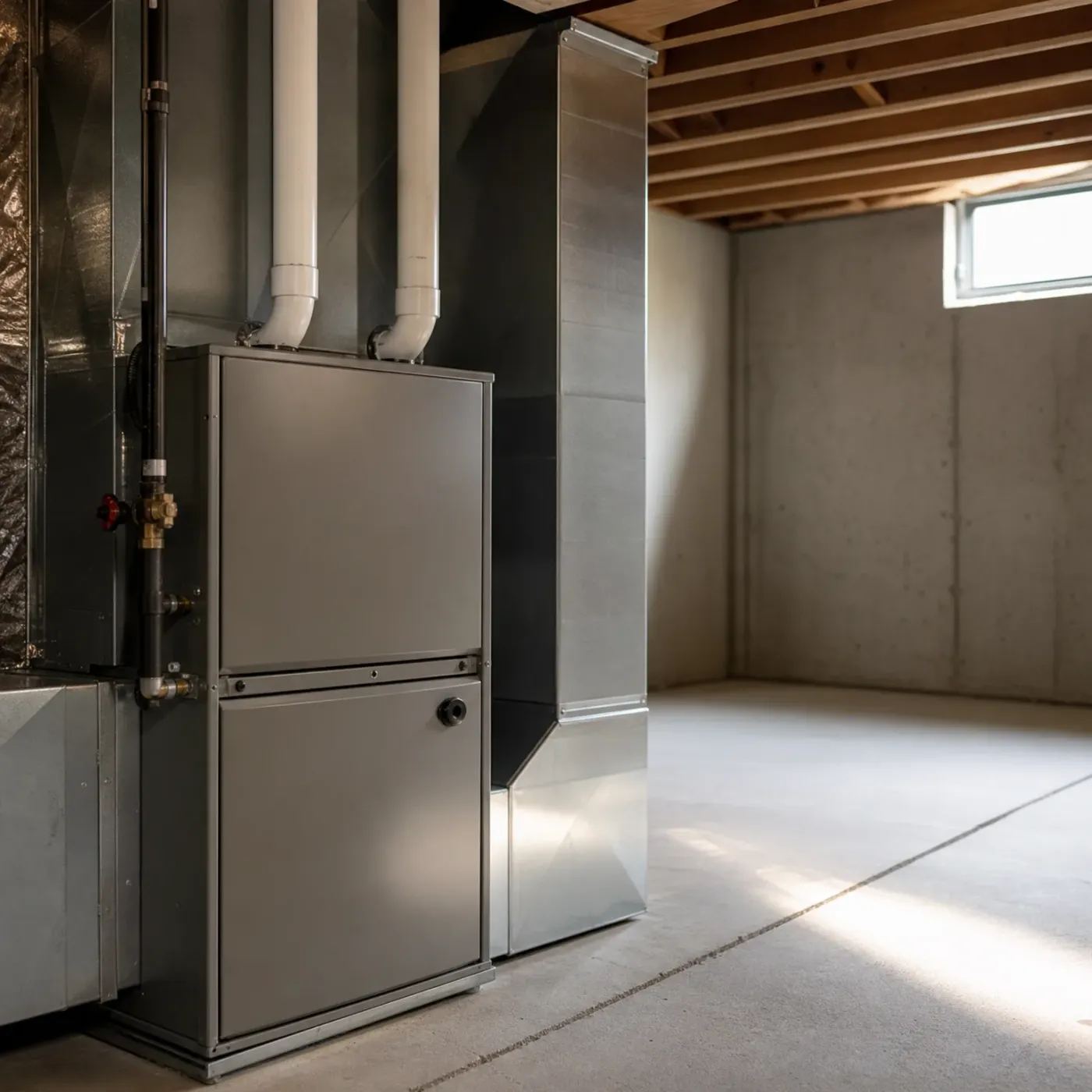
A gray furnace with PVC vent pipes and sheet-metal ductwork stands against a wall in an unfinished basement with concrete floor and walls, exposed wood joists, and a small window.

A furnace pro near you

Find my pro

Fill out one short form instead of calling around.

No charge to send it. You decide if you hire them.