
North Dakota HVAC Guide

Why your house is so dusty in Fargo, ND

Send the form and finding a duct cleaner is handled.

Hand it off

That dust comes back a day after you wipe it down, and the reason is your furnace runs almost nonstop once winter sets in here. Cass County heats mean a long stretch where the blower is cycling for hours at a time, every day, from October into April. Every pass through the ductwork stirs up whatever is sitting in there and pushes it right back into your rooms. If the filter is the wrong size, loose in its slot, or overdue, it stops catching what it should and dust gets past it. Dry winter air makes it worse, since dust rides easier in dry air than damp air. A duct system that has not been cleaned in years is carrying built-up dust along its whole length, and your furnace is blowing through that every single cycle. That is the dust you are seeing settle on the furniture.

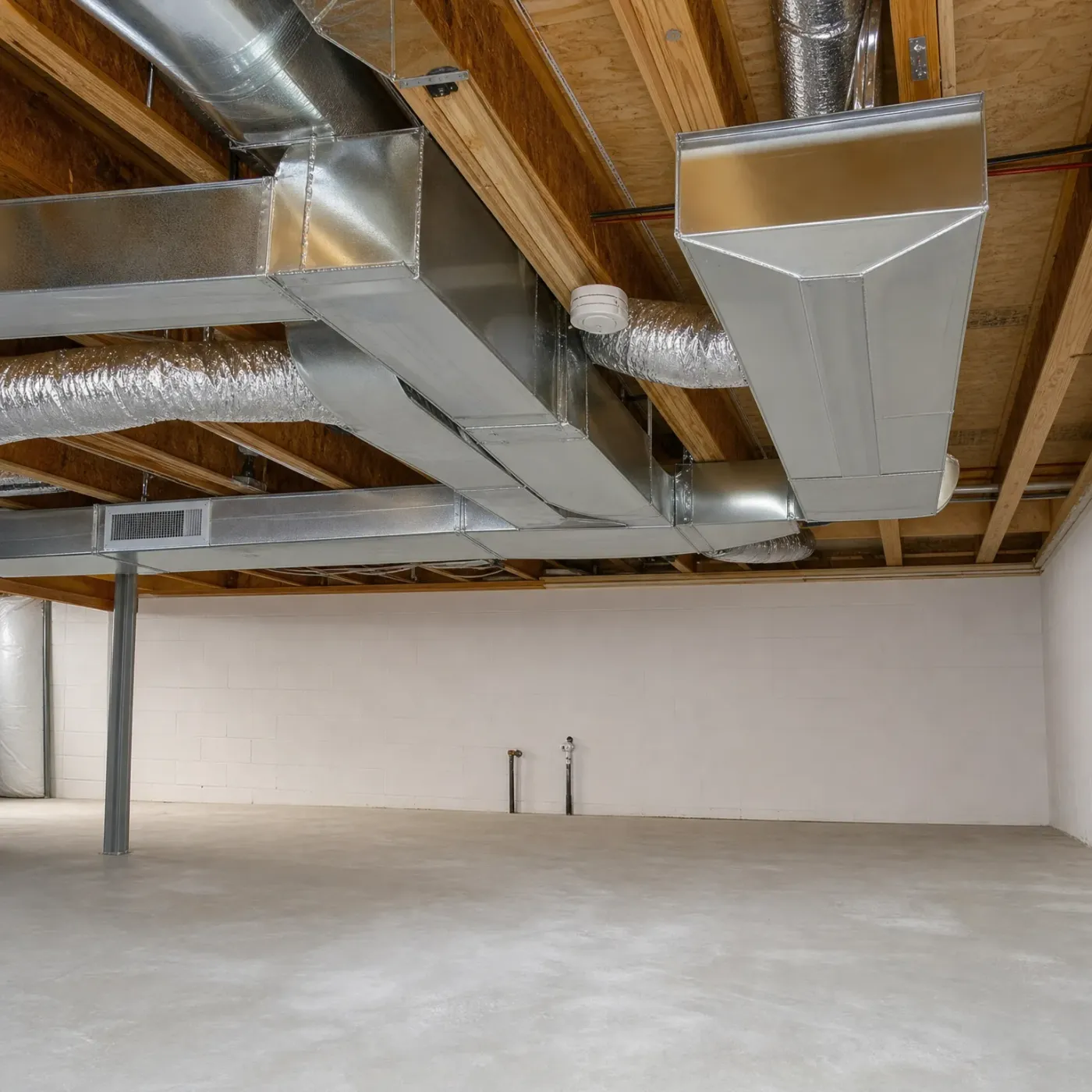
An empty unfinished basement with concrete floor and walls, exposed wood joists, steel beams and support posts, galvanized ductwork and pipes, and a single bare bulb light.

Clean ducts, steady airflow

This is what duct work should look like. The sheet-metal trunk and the round flex runs sit open under the joists, moving air without shedding anything into it. A system like this pulls dust into the filter and holds it there, not back out through the vents.

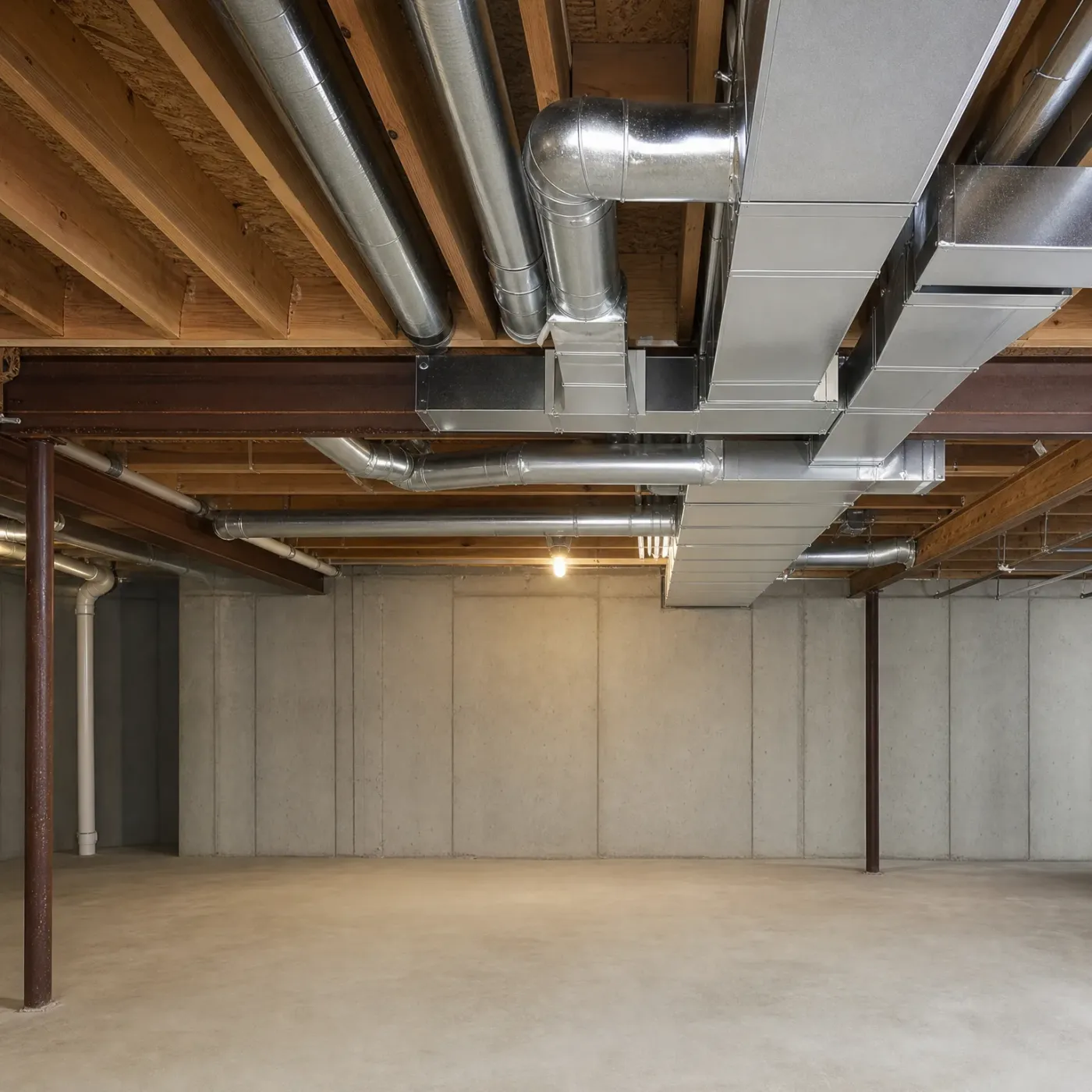
Empty basement with bare concrete walls and floor, with galvanized sheet-metal HVAC ducts, a round duct elbow, and pipes running along the wooden joists of the ceiling.

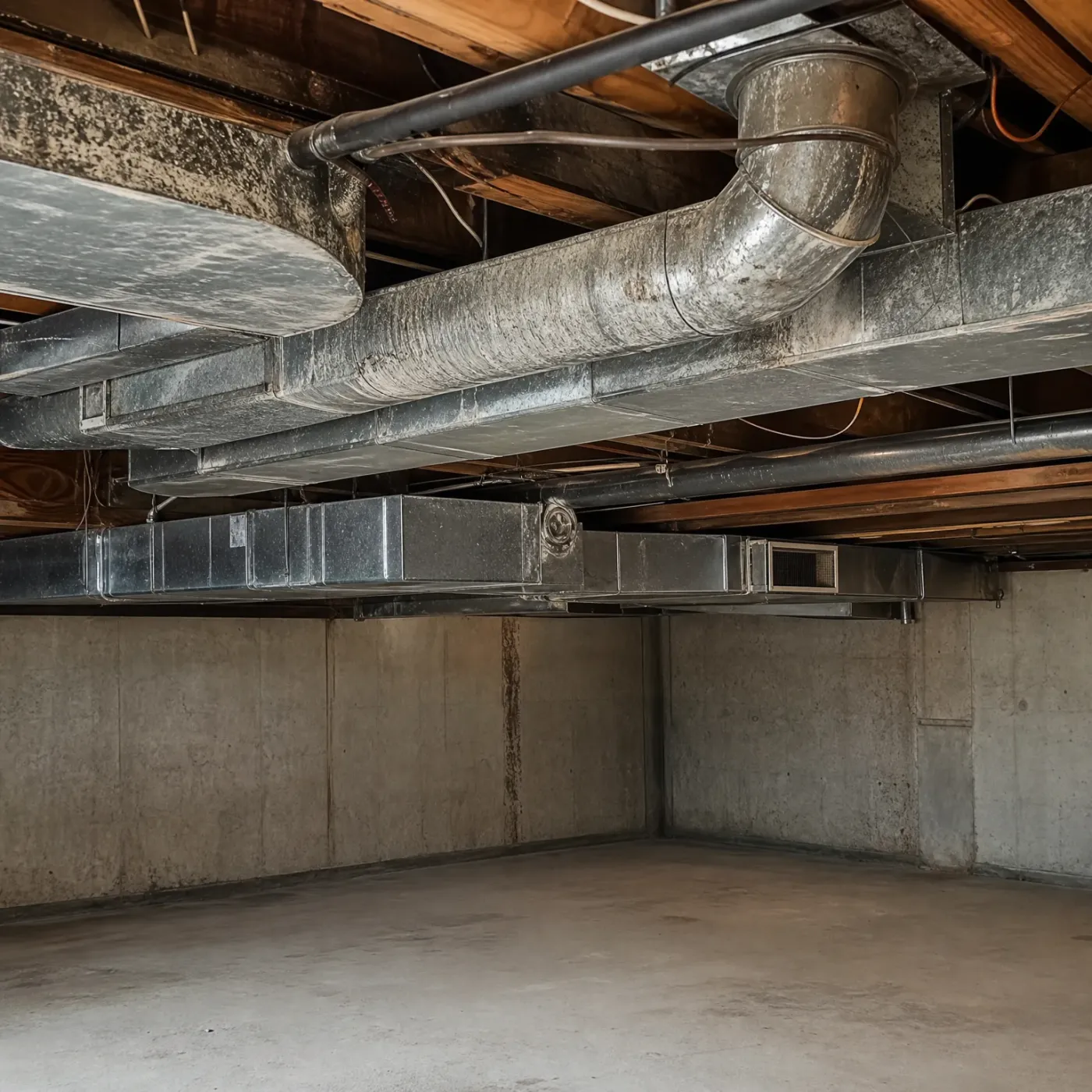
Ducts that are feeding the dust

Dark staining on the joists and duct surfaces means moisture has been sitting in that basement or crawl space. Ducts running through air like that pick up what's growing on them and carry it straight into the rooms you live in, no matter how often you dust.

What's pulling dust through your ducts nine months a year?

  • Half the homes here were built by 1993

    Half the homes in Cass County were built in 1993 or earlier, old enough that the duct joints and seams have had decades to loosen and leak dust.

  • Heat runs September through May

    Heat runs September through May here, nine months of the blower pushing air through the same ductwork, nine months of dust moving with it.

  • Cooling runs June through August

    Cooling only runs June through August, so for most of the year it's the furnace blower, not the AC, doing the work of stirring up what's settled in your ducts.

ACS 2020-2024 · NOAA nClimDiv 1991-2020

  1. Cold outside air leaks in through loose duct seams and joints

  2. That air pulls in dust sitting in the attic or crawlspace

  3. The blower pushes that dust through the trunk line into every room

  4. Dust settles on furniture and floors faster than you can wipe it

Why does my furnace blow so much dust around?

You notice the dust seems to come straight out of the vents themselves, right when the furnace kicks on. It's not just settling from the air, it's being pushed into the room. You want to know what's happening inside the system that would cause that, since it feels like more than normal household dust.

The blower is pushing dust that built up inside the ducts themselves

Every time your furnace starts, the blower forces air through the trunk line and out through the supply runs into each room. If dust has settled inside that ductwork, or if a loose seam is pulling in dust from the attic or crawlspace, the blower moves that dust along with the warm air. It comes out through the registers because that is where all the air in the system has to go. The filter catches what passes back through the return side, but it does nothing for dust already sitting in the supply runs. With the furnace cycling for hours at a stretch all winter in Cass County, that dust gets moved through the house far more than it would in a sealed, clean system.

Empty basement with bare concrete floor, painted block walls, and an exposed wood-joist ceiling with sheet-metal and insulated flexible ductwork and a steel support column.
Clean ducts like these hold their dust instead of spreading it, so the joists and metal stay bare.
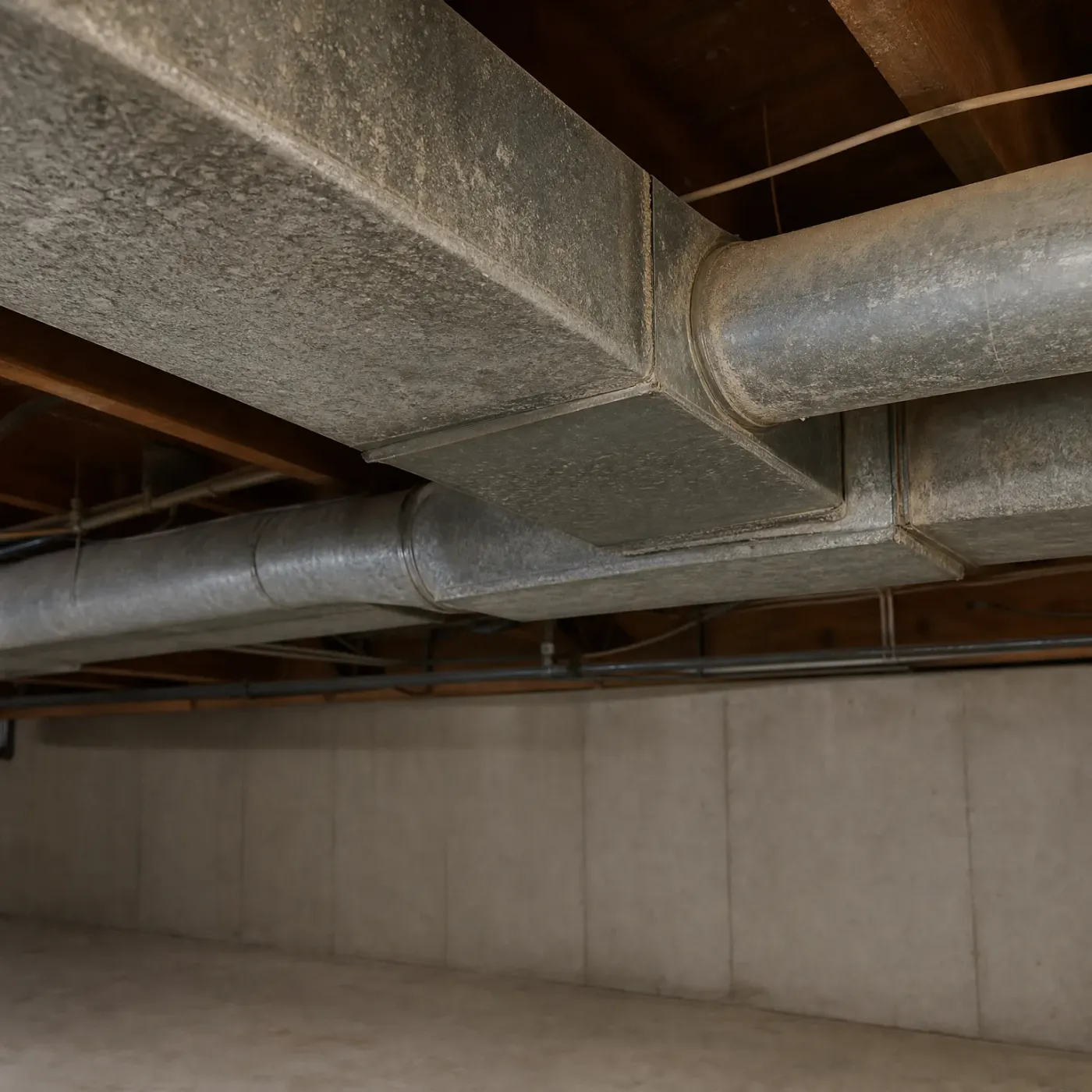
Galvanized rectangular and round sheet-metal ductwork running beneath a wood-joist ceiling in a basement with concrete walls and floor, with pipes and wiring alongside.
Ductwork caked in dust like this feeds every grain back into the air each time the blower kicks on.
A dim room corner with a dark grey sofa and cushion, a wooden side table holding a ceramic vase and a small potted plant, a linen curtain beside a bright window, and a wall vent near the ceiling.

The furnace kicks on around nine in the morning, that low hum through the floor. Sun's coming in low through the window, lighting up the room enough that you can see it: a soft gray coat on the ceiling vent grille, and more of it settled on the bookshelf and the arm of the couch underneath. You ran a cloth over that same spot two days ago. By May you figure the furnace should be easing off soon, but right now it's still working, and the dust keeps finding its way back to the same surfaces before you've even put the cloth away.

One request and it's handed off

A furnace that runs nine months of the year is pulling air through the same loose joints and seams the whole time, and nobody in the house sees the inside of that ductwork to know how bad it's gotten. You only see what lands on the shelf. Getting it cleaned means someone has to go through the trunk line and the branch runs with the right equipment, not a shop vac at the register. That's a different job than most furnace or AC work, and it matters who you get for it. A local contractor who cleans ducts in Cass County homes all winter knows what nine months of heat does to a system like yours, where the dust tends to sit heaviest, and what it takes to get it out for good instead of just stirring it around. Send the request and that search is off your plate.

The filter only catches so much

Your furnace filter is built to protect the blower motor and coil, not to scrub every particle out of the air passing through it. Air moving at duct speed carries fine dust right past the pleats, especially once that filter has a few weeks of buildup on it already. The dust that gets past the filter rides the supply air straight into the room. With the blower running for hours at a stretch all winter, that air passes through the filter thousands of times, and whatever slips through adds up fast on the furniture and floors.

Return leaks pull in more dust

Every return duct runs at a slightly lower pressure than the rooms around it, and any gap in the seams or joints lets outside air get pulled in to fill that gap. That air often comes from the attic or crawlspace, both places where dust collects undisturbed for years. Once it enters the return, the blower treats it the same as room air and pushes it right back out through the supply vents. A duct system with no leaks only moves air that was already in your living space, which is a far smaller source of dust to begin with.

Empty basement with bare concrete walls and floor, a steel support column, and galvanized sheet-metal ductwork and pipes running along the exposed wood joist ceiling.
Before you get your ductwork cleaning
Empty unfinished basement with concrete walls and floor, exposed wood joists, metal HVAC ducts and pipes overhead, and a steel support column near a framed wall.
After you get your ductwork cleaning
Unfinished basement with concrete floor and walls, exposed wood joists, steel support posts, and large galvanized sheet-metal ductwork running to a furnace or air handler against the far wall.

Ductwork working as it should

This is what the trunk and return lines look like doing their job. Metal and joists stay bare because the dust stays in the filter where it belongs. Air moves through clean, so nothing extra lands on your furniture between cleanings.

Galvanized sheet-metal ductwork and round pipes run along a wooden floor joist ceiling above a bare concrete wall and floor.

Ductwork feeding the problem

This is what's running above your head if the dust keeps coming back fast. Every seam and joint up there is a place for attic or crawlspace dust to get pulled in. The blower pushes it straight into the rooms you're wiping down.

A bearded man in a dark t-shirt sits on a light sofa, smiling and looking down toward a laptop screen visible at the bottom edge of the frame, with a blurred living space behind him.
A bearded man in a plaid flannel shirt looks out a window at snow-covered conifer trees, with a steaming ceramic mug on the sill and wooden shelves holding dishes and a plant behind him.

Power here costs 13.26 cents per kilowatt-hour

At 13.26 cents per kilowatt-hour, running that blower motor nine months a year doesn't hit your bill hard. That's worth knowing, because it means there's no cost reason to ease off the fan or shut vents to save power. Let it move air the way it's supposed to, and let the ducts carry the dust instead of spreading it.

EIA-861 2025

What's really behind the dust

  • Dust that returns fast points to the duct system, not to how often you clean.
  • Cass County winters keep your furnace cycling from October into April, pulling air through every loose joint.
  • Half the homes in this county were built in 1993 or earlier, old enough for seams to have loosened over time.
  • The filter protects the blower motor, but it was never built to strip fine dust out of fast-moving duct air.
  • A dusty coat on vent grilles and shelves means the trunk line is feeding particles back into the room, not just letting them settle.
  • Cheap power here means there's no reason to run the blower less; the fix is what's inside the ducts, not the fan speed.

You wipe the shelf, and by the next morning there's a film on it again. That's not a cleaning problem. It's an airflow problem. Your furnace in Cass County runs long hours for most of the year, and every one of those hours, air is moving through ductwork that has had time to work itself loose. Houses here that go back to 1993 or earlier have had three decades of seams expanding and contracting with the heat, and gaps like that pull in whatever is sitting in the attic or crawlspace and send it straight into the trunk line. The filter was never meant to stop that. It keeps the blower motor and coil clean, which matters, but fine dust moving at duct speed slips past the pleats without much trouble. So what lands on your grille and your bookshelf isn't just settling out of still air, it's being pushed there every time the blower kicks on. None of this means you should ease up on the furnace to cut down on dust. Power here is cheap enough that running the blower the way it's built to run costs you little, and shutting vents or throttling the fan won't fix ductwork that's leaking. The dust is a symptom. The ducts are the cause. Once you see it that way, the fast return of dust after cleaning stops being a mystery and starts being something you can actually address at the source.

A man in a gray knit sweater stands smiling and looking off to the side beside a white marble kitchen island, with a dining table, pendant light, and open shelving in the background.
A smiling man with short dark hair and stubble in a gray sweater sits at a stone-topped counter with a white ceramic mug, in a room with a framed picture, a plant, and shelves holding bowls.
A smiling man in a dark navy sweater sits at a wooden kitchen counter with a light ceramic mug, with white tile backsplash, open shelving and a window with potted plants behind him.
A smiling man with dark hair and a beard, wearing a dark green knit sweater, stands at a kitchen counter with a ceramic mug, with an open living room, sofa, armchair and large windows behind him.

Ductwork Cleaning

Done looking for a duct system pro

The pro who gets in touch is licensed in North Dakota and works in Cass County.

A smartphone with a blank green screen stands upright against a plain light gray background.
Duct and vent cleaningDucts or ventsCass County, ND
Step 1 of 2

What ZIP code is the job in?