A local pro who knows air conditioners gets your details and gets in touch.
Wet vents in the summer usually mean cold air hitting a surface warmer than the air inside your ducts. In North Dakota, where the air outside isn't heavy the way it is further south, people notice this less, so when it shows up it catches them off guard. It's not nothing. Water dripping from a vent can mean a duct that isn't sealed right, insulation that's missing or thin where the duct runs through a warm space, or airflow that's off enough to drop the metal's temperature further than it should go.
Left alone, that moisture doesn't just sit there. It can stain the ceiling or wall around the vent, and over time it can get into the drywall or the framing behind it. Figuring out which of those it is takes someone looking at the actual duct, the actual insulation, the actual airflow in your house. Nobody can tell you which from a search result.
That's the part that takes the time. Finding a contractor who'll actually show up, explaining the problem to three different people on the phone, waiting on callbacks, trying to compare one quote against another when they never looked at the same thing. Most people don't have a spare afternoon for that, and a sweating vent doesn't wait for one either.
You can skip that part. Tell us what's going on with your vents and your system, and a contractor who handles this kind of work gets matched to your situation and reaches out to you directly. No calling around, no repeating yourself, no guessing which company actually deals with duct and airflow problems versus one that doesn't.
What happens after that call, the diagnosis, what it takes to fix it, is between you and the contractor. But getting to that first conversation, the part that usually eats an afternoon or two, is the part this page takes off your plate.
Sweating vents mean your air conditioner is pulling more moisture out of the house than the duct insulation can handle, so the metal or the register around it drops below the dew point of the air in the room and water forms on it, the same way a cold glass sweats on a table. This is not about North Dakota air being heavy. It usually points to a duct that lost its wrap somewhere, a vent that was never sealed tight against the ceiling or wall, or a system that is running long enough and cold enough to push humidity down lower than a well-sealed duct would need to go. Sometimes it is a sign the air conditioner is oversized or short-cycling, cooling the air fast without pulling the moisture out with it. Left alone, that water finds drywall and insulation, and the stain shows up before the cause does. It is worth having someone look at the duct and the system together, not just wipe down the vent.
Before you get your air conditioner repairAfter you get your air conditioner repair
A local pro for your air conditioner repair
Skip searching for an air conditioner pro and answer a few questions instead.
Tell a local repair pro what your air conditioner is doing.
It costs nothing to send, and you don't have to hire anyone.
Insulated Duct vs. Bare Duct
Insulated duct
Insulation wrapped around the duct keeps the metal surface closer to room temperature, so it stays above the dew point even when the air inside is cold.
A vent register stays dry to the touch because the cold air never reaches the metal frame directly.
No drip means no stain on the ceiling or wall around the register.
Rooms stay comfortable without the extra moisture collecting anywhere near the vents.
Insulation that has gaps or has come loose in spots can still let cold spots form, even if the rest of the run is covered.
Bare or gapped duct
Metal with no insulation, or insulation that has slipped or torn, drops to the temperature of the air moving through it.
Warm room air hitting that cold metal condenses the same way it would on a cold glass set on a counter.
Water collects at the register, around the seams, or drips from the duct itself onto the ceiling below.
A vent that sweats in one room and not another usually points to a gap or a thin spot in just that run.
Left alone, the moisture can soak into drywall or insulation around the duct and leave a stain or a soft spot.
Is the drywall around your vent starting to soften?
Look at the ceiling or wall around the vent, not just the register itself. A ring of discolored paint, a soft spot in the drywall, or a drip that only shows up on the muggiest days are all the same problem working its way outward. You might smell it before you see it, a musty note in that one room that isn't anywhere else in the house. Left alone, the moisture doesn't stay at the surface. It gets into the drywall paper and the framing behind it, and that's where mold takes hold. A towel under the vent stops the drip but does nothing about what's happening inside the duct.
Running dry
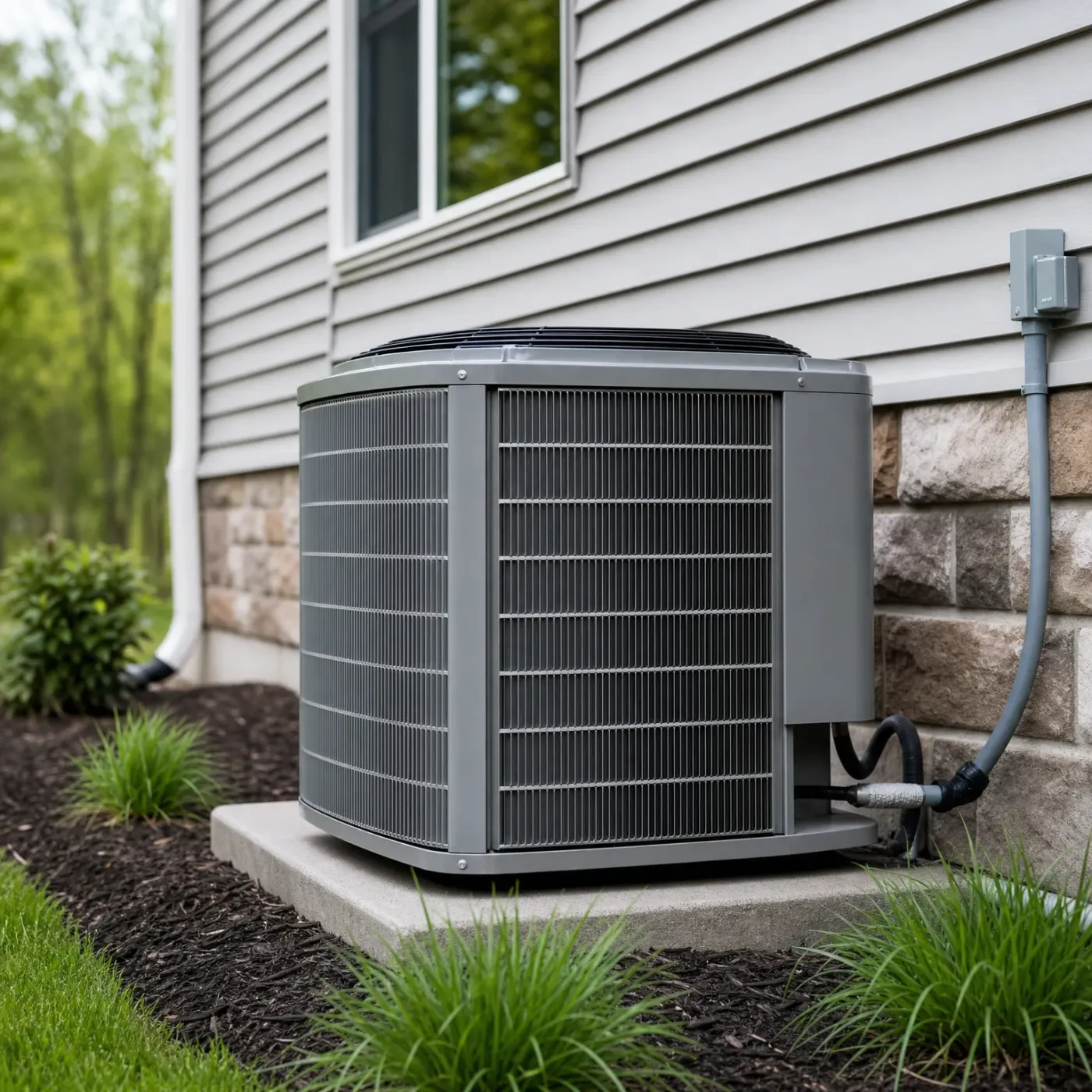
This condenser is keeping up with the house. The fins are clean, the lines run straight into the wall, and nothing around the pad is dripping or stained. When a system is sized and running right, the air it sends through the ducts cools evenly enough that the metal never drops below the dew point.
Falling behind
Years of dirt packed into the fins make this unit work harder to move the same heat, and a unit working harder can push colder air into ducts not built to carry it. That mismatch is what turns a vent cover damp. The weathering here didn't happen overnight, and neither did the sweating.
Power costs 11.82 cents per kilowatt-hour statewide
At 11.82 cents a kilowatt-hour, running your air conditioner longer to chase a sweating vent won't wreck your bill the way it might elsewhere. That's worth knowing before you assume you have to live with the drips, since the fix itself costs more to ignore than the extra power ever will.
EIA-861 2025 statewide residential average
A sweating vent has a reason behind it, and it's fixable
A wet vent means something specific is wrong, whether that's thin duct insulation, a system pulling more moisture than the house needs, or a register in a spot that stays colder than the room around it. None of that gets better by itself, and the drip marks on the ceiling only tell you it's been going on a while.
You don't need to track down a contractor yourself, call around, and explain the same ceiling stain three different times before someone gives you a straight answer. Tell us what's going on with your vents and you'll be matched with a contractor who works on this in North Dakota homes, and they'll reach out to you directly. No more guessing whether the spot on the drywall is getting worse.
Get the right pro for your air conditioner
One form replaces the calls you'd make to find an air conditioner pro.